


Morning, CEO!
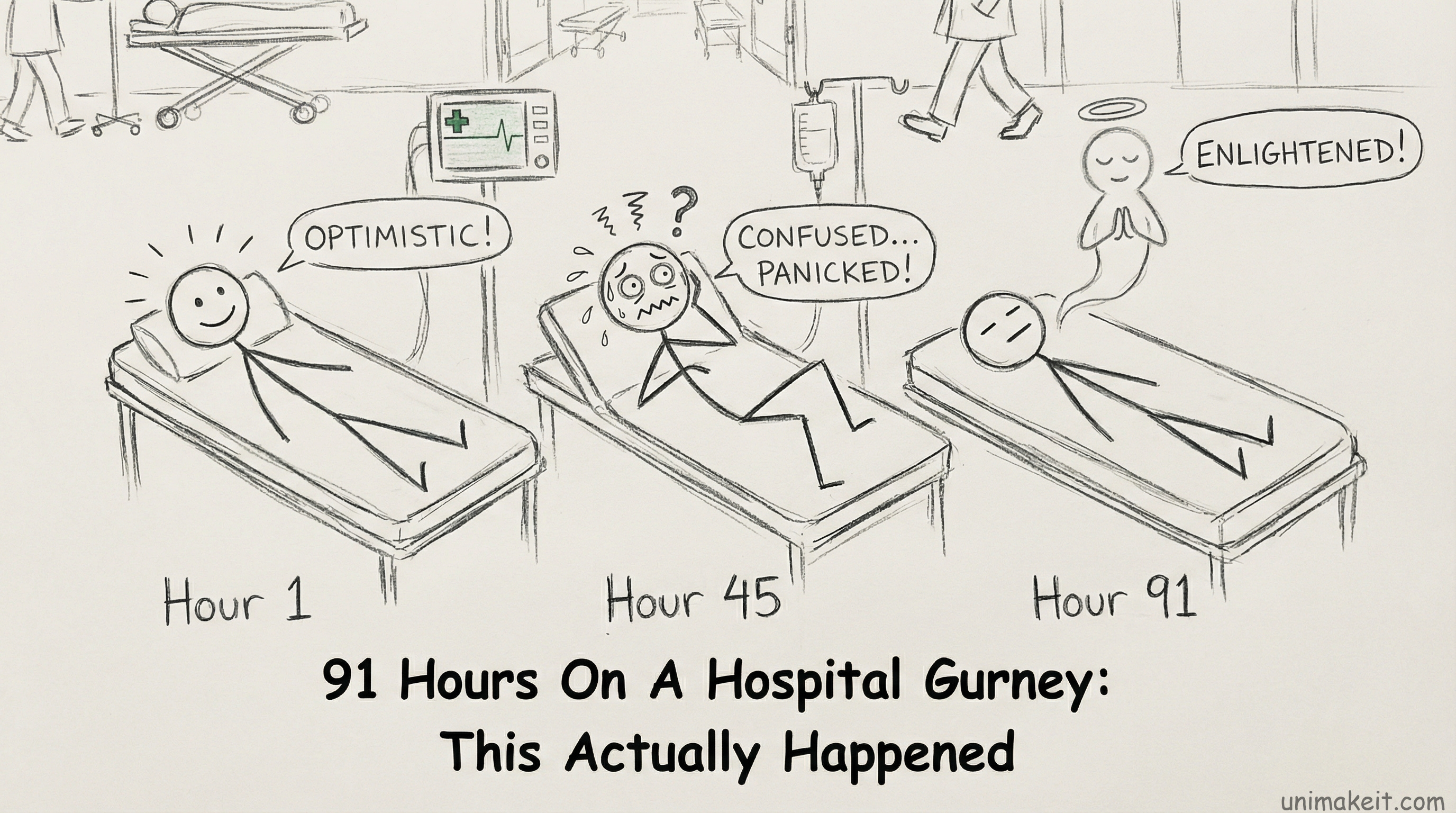
A patient in Liverpool waited 91 hours on a hospital gurney for a bed. Not 91 minutes—91 HOURS. Four days listening to footsteps and beeping machines. This wasn’t an outlier. This was winter 2024 in the UK’s NHS. But then 50 hospitals did something weird: they stopped looking at other hospitals for answers and started copying Amazon instead.
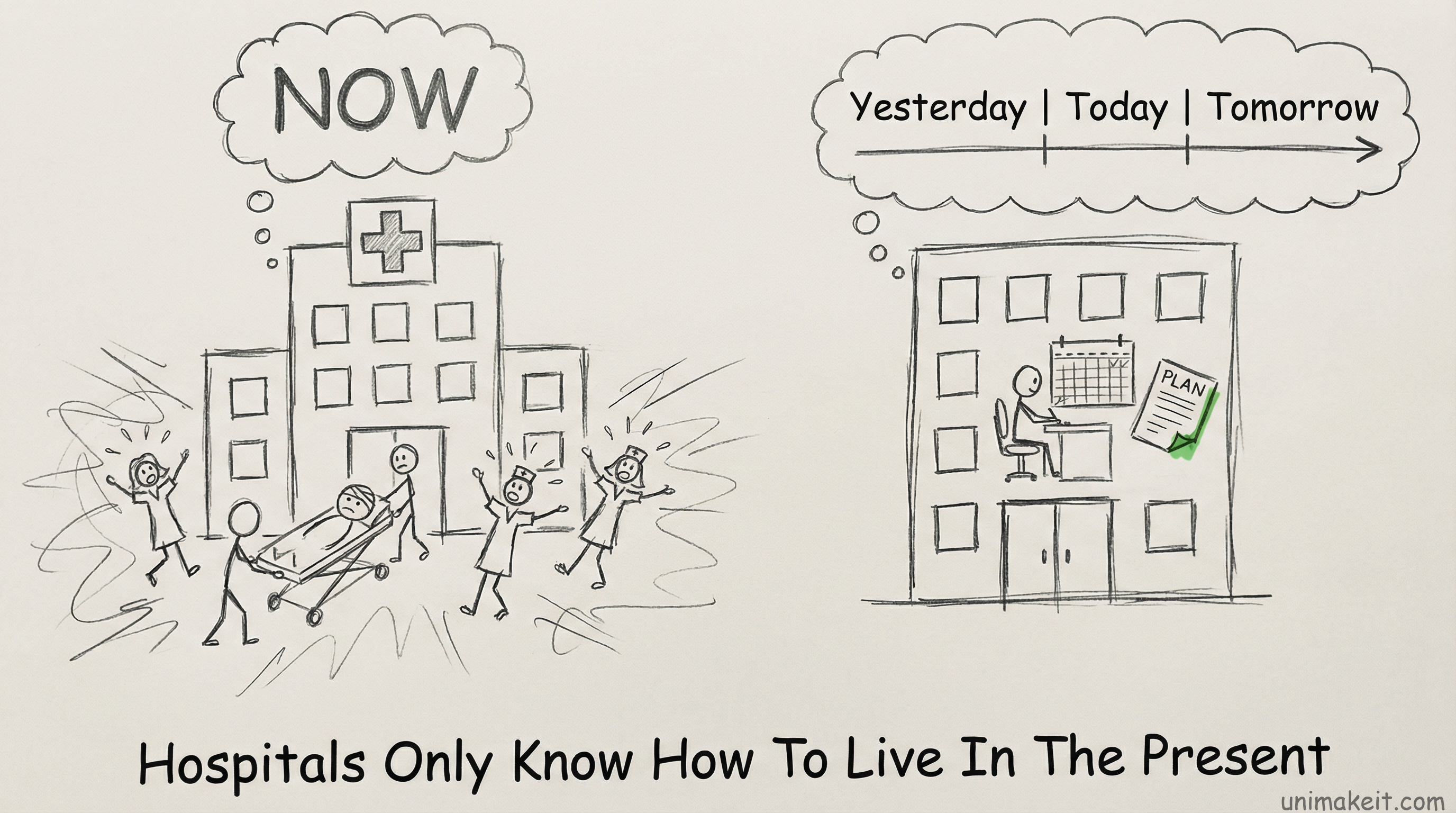
The Problem: Hospitals Only Know How To Live In The Present
Here’s how hospitals traditionally work:
Patients show up. Staff scramble.
More patients show up. Staff scramble harder.
Everyone scrambles until someone collapses or the day ends.
The entire system lives in the present tense. What’s happening NOW, we handle NOW. No bandwidth for tomorrow.
This works fine during “normal times” (that mythical two-week period in April when nobody gets sick).
But winter? Winter is chaos.
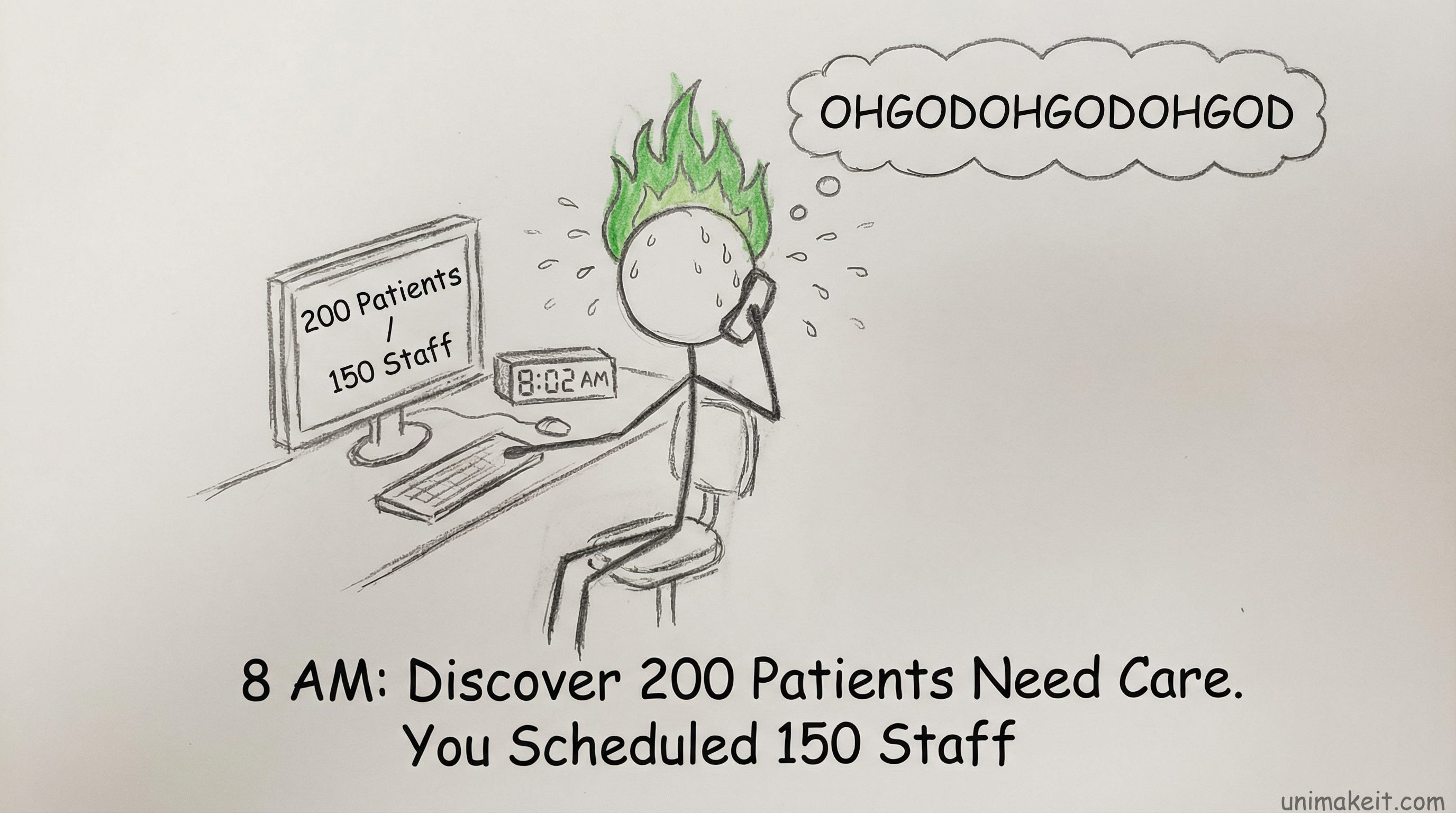
One ER director’s typical morning: Arrive at 8 AM. Discover 200 patients need care today. Remember you only scheduled 150 staff. Start frantically calling people.
First your own nurses: “Want to work a double shift?”
Then the temp agencies—those mercenary outfits that provide contract staff at 2-3x the cost. And they’re not even guaranteed to show up because every other hospital is calling the same agencies, fighting over the same pool of temps like it’s Black Friday for healthcare workers.
But even if you find staff, you still have a problem: Where do you put the patients?
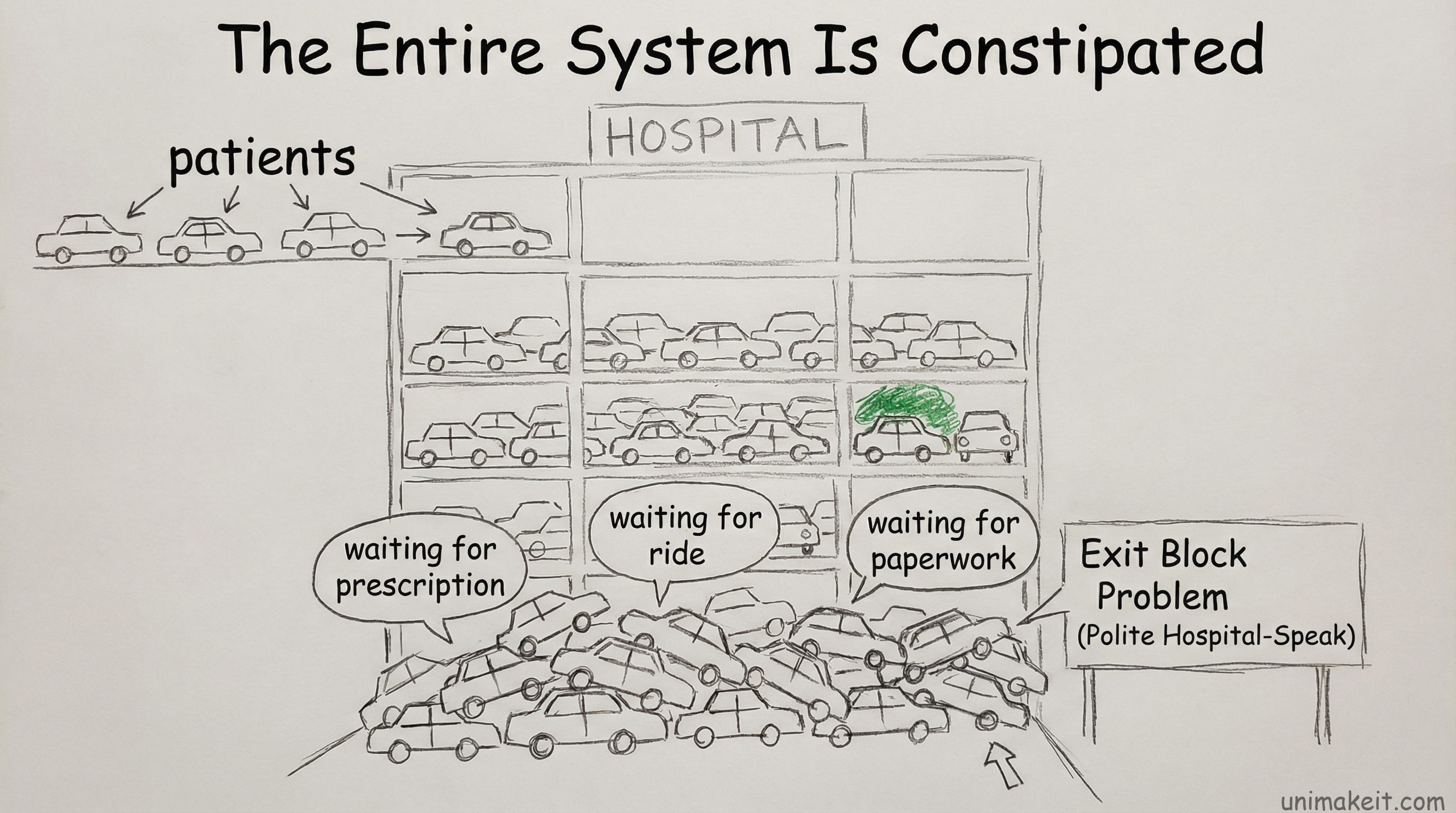
The ER can treat them, sure. But then they need to go to a hospital ward. Except the wards are full. Why? Because the patients IN the wards can’t leave.
Not because they’re sick. Many are medically cleared. But they’re waiting for prescriptions, or rides home, or community care arrangements.
This is the “exit block problem.” (Polite hospital-speak for “the entire system is constipated.”)
Imagine a parking garage where cars keep entering, no spaces are available, and the exit is blocked by cars that COULD leave but are waiting for... reasons.
That’s a hospital in winter.
The patient who waited 91 hours? That wasn’t because doctors weren’t trying. It was because the system had no ability to plan ahead.
Like running a restaurant where you wait until you’re completely slammed, THEN run to the grocery store to buy ingredients and hire a chef.
That restaurant would fail immediately.
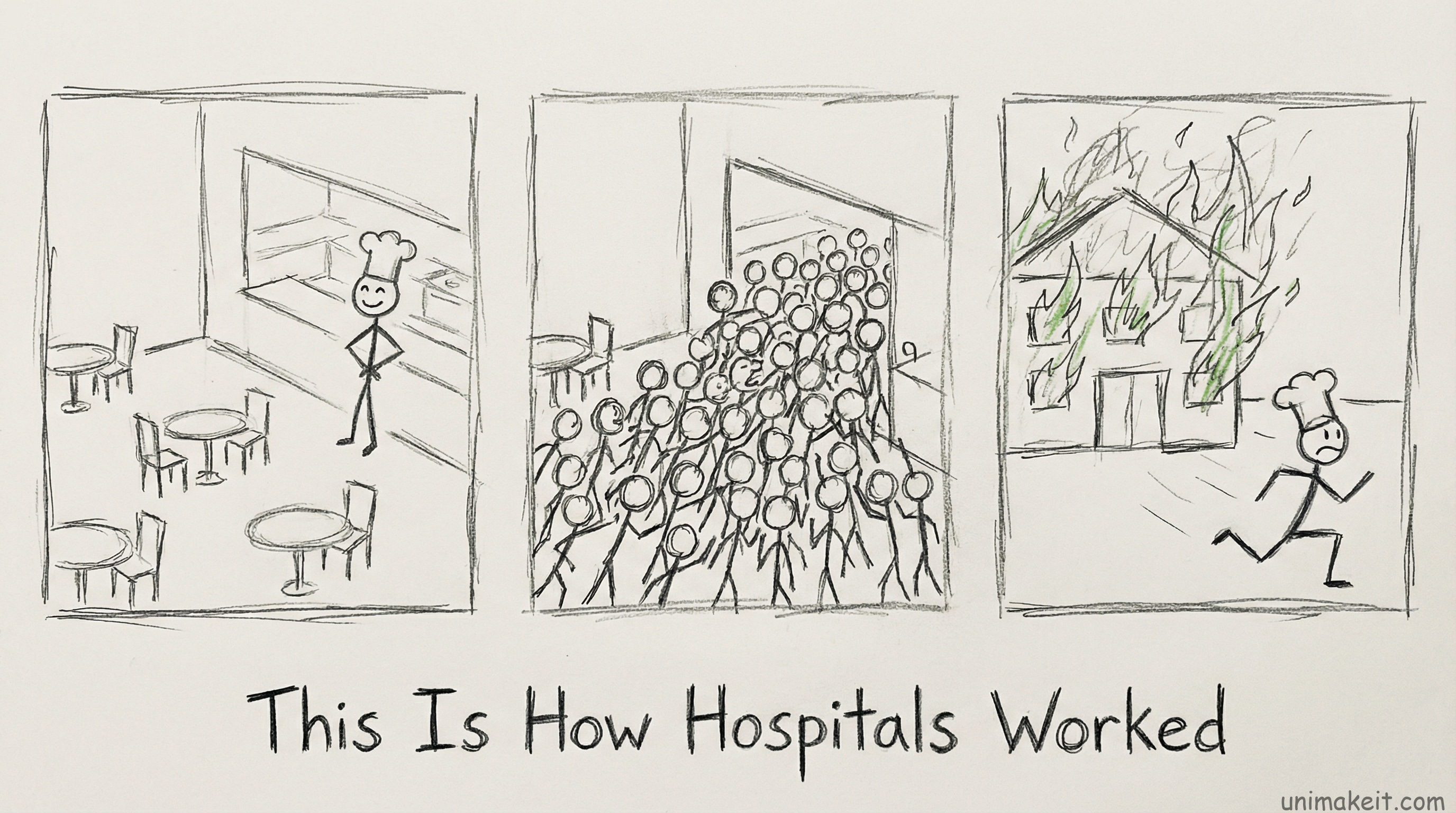
Hospitals just suffer.
The Solution: Time Travel (Sort Of)
The NHS rolled out an AI tool that predicts ER demand three weeks in advance.
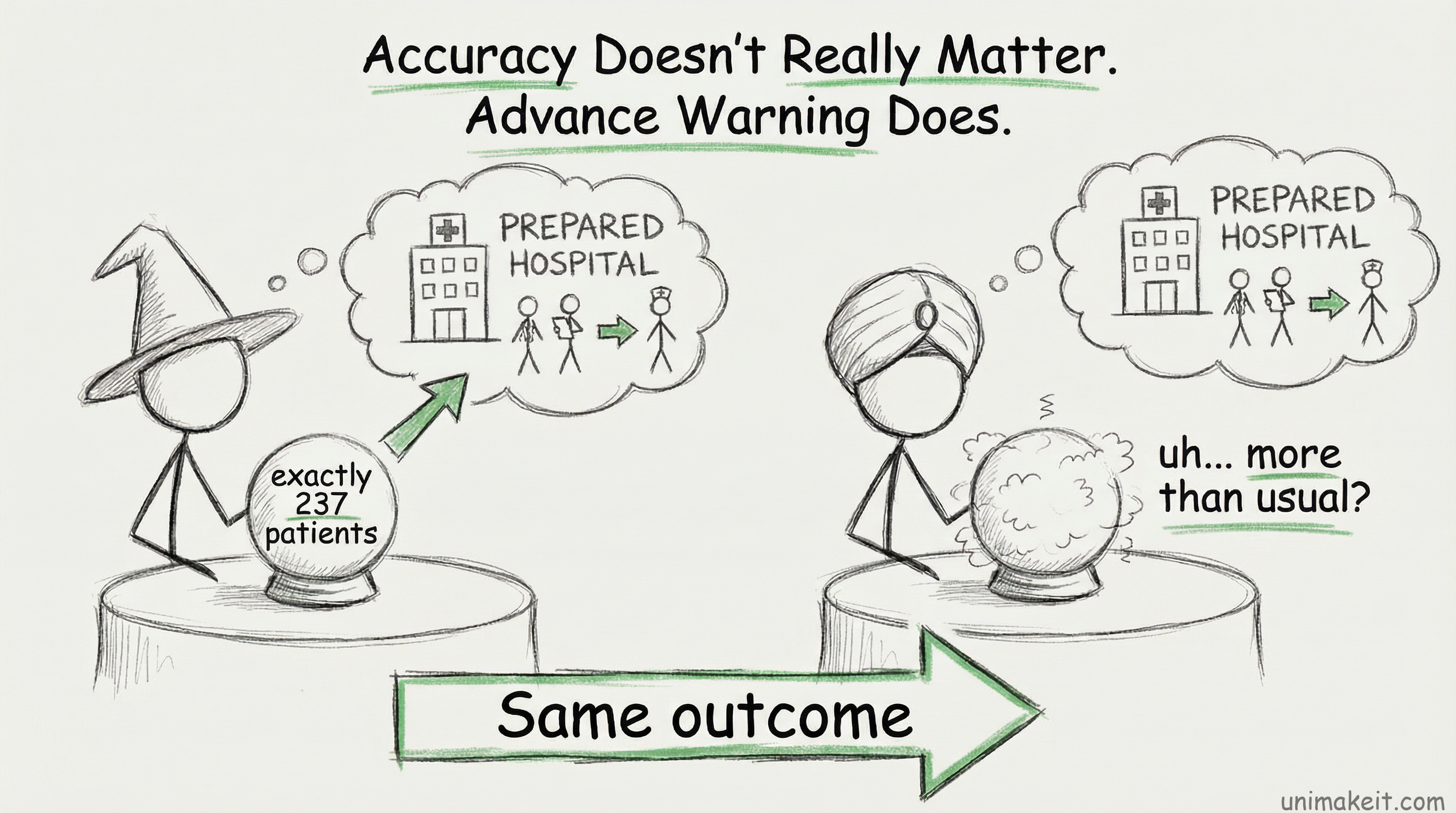
Here’s what surprised me: Accuracy doesn’t really matter.
Whether it predicts 30% more patients or 25% more—who cares?
What matters is having ANY advance warning at all.
The system looks at weather forecasts (temperature drops = respiratory spikes 3-7 days later), school holidays (kids spread disease like it’s their job), historical patterns, flu transmission rates.
Then it tells you: “Next Monday 10 AM-2 PM, you’re getting slammed” or “Three weeks from now, cold snap + flu season = 30% surge.”
With three weeks of warning, hospitals can finally do three things:
One: Stop playing schedule roulette.
Traditionally, hospitals schedule staff weeks ahead based on last year’s patterns or vibes. If something unexpected happens, panic-call temp agencies.
Now they can see the staffing gap coming and post overtime shifts to “bank staff”—regular employees who want extra cash.
Using internal staff costs WAY less than temp agencies. Plus you can optimize: pediatric surge predicted? Schedule more pediatric nurses specifically.
Two: The great bed liberation.
If you know a wave is coming in three weeks, start planning discharges NOW.
Which patients are medically ready but stuck waiting? Get them out. Which elective surgeries can be postponed? Reschedule them.
You’ve turned “exit block” from a passive disaster into active management.
Three: Surgery Tetris.
Non-emergency surgeries get scheduled dynamically based on predicted ER pressure. Light week? More surgeries. Busy week? Scale back, save resources for emergencies.
One pilot hospital called this “groundbreaking.” Translation: “Holy shit, we can actually plan things now.”
The real breakthrough isn’t the AI. It’s that AI changed how hospitals think about time.
Old hospitals operated in linear time: present moment only.
New hospitals got a new dimension: the next three weeks.
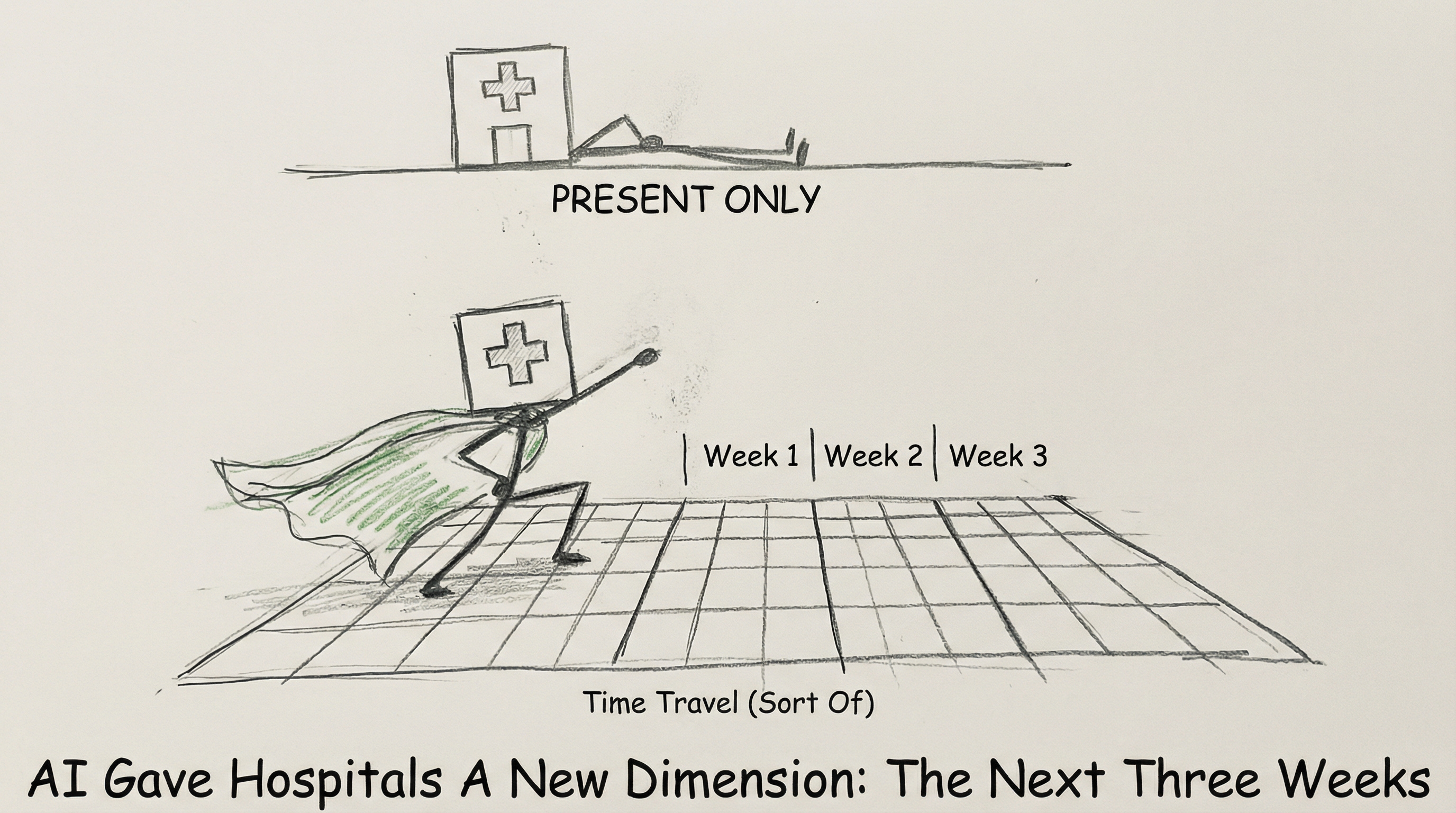
Those three weeks aren’t for waiting. They’re for preparing.
It’s like the difference between driving without GPS (you only see what’s directly ahead) versus with GPS (you can see three kilometers ahead and adjust before problems hit).
GPS doesn’t change your car. It changes your understanding of the road.
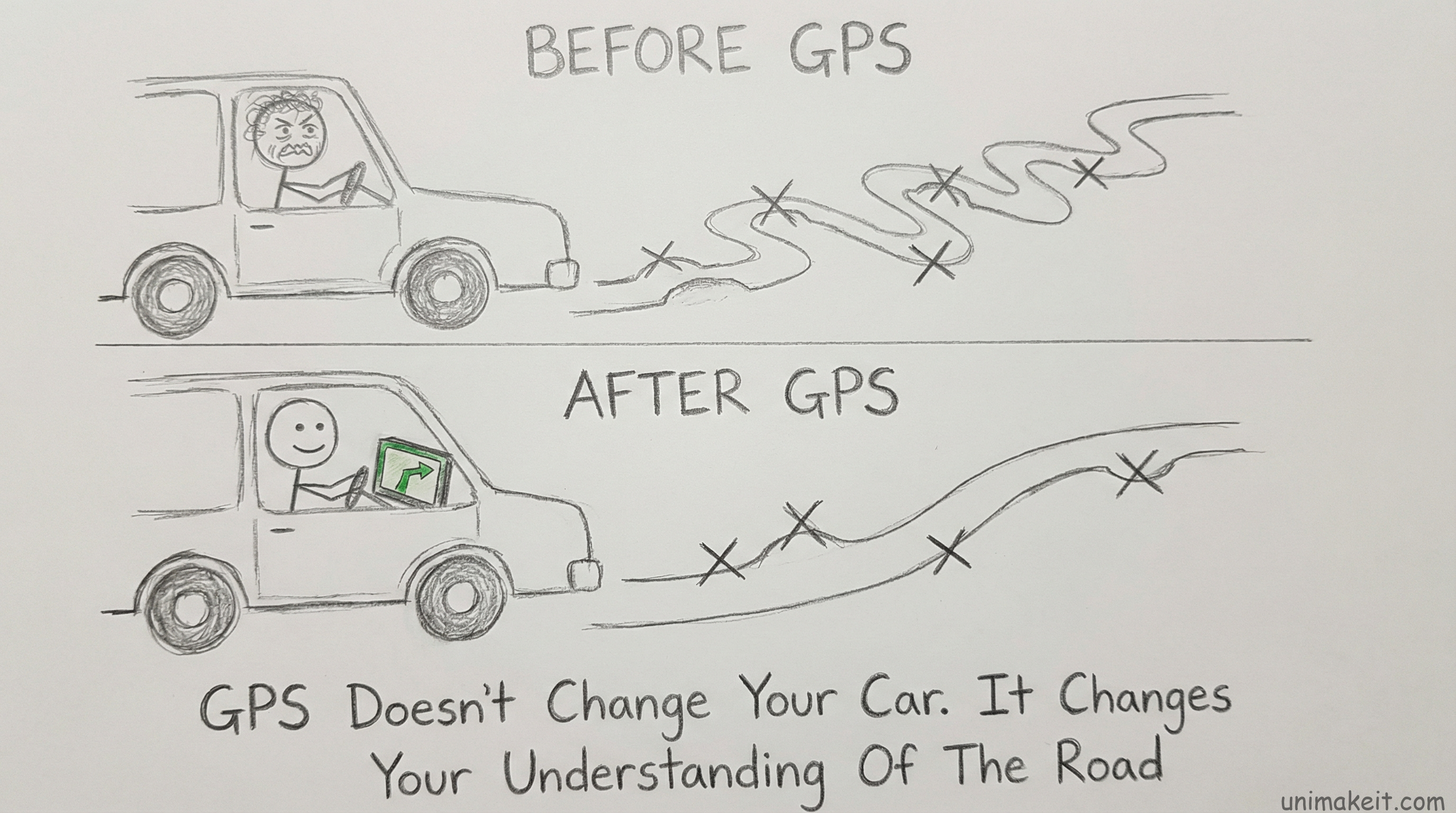
AI didn’t change the hospital’s resources. It changed their understanding of time.
The Real Lesson: They Learned From The Wrong Industry
Here’s what’s wild about this case:
This playbook isn’t new. It’s exactly what e-commerce has been doing for years.
Amazon’s “predictive dispatch” looks at your browsing history and buying patterns, then moves items to local warehouses BEFORE you click buy. That’s how they do 2-hour delivery.
NHS hospitals are basically doing e-commerce logistics with nurses and beds.
The difference: E-commerce moves packages. Hospitals move nurses. E-commerce can stock inventory in advance. Hospitals can only prepare the ABILITY to handle patients.
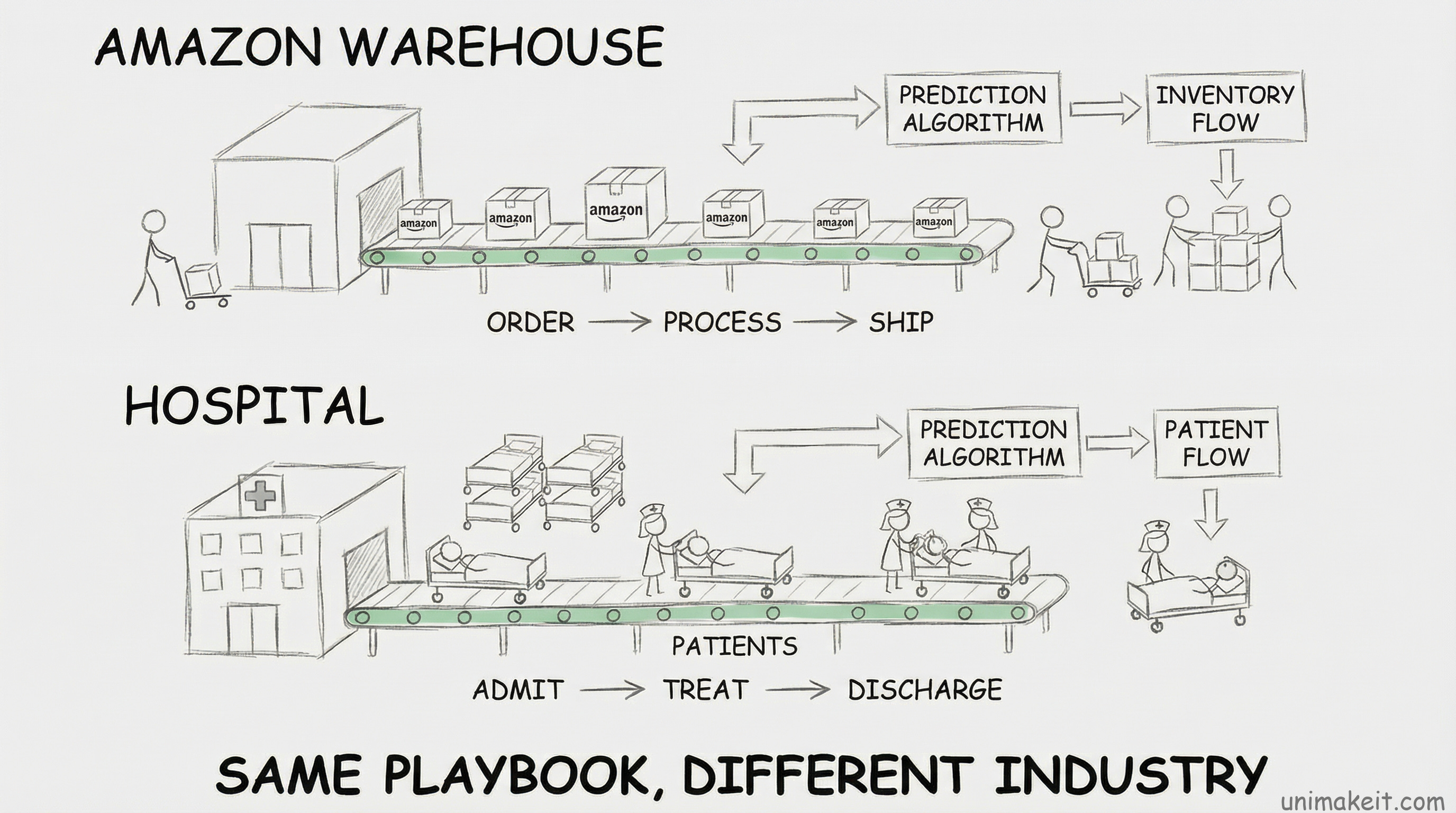
Which makes this approach even MORE valuable in healthcare.
But here’s what struck me:
Healthcare didn’t learn this from other hospitals. They learned it from retail.
The innovation wasn’t medical. It was operational.
The best hospitals didn’t benchmark against other hospitals. They benchmarked against Amazon.
They stopped asking “What are other hospitals doing?” and started asking “What are the best operators in ANY industry doing?”
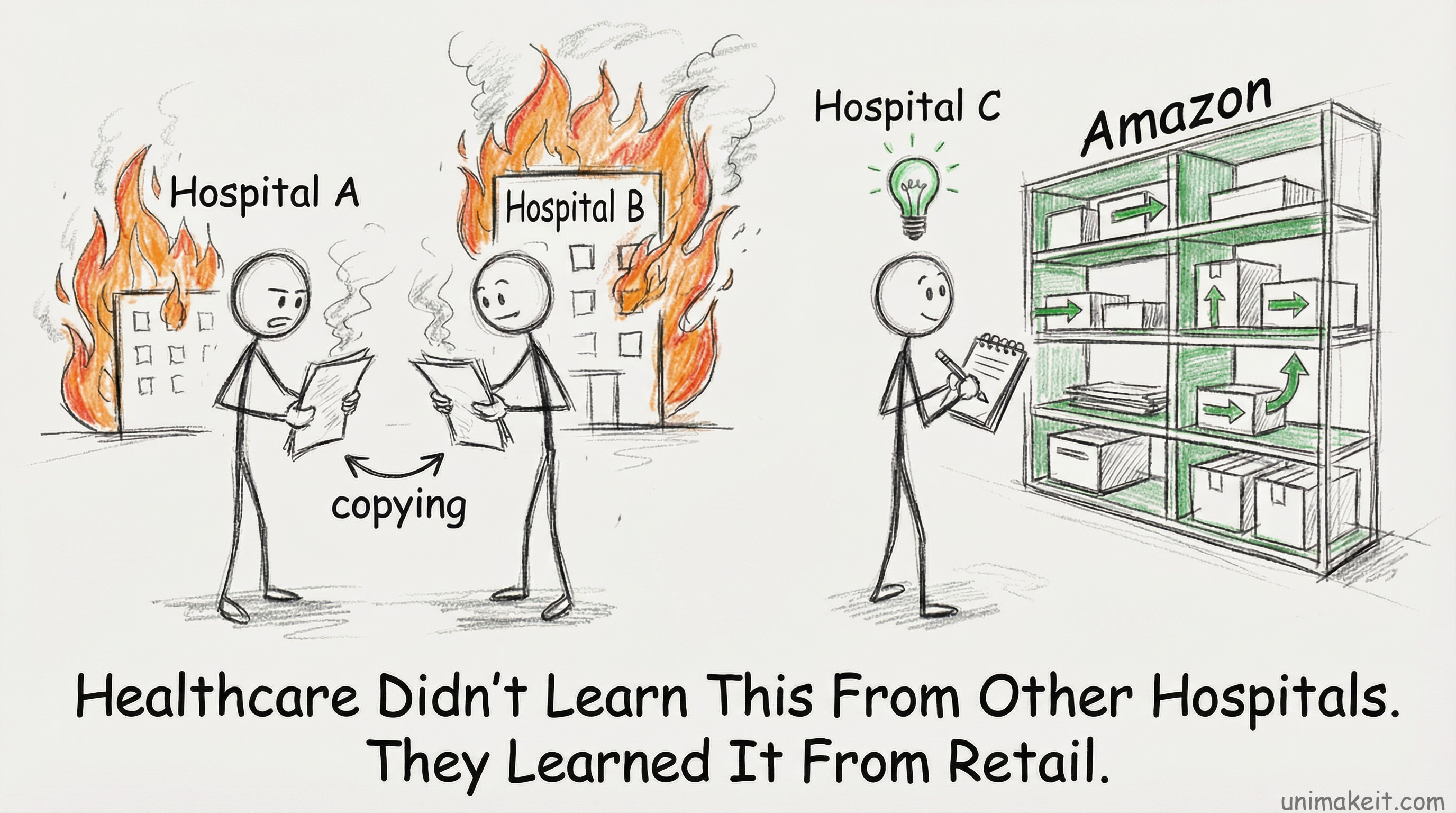
That’s the move.
When your entire industry operates one way, look outside your industry for different playbooks.
The constraint isn’t usually what you think it is.
Hospitals thought the constraint was nurses and beds (resources).
Turns out the real constraint was TIME. Specifically: not having advance warning.
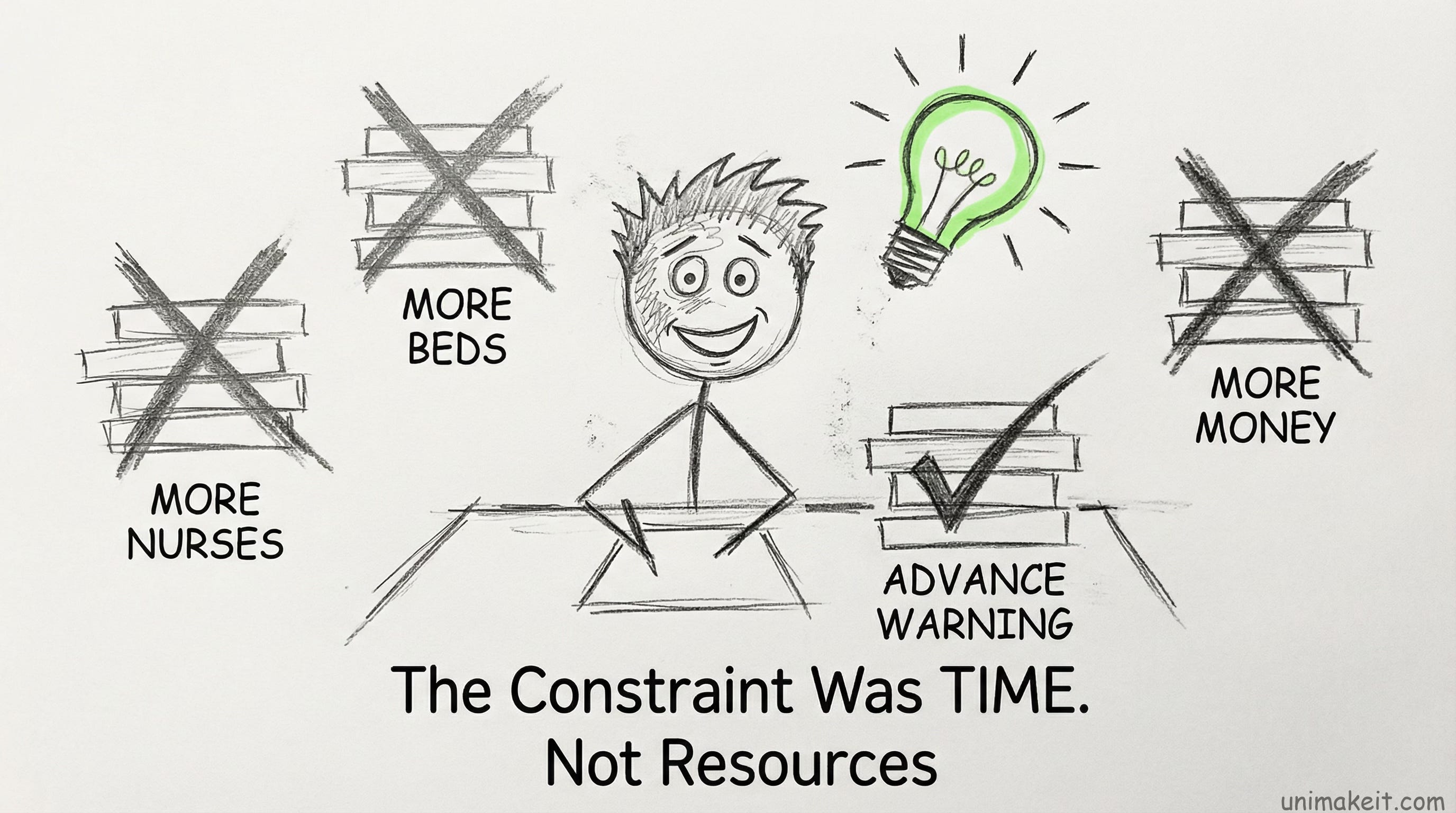
E-commerce figured out how to manufacture certainty from data. Hospitals just copied the homework.
And it’s working: ambulances stopped piling up at entrances, patients move through faster, temp agency costs drop.
This is now running in 50+ UK hospitals. It’s a flagship government project.
But the playbook isn’t government or healthcare specific.
Any business facing demand uncertainty can use this:
Call centers predicting volume spikes. Airports predicting delays. Supply chains predicting stockouts. Cities predicting traffic jams.
When everyone’s firefighting, you’re already preventing fires.
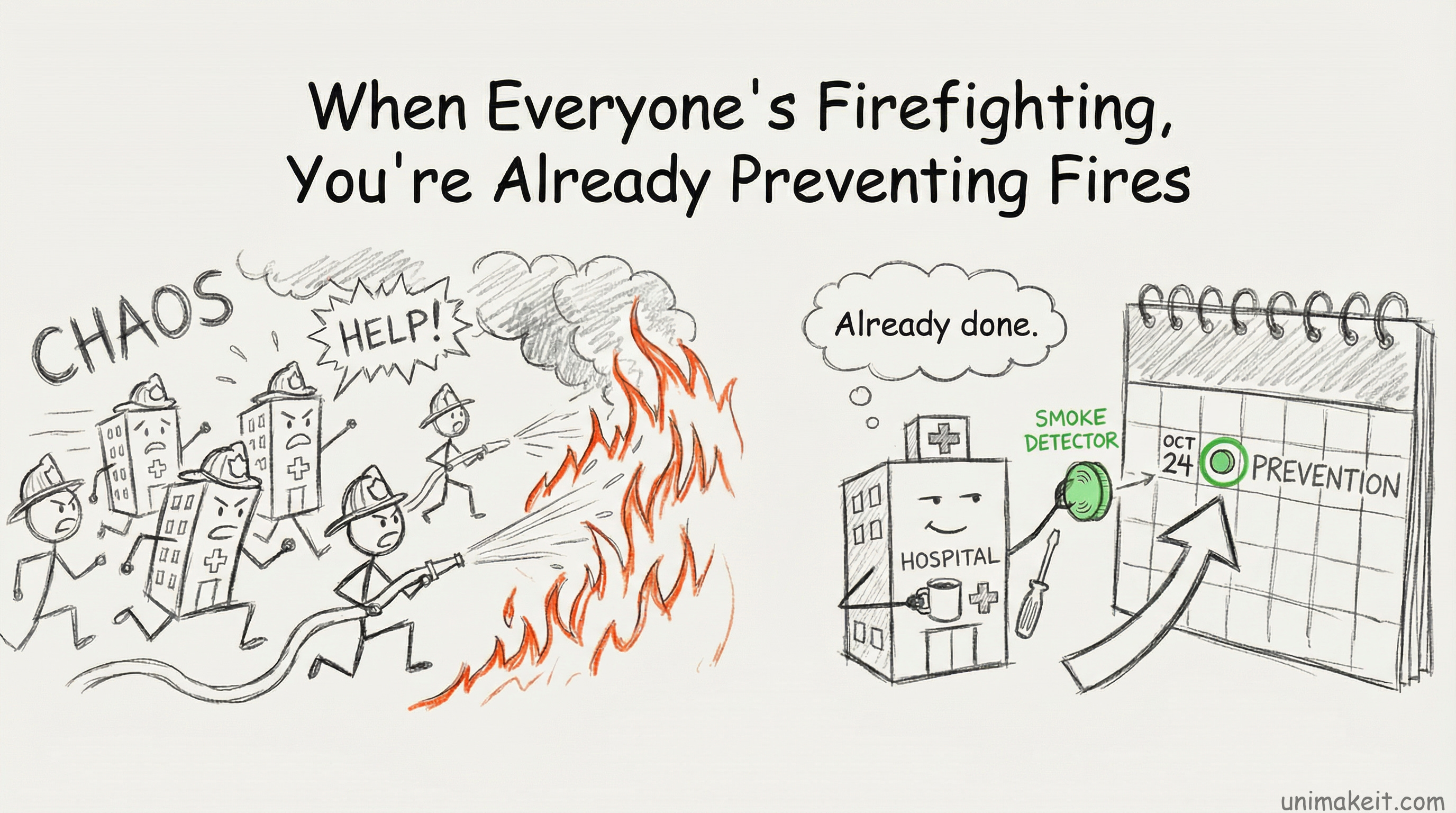
That’s not just an advantage. That’s a different game.
The Punch:
NHS hospitals didn’t just steal Amazon’s playbook. They learned how to pull the future into the present. And the best part? They didn’t need to invent anything new—they just needed to look at who was already solving similar problems in completely different contexts. Sometimes the best answer to your problem is sitting in an industry that has nothing to do with yours.
Links:
https://www.gov.uk/guidance/ai-exemplars-programme
https://www.gov.uk/government/news/faster-treatments-and-support-for-health-workers-as-ai-tackles-ae-bottlenecks


