


Morning, CEO!
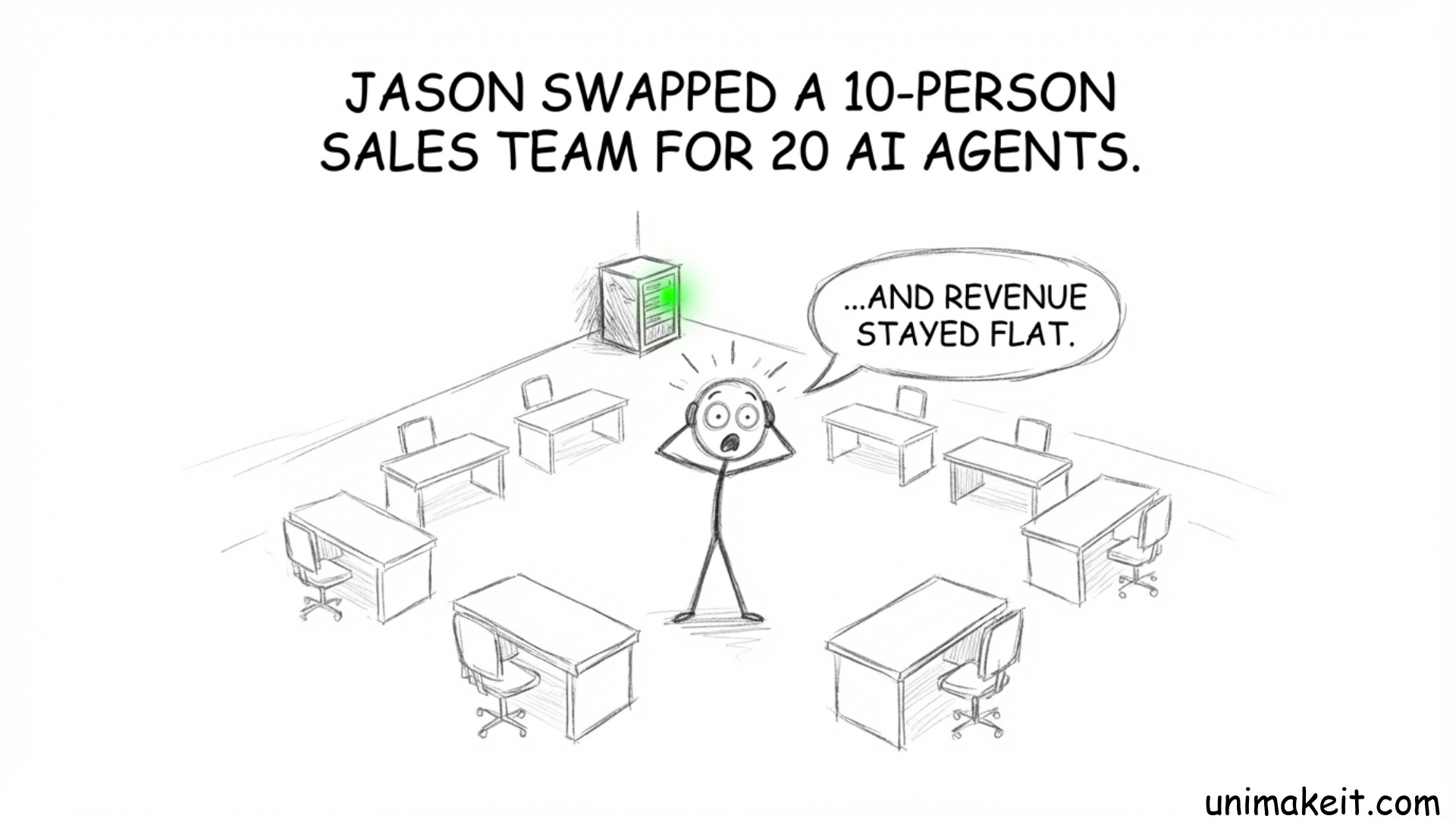
Imagine walking into your sales department. There are ten desks. They used to be occupied by loud, caffeinated humans ringing gongs and complaining about lead quality.
Now? Silence.
Just ten empty chairs and the faint hum of a server rack.
Jason Lemkin, the godfather of B2B SaaS, didn’t just fire his sales team. He replaced 10 humans with 20 AI agents and 1.2 humans.
The result? Revenue didn’t drop. Efficiency went to the moon. And the office drama went to zero.
Let’s peek under the hood.
1. The “Meh” Middle is Lava
I have a confession. I prefer code to people. Code does what you tell it to do. Cold leads just hang up on you or report you as spam.
But for a long time, the business world ran on young people doing exactly that. We hired armies of SDRs (Sales Development Representatives). Their job was to exist. To “Show Up.” To spam inboxes and hope for a 1% reply rate.
It was boring. It was soul-crushing. But it was necessary.
Jason Lemkin’s experiment proved something terrifying: That job is dead.
Not “dying.” Dead. Buried. The tombstone is already engraved.
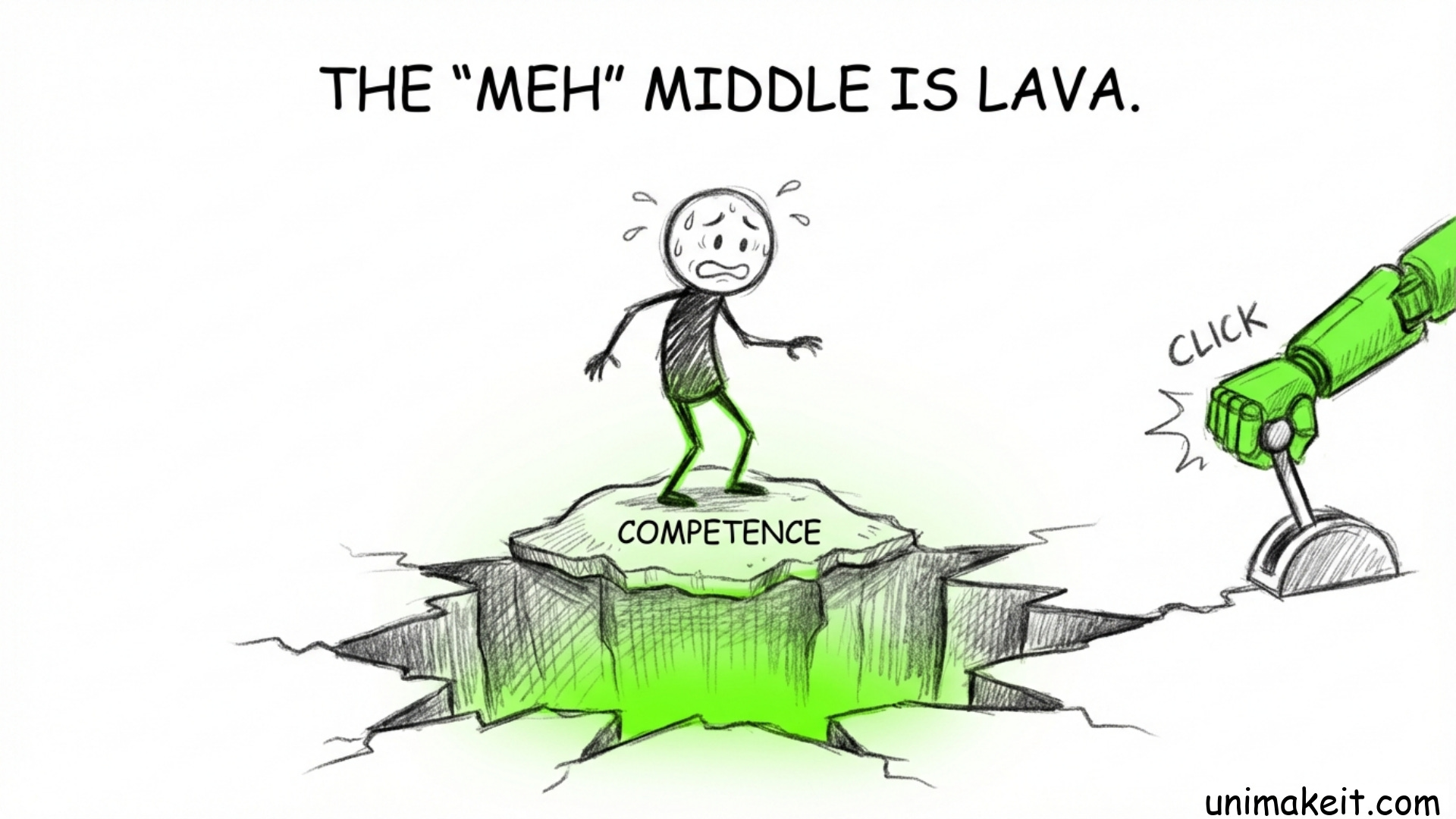
Why? Because the “Mediocre Middle”—the zone where you just go through the motions—is where AI thrives.
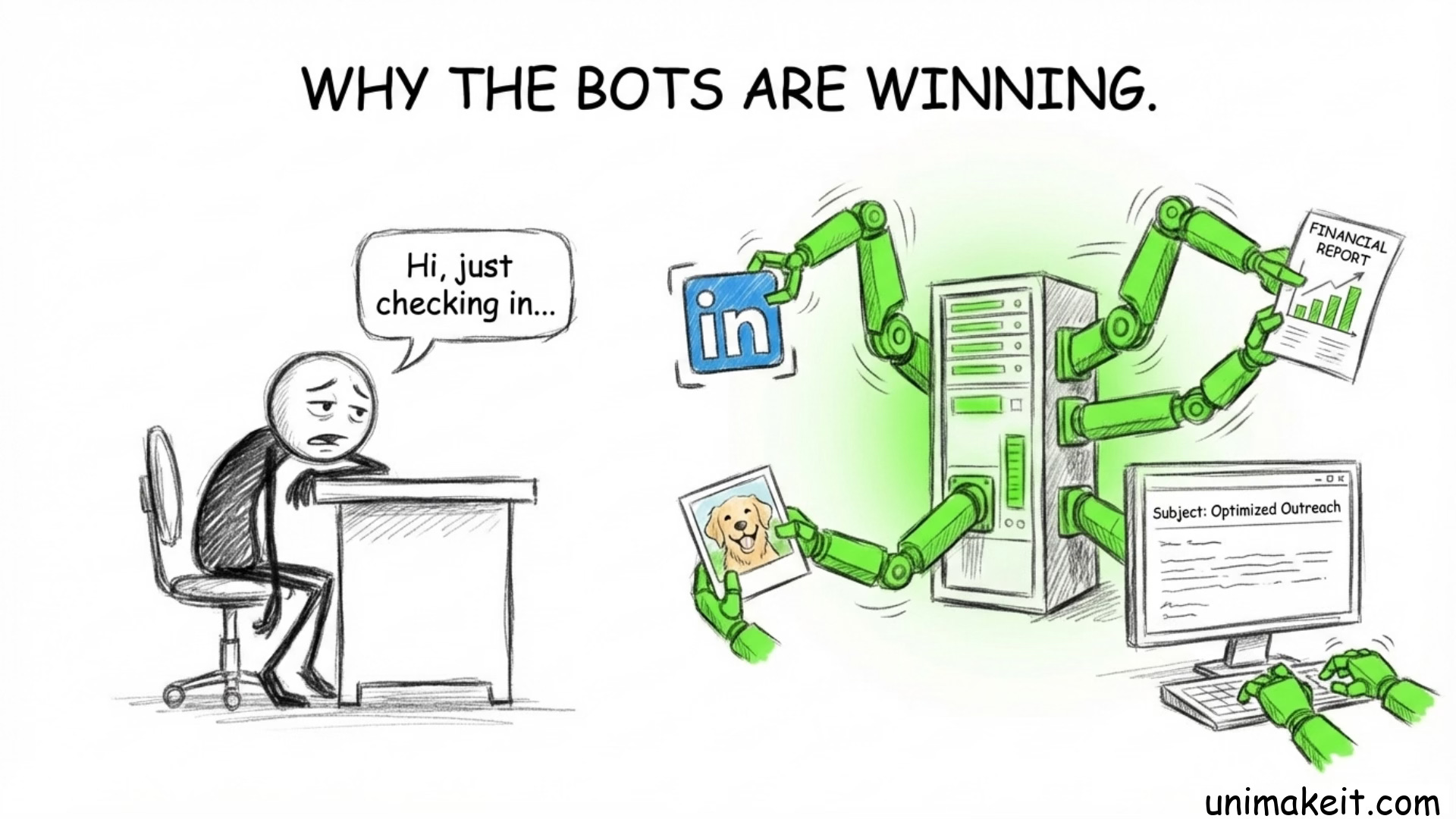
The SaaStr bots don’t just send emails. They read a prospect’s LinkedIn. They digest the company’s Q3 earnings report. They notice that the prospect just adopted a golden retriever. Then, they write a hyper-personalized email that sounds more human than the actual humans used to write.
And they do it in 4 seconds. At 3:00 AM on a Sunday.
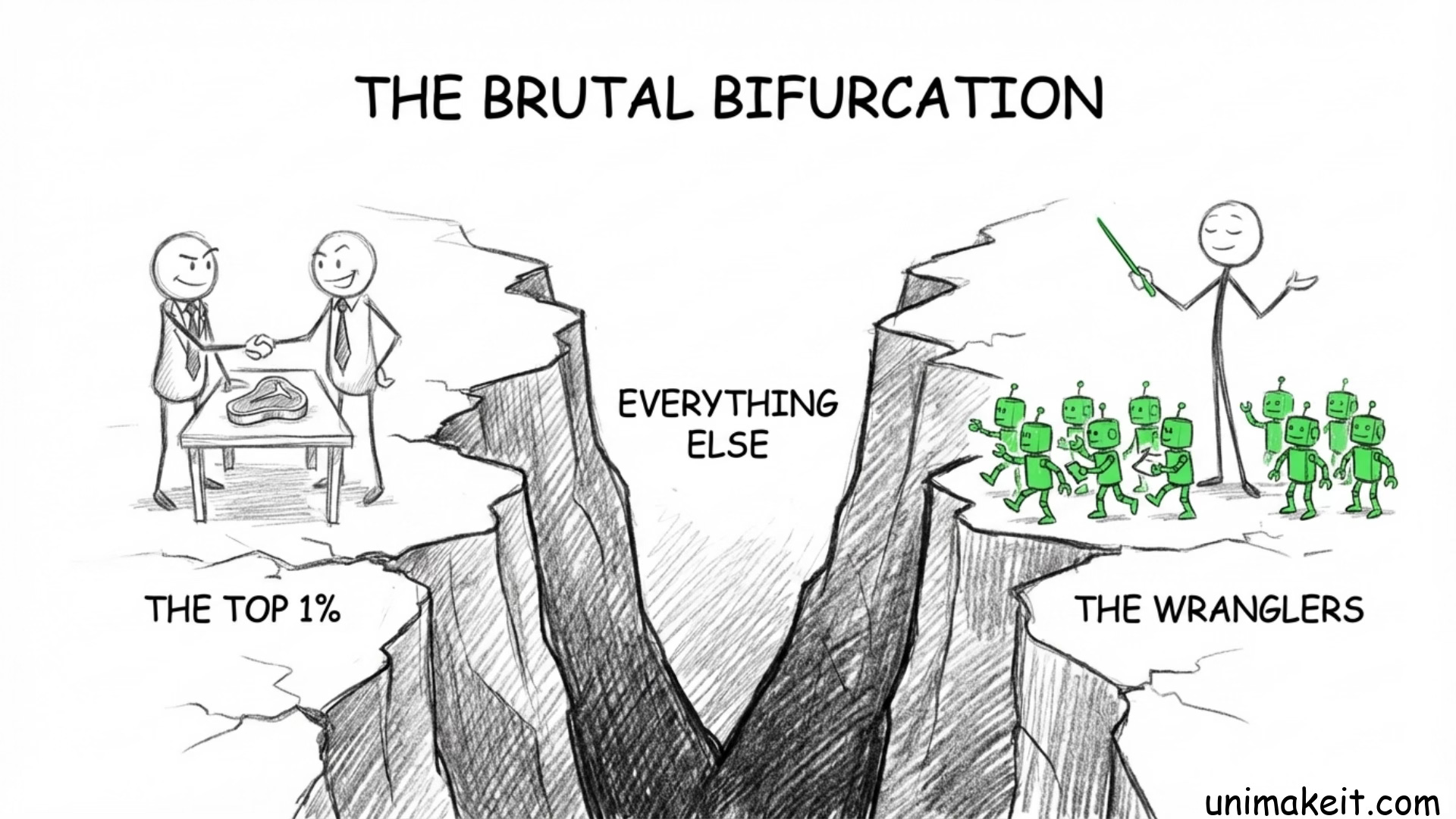
This creates a brutal bifurcation in the workforce.
The Safe Zone A (The Top 1%): The humans who can close a million-dollar deal over a steak dinner because they possess charisma, empathy, and strategic genius. AI cannot eat steak (yet).
The Safe Zone B (The Wranglers): The people building the bots.
The Danger Zone (Everything Else): If your value prop is “I process information and move it from Spreadsheet A to Spreadsheet B,” you are standing on a trapdoor. And the AI just found the lever.
We can no longer build a career on being “competent.” Competence is now a commodity. We have to be exceptional, or we have to be the architect.
2. Your New Job: Managing Compute, Not Egos
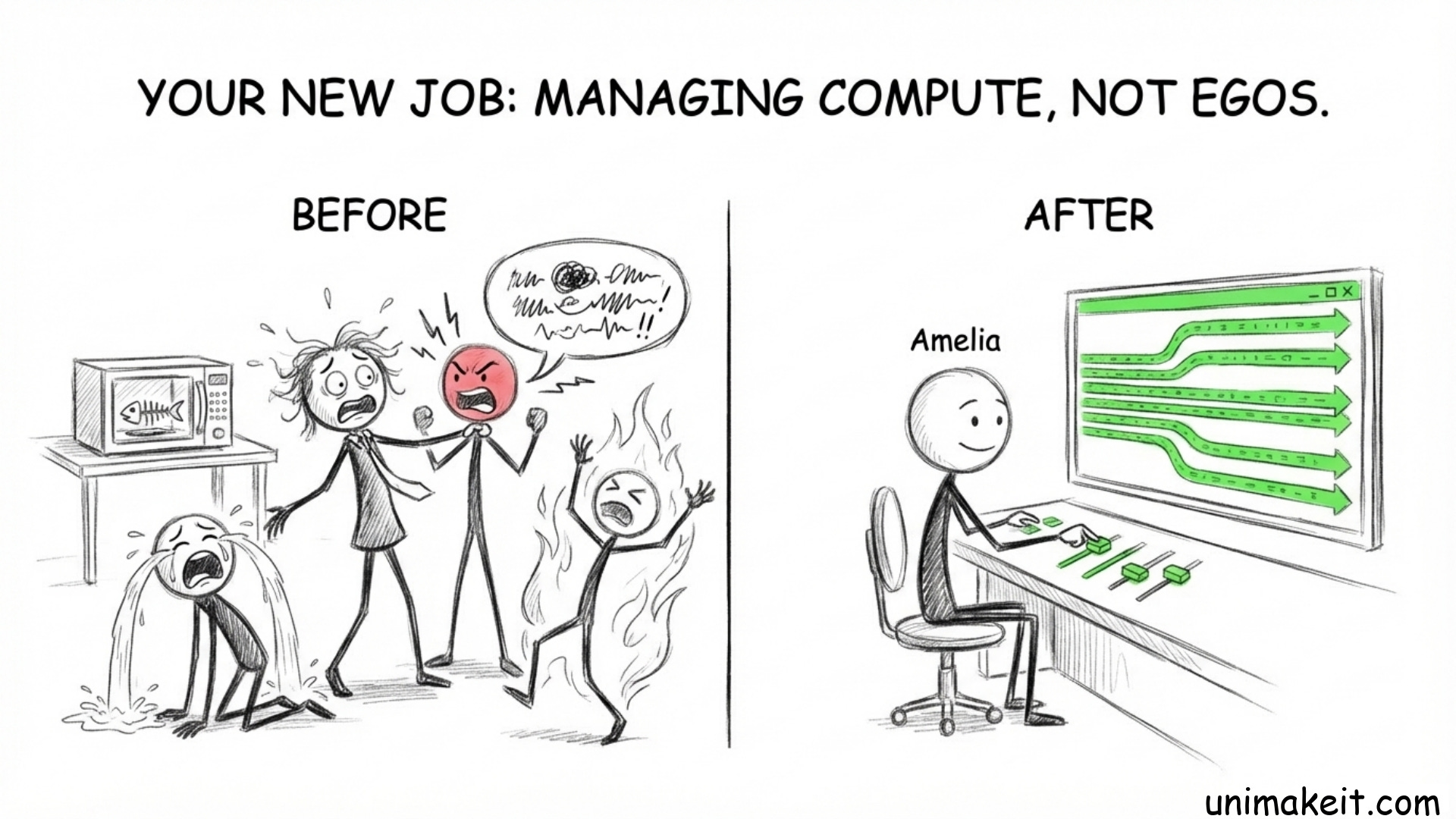
Let’s talk about that “1.2 humans” statistic.
The “1” is a human Account Executive who handles the final, high-stakes closing conversations.
The “0.2” is the fascinating part.
Her name is Amelia. Jason calls her the “Chief AI Officer.”
She spends roughly 20% of her time managing this army of 20 robots.
Think about that. One person. Ten full-time employees’ worth of output.
This fundamentally shifts what it means to be a manager.
In the old world (2025), a manager was a therapist. You managed burnout. You managed vacation schedules. You managed that one guy who kept heating up fish in the office microwave.
In Jason’s world, Amelia doesn’t manage feelings. She manages orchestration.
She is a Robot Wrangler.
Her job is to:
Feed the bots the right data (ingestion).
Check their work for hallucinations (QA).
Tweaking their prompts when they start acting weird (training).
It’s like raising a puppy. A very fast, very literal puppy that never sleeps.
At first, you have to watch the puppy constantly so it doesn’t chew on the electric cords (send a hallucinated discount to a client). But unlike a human employee who might get trained up and then leave for a competitor, the AI gets smarter and stays.
The “institutional knowledge” isn’t walking out the door at 5 PM. It’s hard-coded into the system.
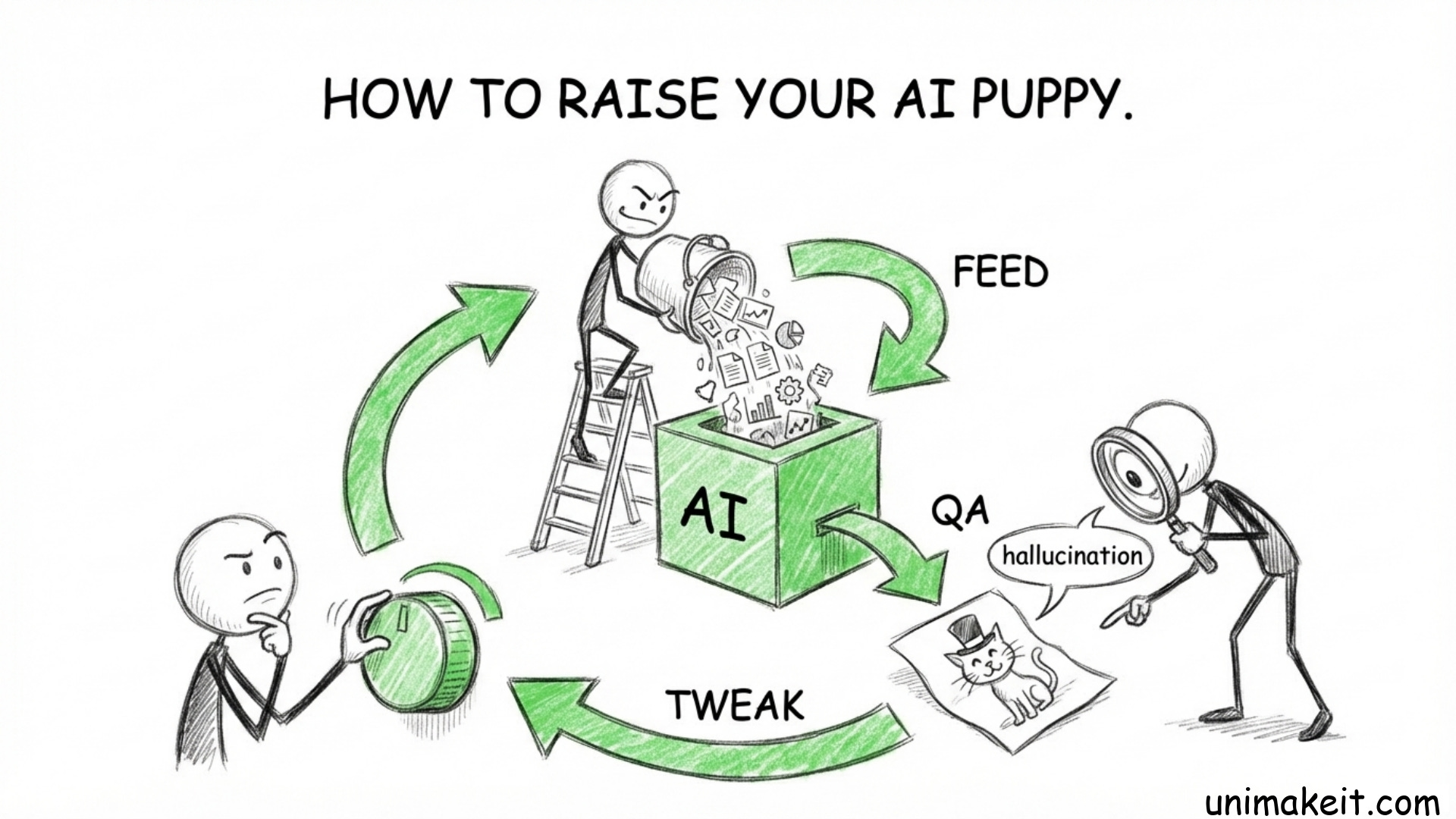
For us running our own shops, this is the unlock. We don’t need to hire a junior assistant to offload the boring work. We need to become the Chief AI Officer of our own tiny empires. We need to stop doing the work and start orchestrating the compute power to do it for us.
3. The “Perfect” Trap (And the Rise of the FDE)
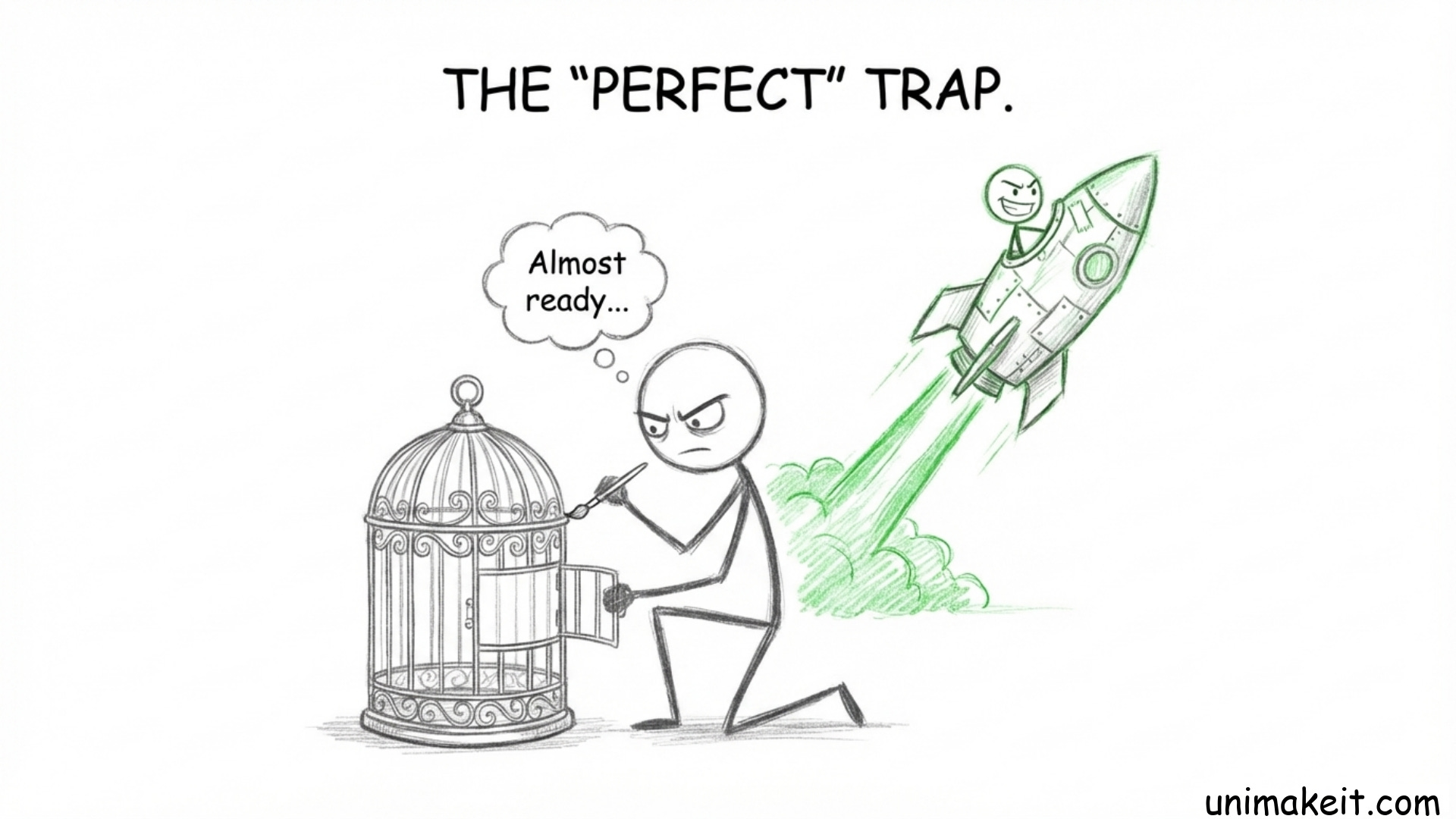
I have a bad habit. I like to wait until I have a perfect plan before I start. I will spend three hours researching the “best” font for a website I haven’t built yet.
If I tried to deploy AI sales agents, I would spend three weeks trying to get the workflow perfect before sending a single email.
Jason says this is the fastest way to die.
“The biggest mistake is waiting for it to be perfect.”
The companies winning right now aren’t the ones with the smartest AI models. They are the ones willing to get their hands dirty.
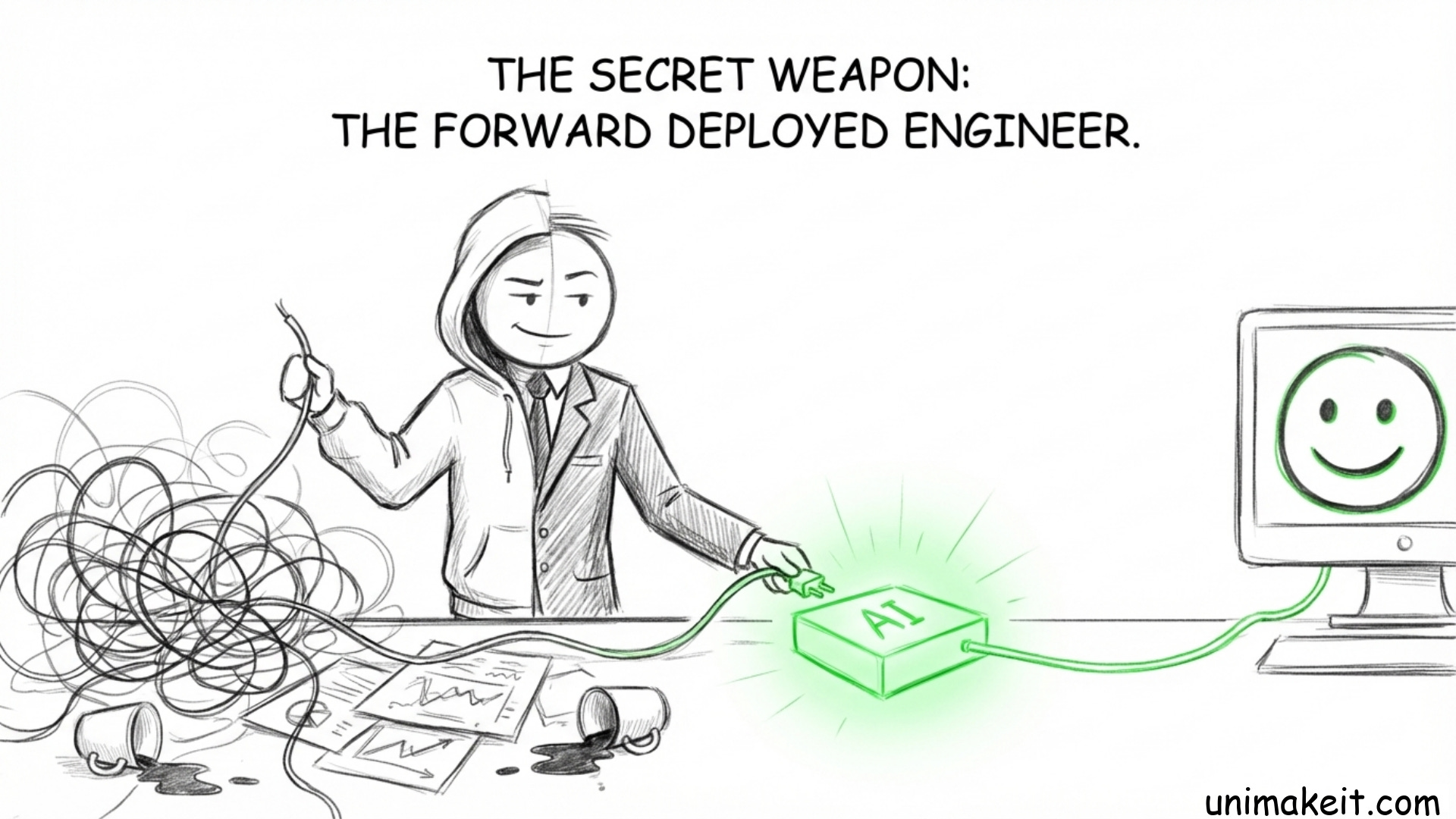
Jason highlights a specific role that is becoming the secret weapon of the AI era: The Forward Deployed Engineer (FDE).
This isn’t just a coder sitting in a dark room. And it isn’t a sales guy in a nice suit.
It’s a hybrid.
An FDE is someone who goes to the client, understands their messy, chaotic data, and manually wires the AI to fix it. They are the bridge between the “magic” of AI and the “reality” of business process.
They don’t just sell the software; they guarantee the outcome by building the integration themselves.
This is counter-intuitive because we are taught that software should be “plug and play.” We want passive income. We want one-click solutions.
But the real money right now isn’t in the software itself—it’s in the configuration of that software.
If you are looking for a way to position yourself, don’t just be the person who uses AI. Be the FDE. Be the person who walks into a mess, untangles the wires, and sets up the machine so it hums.
The gap between “people who use AI” and “people who wait for AI to be ready” is no longer a gap. It’s a different species.
The Bottom Line
We used to ask, “Will AI replace me?”
Jason’s story suggests that’s the wrong question.
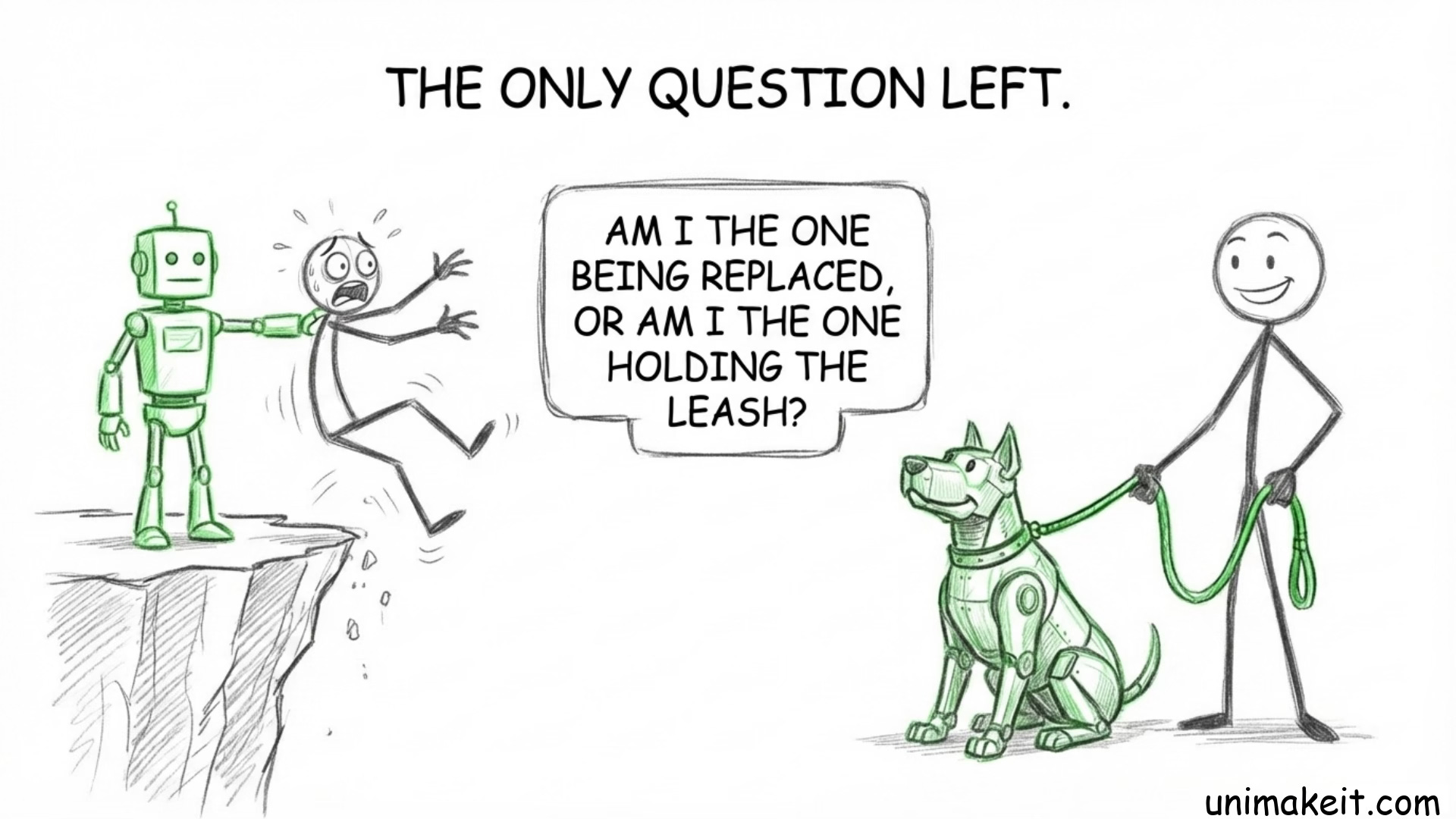
The right question is: “Am I the one being replaced, or am I the one holding the leash?”
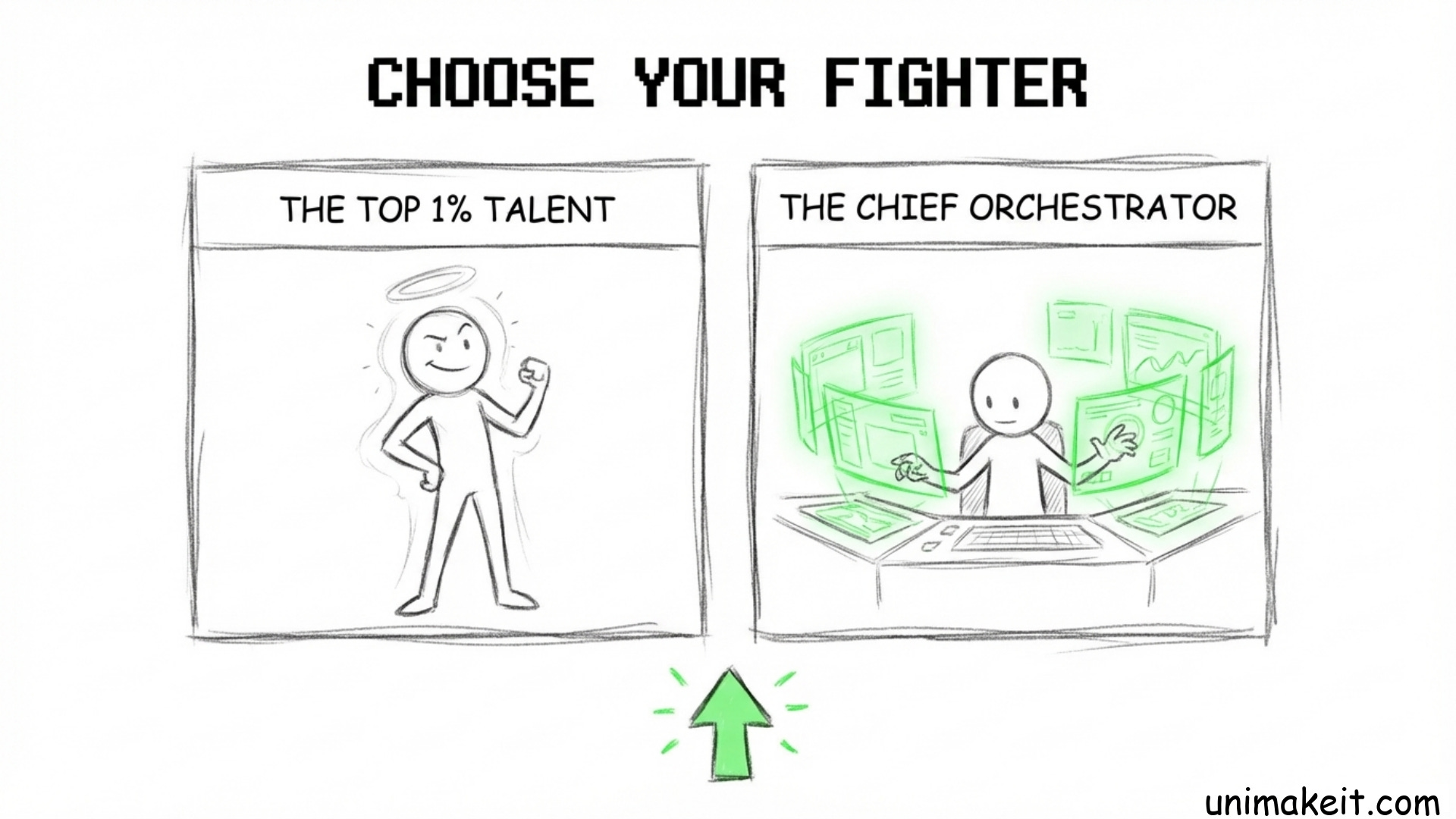
The middle ground has collapsed. You are either the Top 1% Talent or the Chief Orchestrator.
Choose your fighter.
Links:


