


Morning, CEO!
An 18-year-old made $2 million per month with a calorie-tracking app, eight months after launch.
But here’s the part that made me spit out my coffee: He didn’t build his own custom AI model. He just... connected two existing ones.
While I’m over here trying to figure out which Python library to use, he’s treating AI models like LEGO bricks.
Let me show you what he did that I completely missed.
1. The Build vs. Buy Decision (Spoiler: He Chose Neither)
Zach Yadegari wanted to track calories for his gym sessions. MyFitnessPal made him manually confirm every food item after taking a photo. He quit after three days.
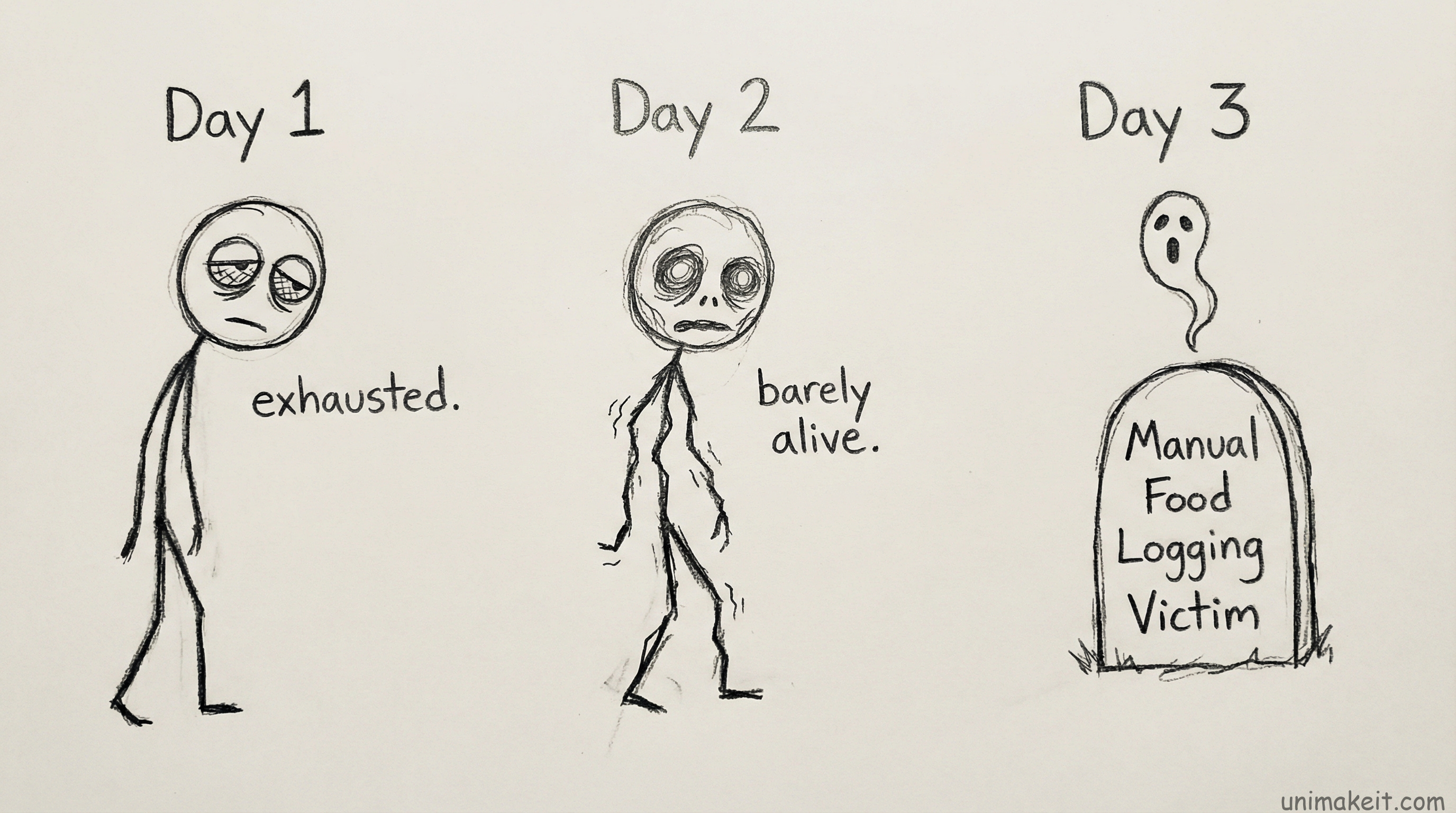
Most technical people would think: “Time to build a custom model!”
I certainly would have. Six months of gathering data, fine-tuning, debugging why it thinks an apple is tikka masala...
Zach did something different.
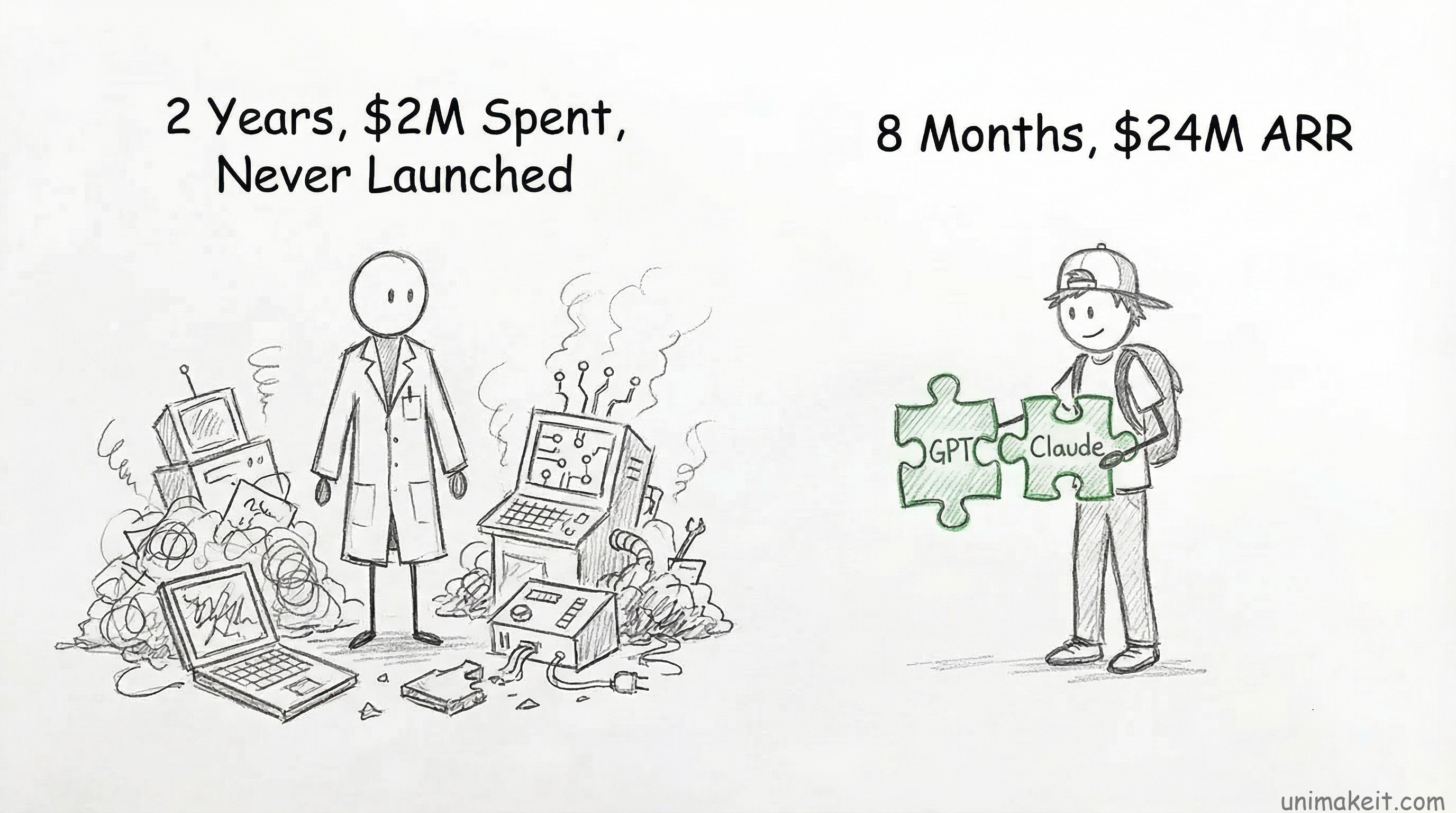
He just plugged OpenAI’s GPT vision model and Anthropic’s Claude vision model together. Added some RAG (Retrieval-Augmented Generation) so the models could double-check themselves. Done.
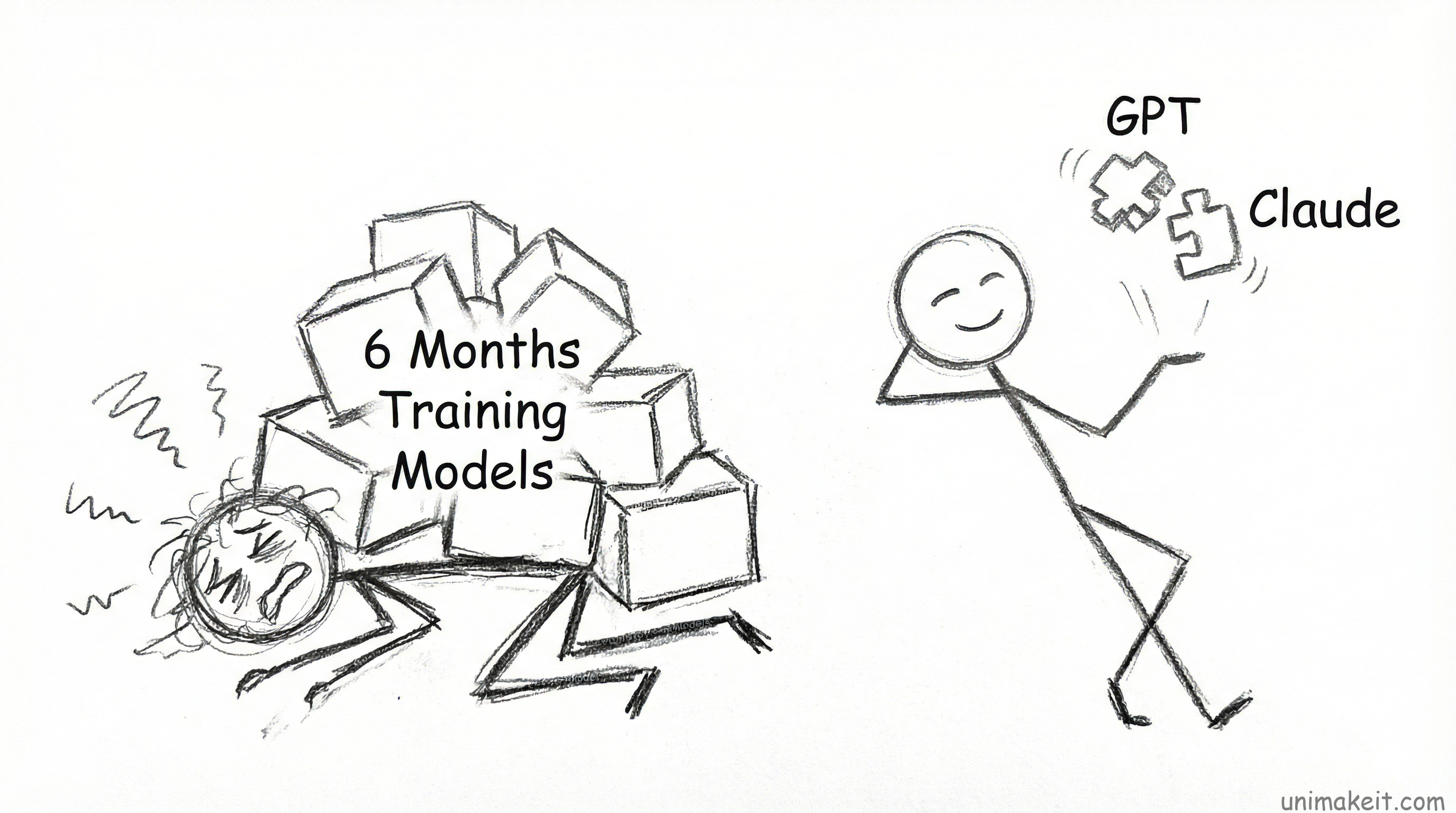
90% accuracy. Better than industry average.
Total time spent training custom models: Zero hours.Here’s what I didn’t understand until I saw this: The question isn’t “build or buy.” It’s “compose or compete.”
Trying to build better vision models than OpenAI is like trying to manufacture better electricity than your local power company. Sure, you could. But why would you?
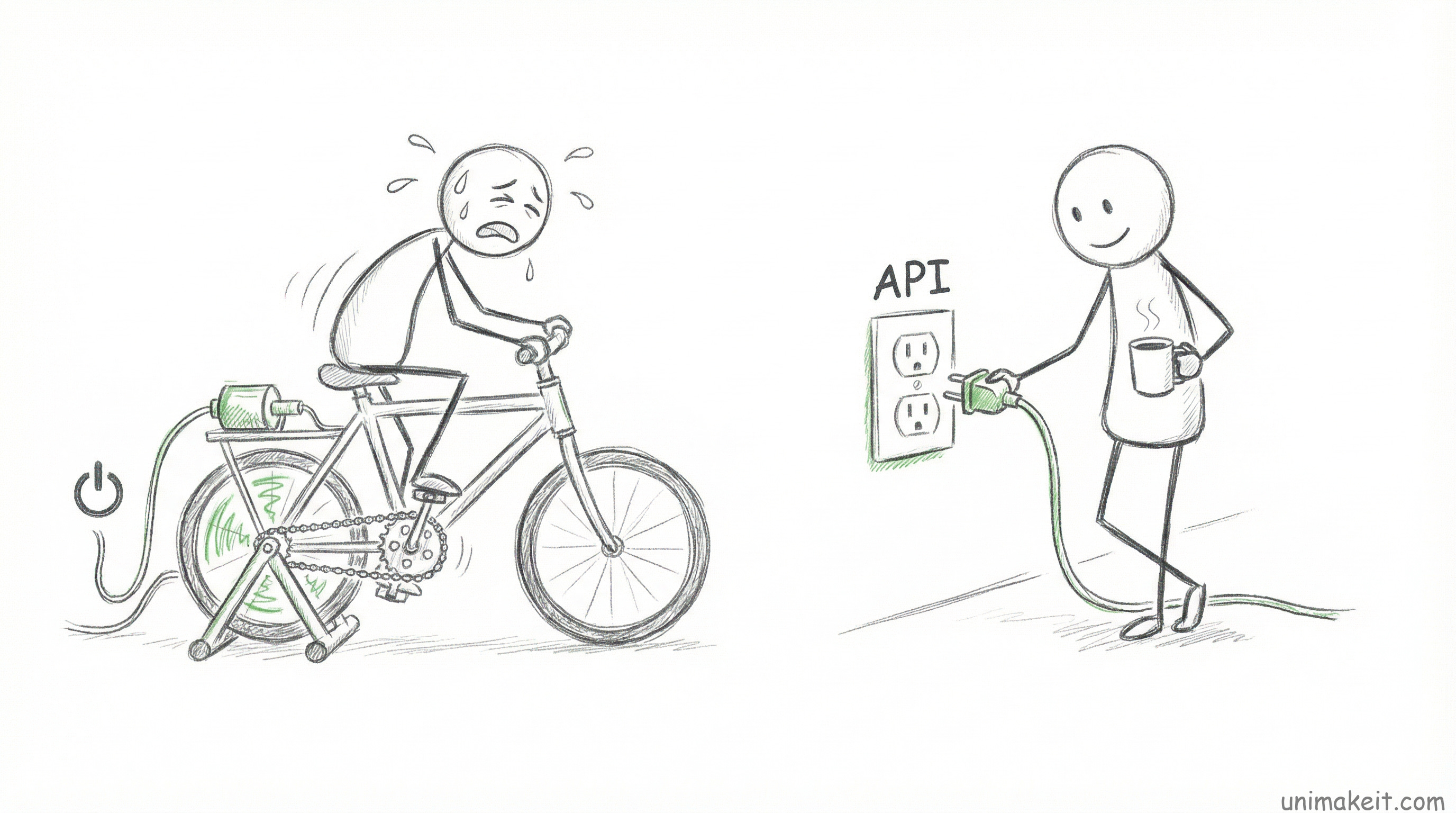
The companies competing on “better AI models” are burning through millions in compute costs. The companies competing on “better AI model composition” are four teenagers in a hacker house.
This creates a weird tradeoff most people miss:
If you build your own models, you own the technology but you’re competing with Google’s budget.
If you compose existing models, you own the application but you’re dependent on someone else’s API pricing.
Zach chose dependency. And hit $24M ARR in 8 months.
Meanwhile, there are startups that spent two years building custom models and never launched.
The hard part isn’t the AI anymore. It’s knowing what problem to solve and how to package it.
I spent so much time learning ML fundamentals that I missed the fundamental shift: In the age of model APIs, “knowing how to code AI” is less valuable than “knowing what to build with AI.”
Everyone has access to GPT now. Not everyone knows what to do with it.
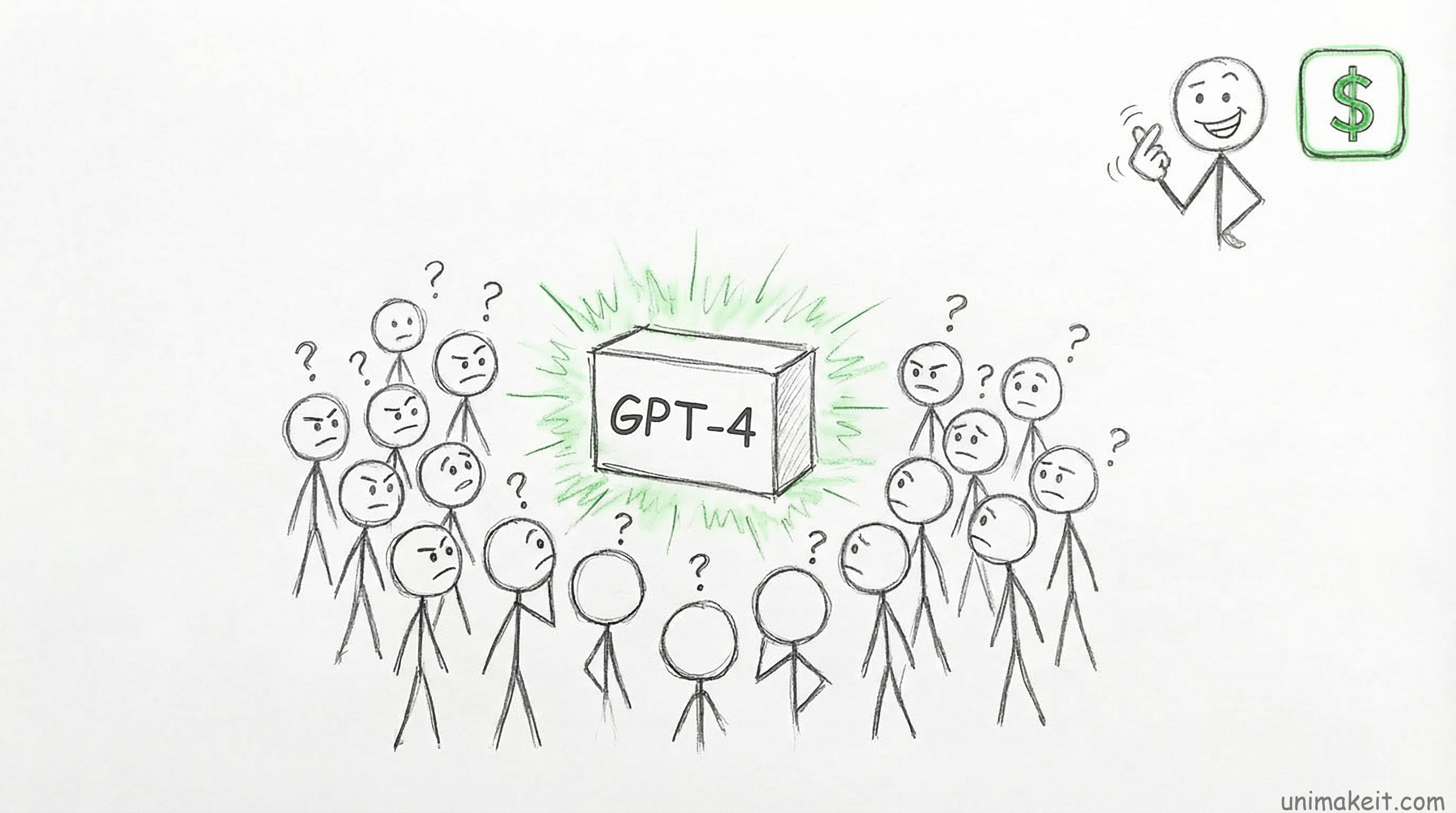
2. When $770K in Marketing Spend Is Actually Market Research
Cal AI spends $770,000 per month on ads and influencer marketing.
That’s almost their entire profit going right back out the door.
My first reaction: “Oh great, another startup hemorrhaging cash for vanity metrics.”
But look at how they spent it:
Phase 1 (Early days): Partner with fitness influencers on TikTok. Performance-based payment plus referral codes.
Phase 2 (After validation): Scale with TikTok Ads and Apple Search Ads.
See the difference?
Phase 1 wasn’t marketing. It was paying influencers to tell them if their product was any good.
If the app sucked, influencers’ followers wouldn’t convert. The referral codes would show that immediately. Cal AI would know within days whether they built something people actually wanted.
This is the opposite of what I thought marketing was.
I thought: Build product → Validate with users → Then market it.
They did: Market to users → Validation happens automatically → Scale the marketing that works.
The tradeoff here is subtle but important:
Traditional validation is cheap but slow. You talk to users, run surveys, do beta tests. It takes months to know if you’re building the right thing.
Marketing-as-validation is expensive but fast. You pay influencers to promote your product and watch what happens. You know within days.
Cal AI spent $770K to learn what most startups spend 18 months trying to figure out: Who actually wants this? How much will they pay? What messaging works?
By the time they scaled to paid ads, they already knew:
Which user segments converted best
What pain points resonated
How to position the product
What price points worked
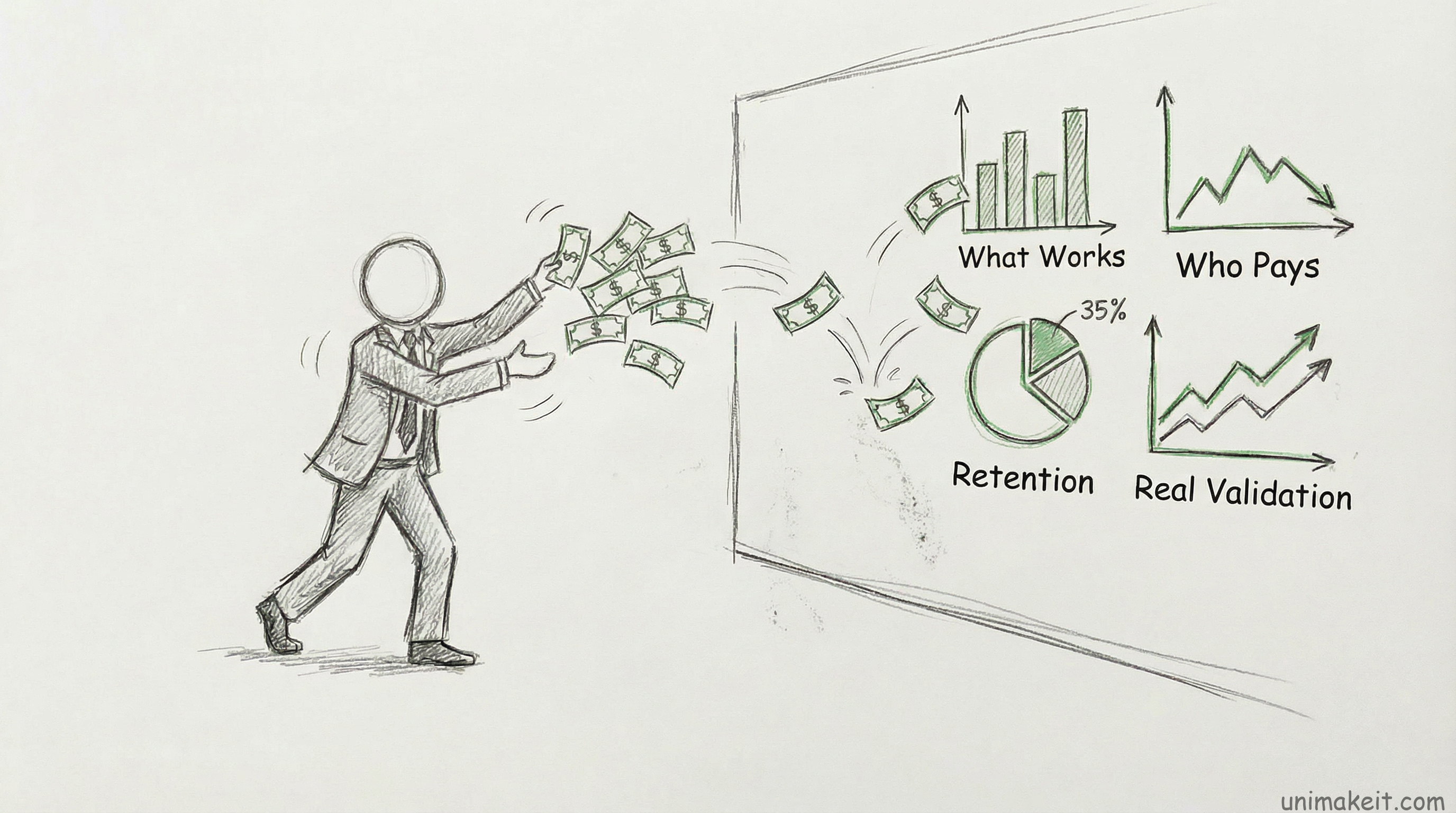
The expensive “marketing” in Phase 1 made the expensive marketing in Phase 2 way more efficient.
Here’s what clicked for me: Sometimes the fastest way to validate isn’t to build smaller—it’s to spend louder.
I keep trying to “validate cheaply” by talking to potential users, running surveys, building MVPs. But talk is cheap. Watching someone actually pull out their credit card? That’s real data.
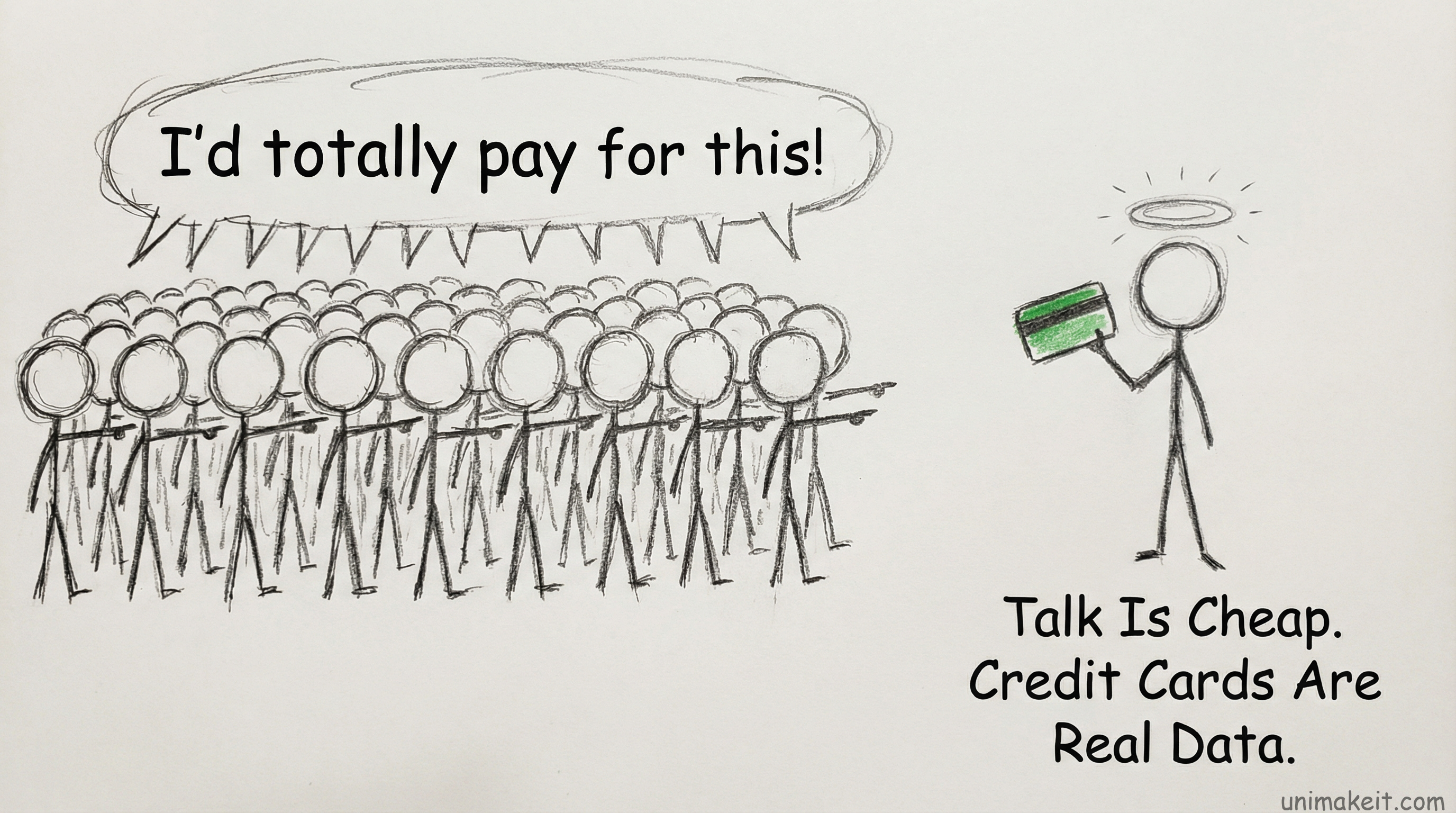
Cal AI’s “reckless” marketing spend was actually the most conservative move they could make. Because finding out your product is wrong after 6 months of careful validation is way more expensive than finding out after 2 weeks of paid traffic.
3. The Reddit Hates You, App Store Loves You Paradox
Reddit absolutely destroys Cal AI.
“Predatory pricing!” “Hidden fees!” “Scammy subscription traps!”
The complaints are everywhere. Long, detailed posts about how the app tricks people into subscriptions they didn’t want.
Meanwhile, App Store rating: 4.8 stars. 150,000+ reviews. 30%+ retention rate.
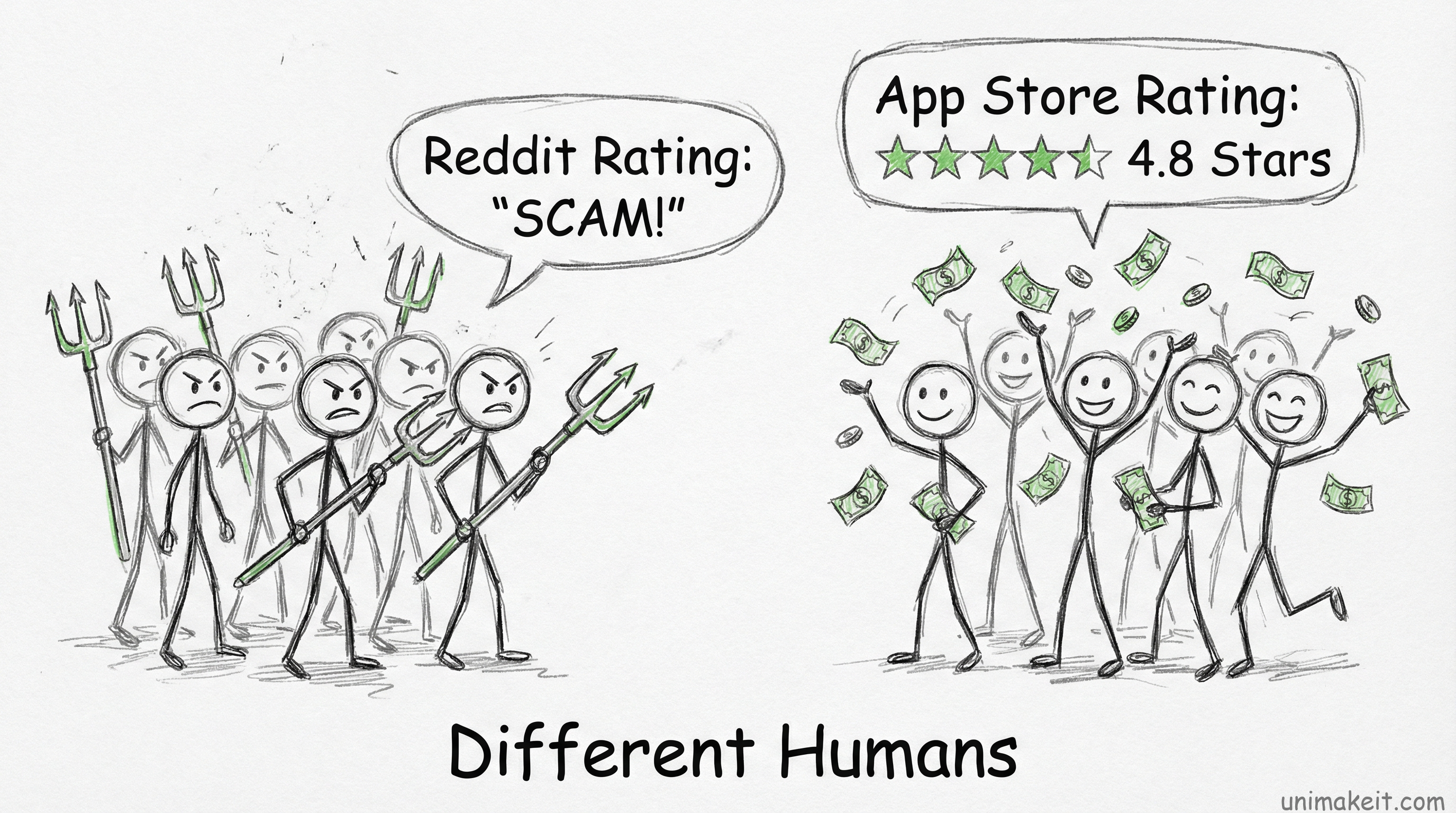
What’s happening here?
Most founders would panic at the Reddit backlash. Try to fix the pricing. Make it more transparent. Add more free features. Chase universal approval.
Cal AI looked at the data and basically said: “Cool, Reddit isn’t our customer.”
They designed everything for people who value convenience over cost optimization:
Hide the price until after onboarding (Reddit hates this)
Use dynamic pricing based on user behavior (Reddit really hates this)
Make the free version basically useless (Reddit loses their minds over this)
Auto-charge after 3-day trial (Reddit wants to burn the building down)
But here’s the thing: The people complaining on Reddit and the people paying $49.99/year are two completely different humans.
Reddit users want maximum value per dollar. They’ll spend 30 minutes researching alternatives to save $5.
App Store users want minimum friction. They’ll pay $50 to avoid spending 30 seconds manually logging food.
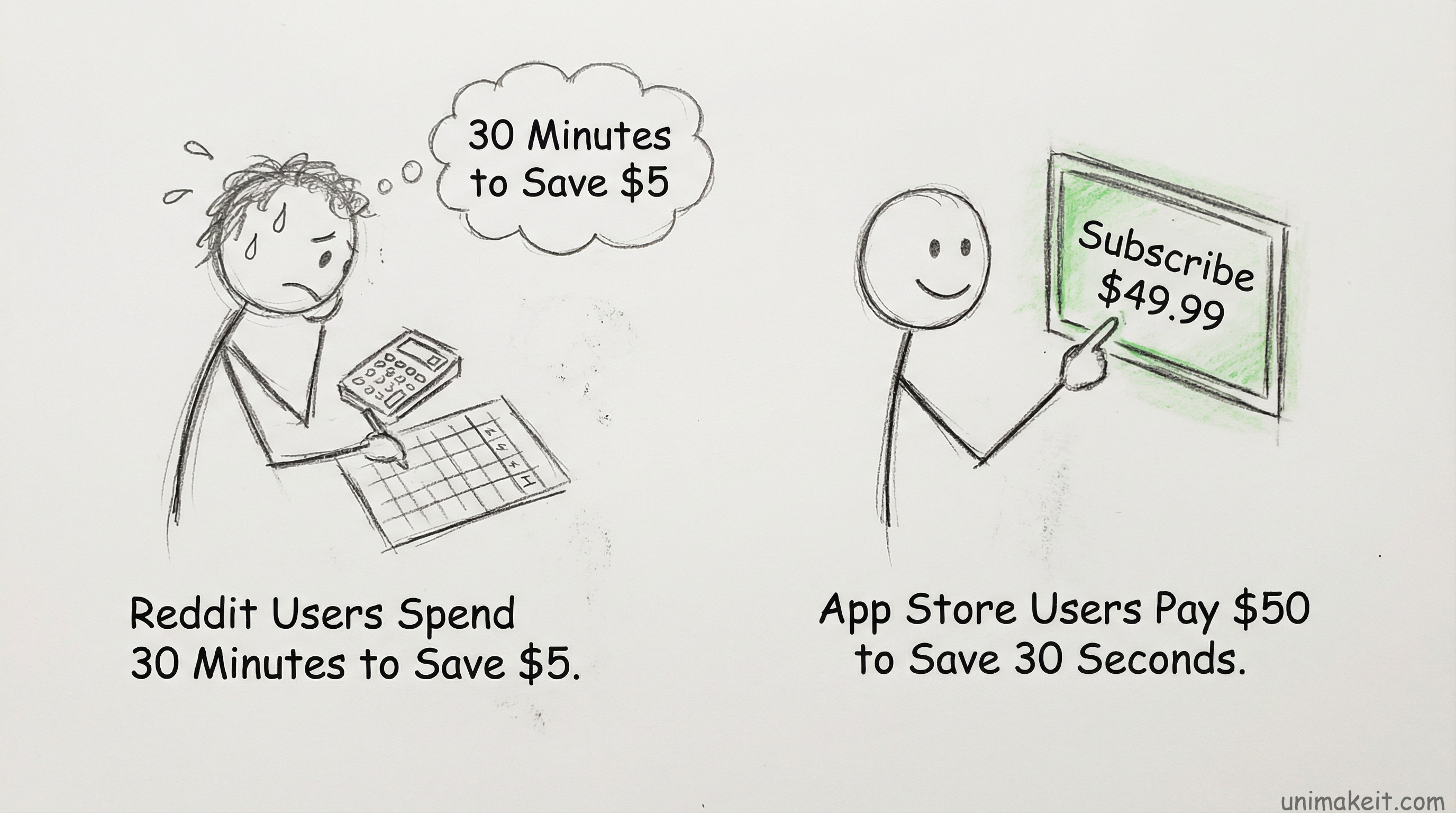
Cal AI picked the latter and optimized everything for them. Made the experience so smooth that the price doesn’t matter. Built in just enough behavioral economics (sunk cost fallacy, dynamic pricing, fake freemium) to convert that audience at scale.
You can’t serve both audiences.
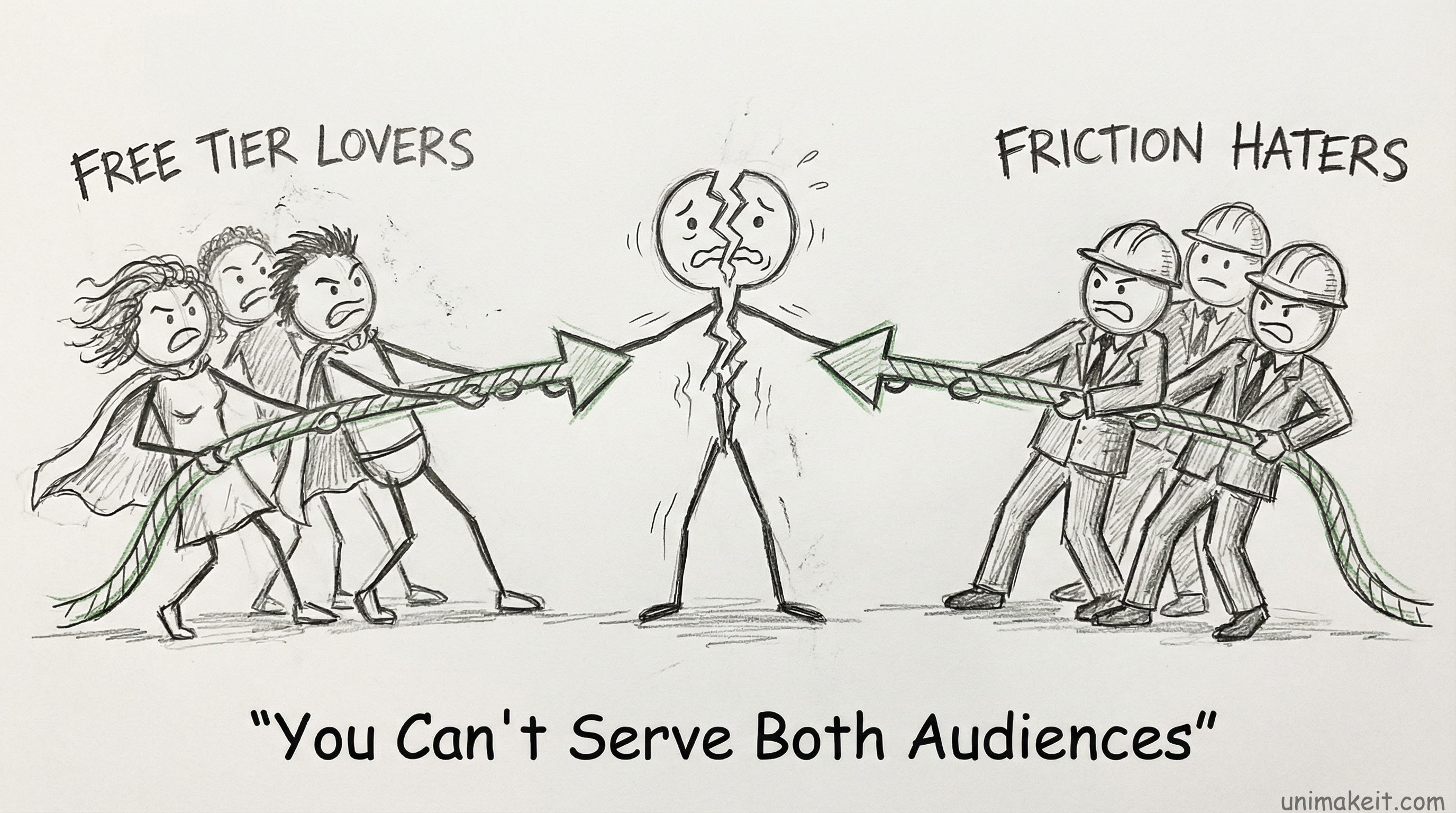
If you make Reddit happy with transparent pricing and generous free tiers, you lose the friction-hating users who were going to pay anyway. They need a little push.
If you optimize for conversion, you get Reddit threads full of angry people. But those people were never going to pay the premium tier price anyway.
This was hard for me to accept because I’m a Reddit person. I research everything. I optimize costs. I get offended by hidden pricing.
But I am not the target market for most consumer apps.
The real lesson: Controversy from the wrong audience is fine. Silence from your actual audience is death.
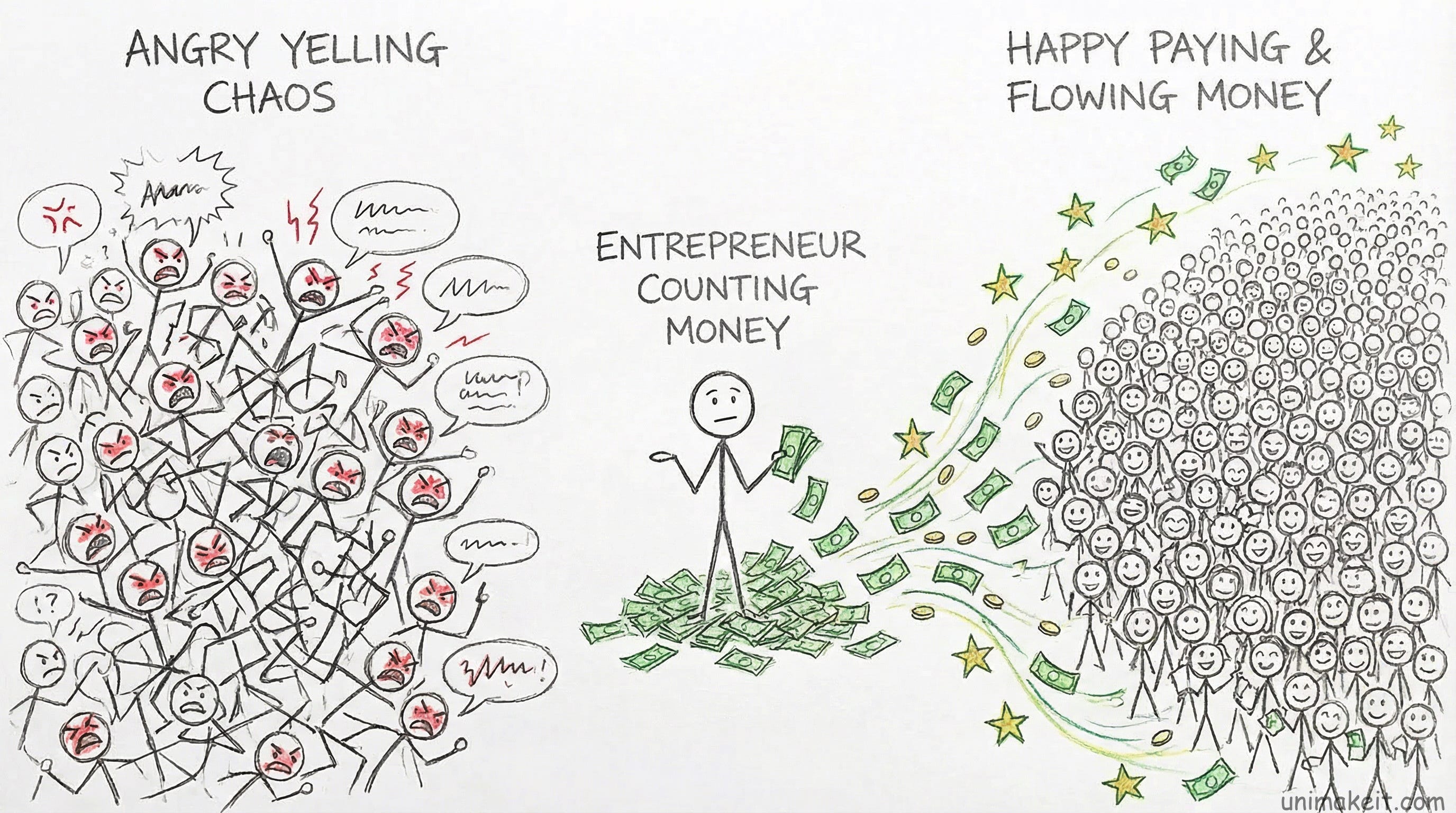
Cal AI would rather have 1,000 Reddit threads calling them a scam and 500,000 happy paying users than 1,000 Reddit upvotes and 5,000 users unwilling to pay.
They picked their lane. Optimized ruthlessly. Ignored everyone else.
Meanwhile, I’m over here trying to make everyone happy and ending up with a product nobody loves.
The Pattern I Keep Missing
So here I am, trying to build the “right way.” Custom models. Careful validation. Fair pricing. Universal appeal.
And this 18-year-old just composed some APIs, spent like a drunken sailor on marketing, pissed off half the internet, and made $24M ARR.
The pattern isn’t about being young or lucky or unethical.
It’s about understanding that the rules changed. Building your own AI isn’t the flex anymore. Solving a problem people will pay for is the flex. And sometimes solving it fast and dirty beats solving it perfect and slow.
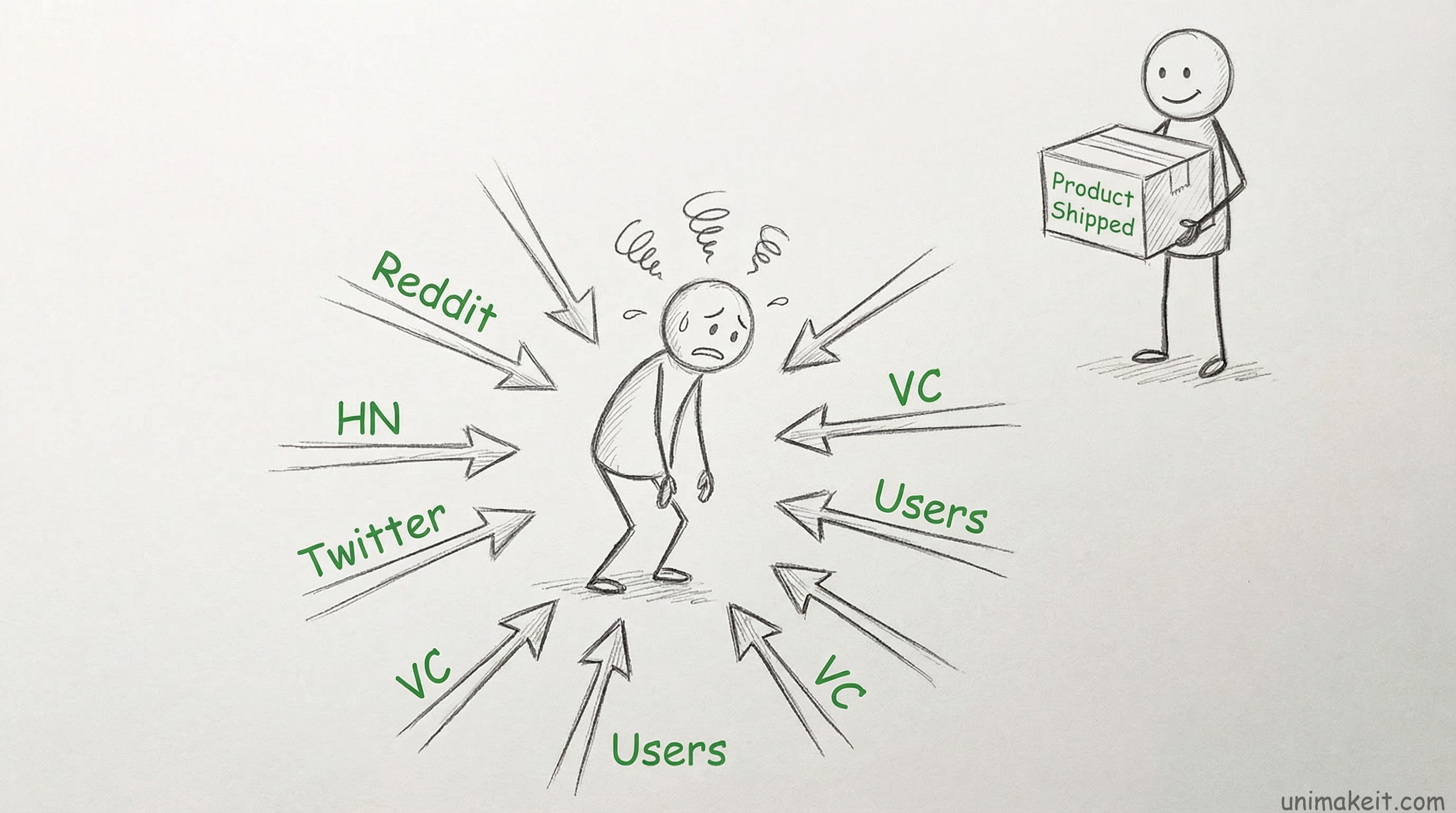
The future belongs to people who can see past what they “should” do and just ship the thing that works.
Even if Reddit hates it.
Links:
https://x.com/zach_yadegari
https://www.calai.app
https://www.reddit.com/r/nutrition/comments/1in01pp/anyone\_have\_success\_using\_cal\_ai
https://techcrunch.com/2025/03/16/photo-calorie-app-cal-ai-downloaded-over-a-million-times-was-built-by-two-teenagers
https://lifehacker.com/health/ai-powered-calorie-counting-apps-worse-than-expected
https://www.cnbc.com/2025/09/06/cal-ai-how-a-teenage-ceo-built-a-fast-growing-calorie-tracking-app.html
https://www.eesel.ai/blog/cal-ai-pricing
https://dataintelo.com/report/calorie-counting-app-market


