

Morning, CEO!
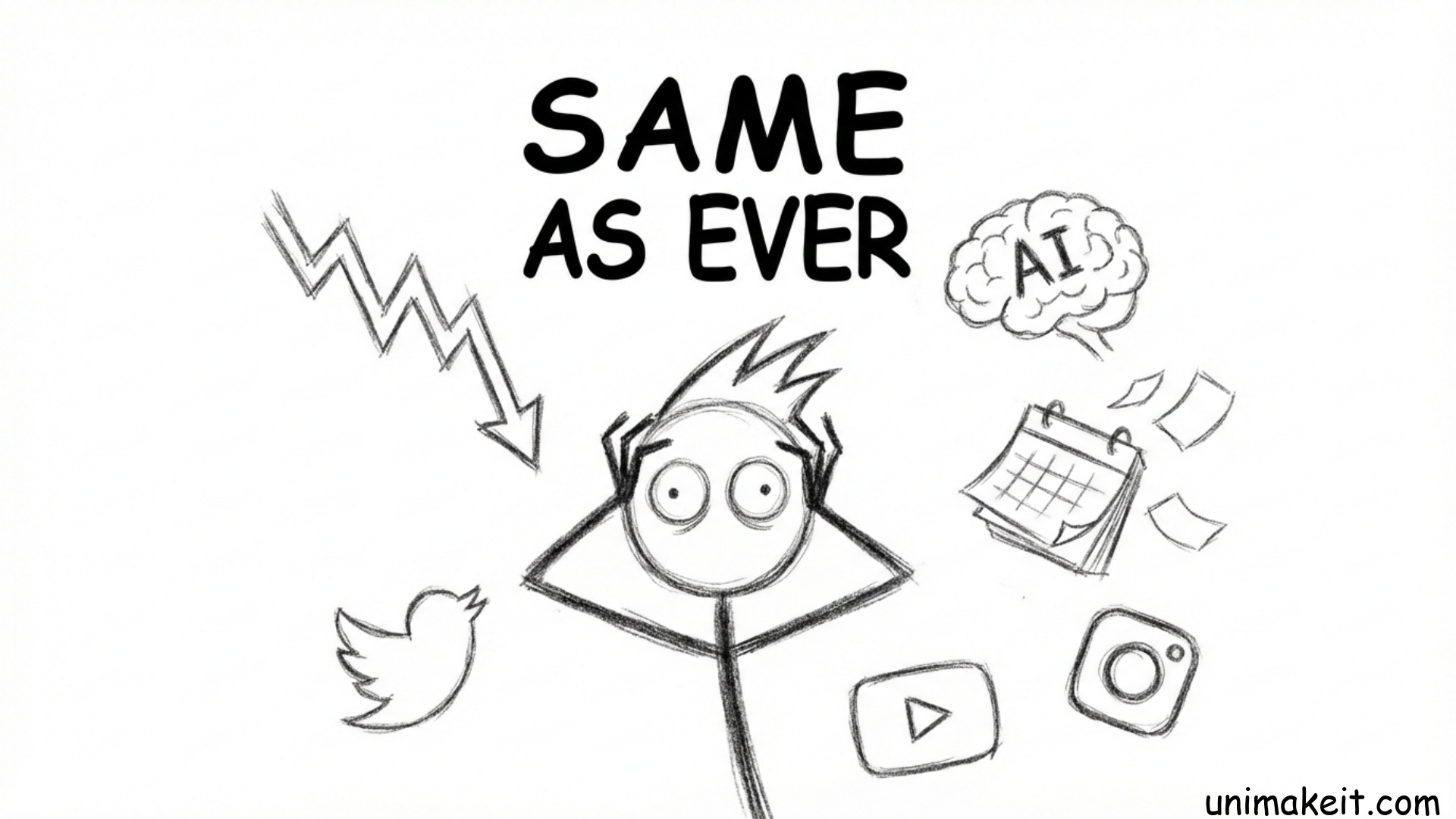
It’s 2026. My AI “staff” is currently writing code faster than I can think, the market is doing interpretive dance, and I am sitting here trying to remember how to be a human.
If you’re anything like me—a socially awkward introvert trying to run the business of “Me”—you’re probably exhausted by the constant updates.
So today, we’re talking about Morgan Housel’s Same as Ever recently. It’s a book about the stuff that doesn’t change when the world goes crazy.
1. Your Crystal Ball is Actually a Magic 8-Ball (And it’s broken)
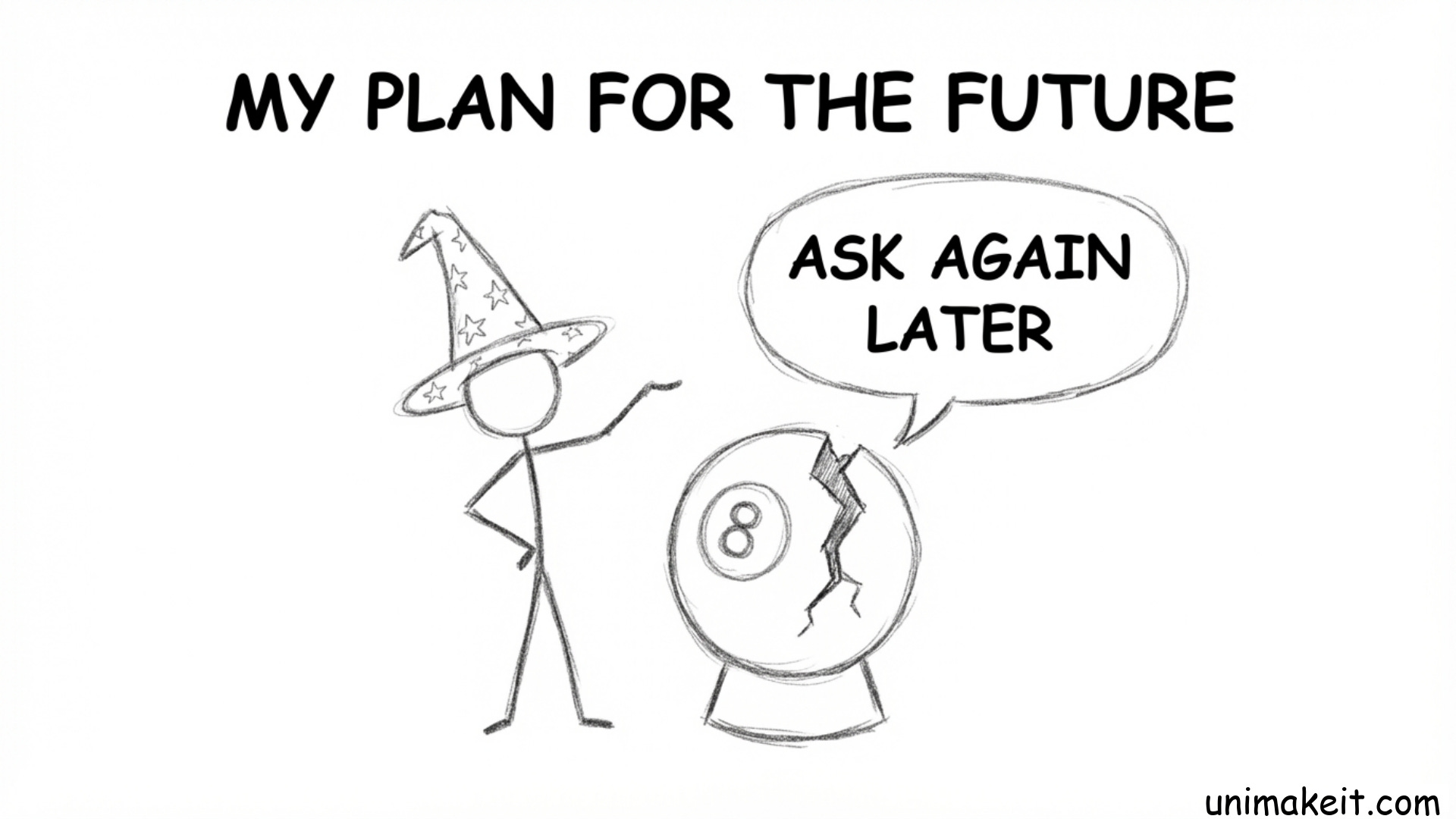
I have a confession. I spend roughly 40% of my CPU cycles trying to predict the future.
“If I launch this Substack post on Tuesday at 9 AM, the algorithm will love me.”
“If I learn this specific tech stack, I will be safe forever.”
Morgan Housel would look at my spreadsheet of predictions and gently throw it in the trash.
He tells a story about the Lusitania. You know, the big ship that sank in 1915 and dragged the US into WWI? That war changed everything—Hitler, nukes, the internet, this newsletter.
But the Lusitania only sank because a German sub happened to spot it. And the sub only spotted it because the ship was moving a tiny bit slower than usual.
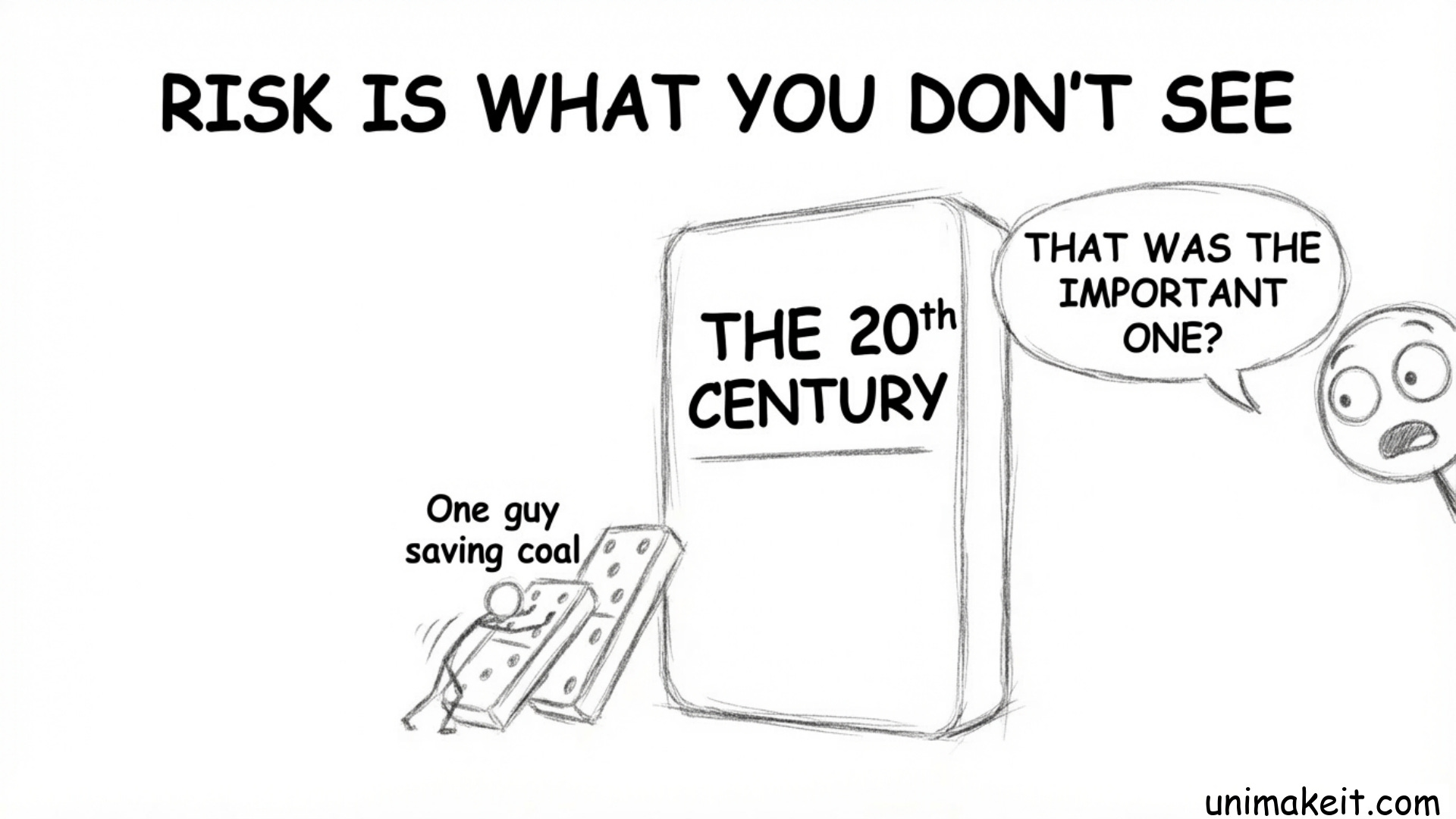
Why was it slow? Because one guy—the ship’s captain—turned off a boiler room to save some coal.
If that one guy hadn’t tried to save a few bucks on coal, the 20th century looks completely different.
We are terrible at predicting the future because history is just a conga line of “One Guy Saving Coal” moments.
I call this the “Boiler Room Error.”
We spend all our time analyzing the competitors we can see, the market trends we can read about, and the risks that have names.
But Housel says: “Risk is what you don’t see.”
If you can see it, you prepare for it. If you prepare for it, it’s not a risk anymore; it’s a to-do list item.
The thing that will actually derail your year isn’t AI taking your job. It’s something stupid and invisible. Like your back giving out because you bought a cheap chair, or a random law changing in a country you can’t find on a map.
Stop trying to be a Prophet. Start being a Prepper.
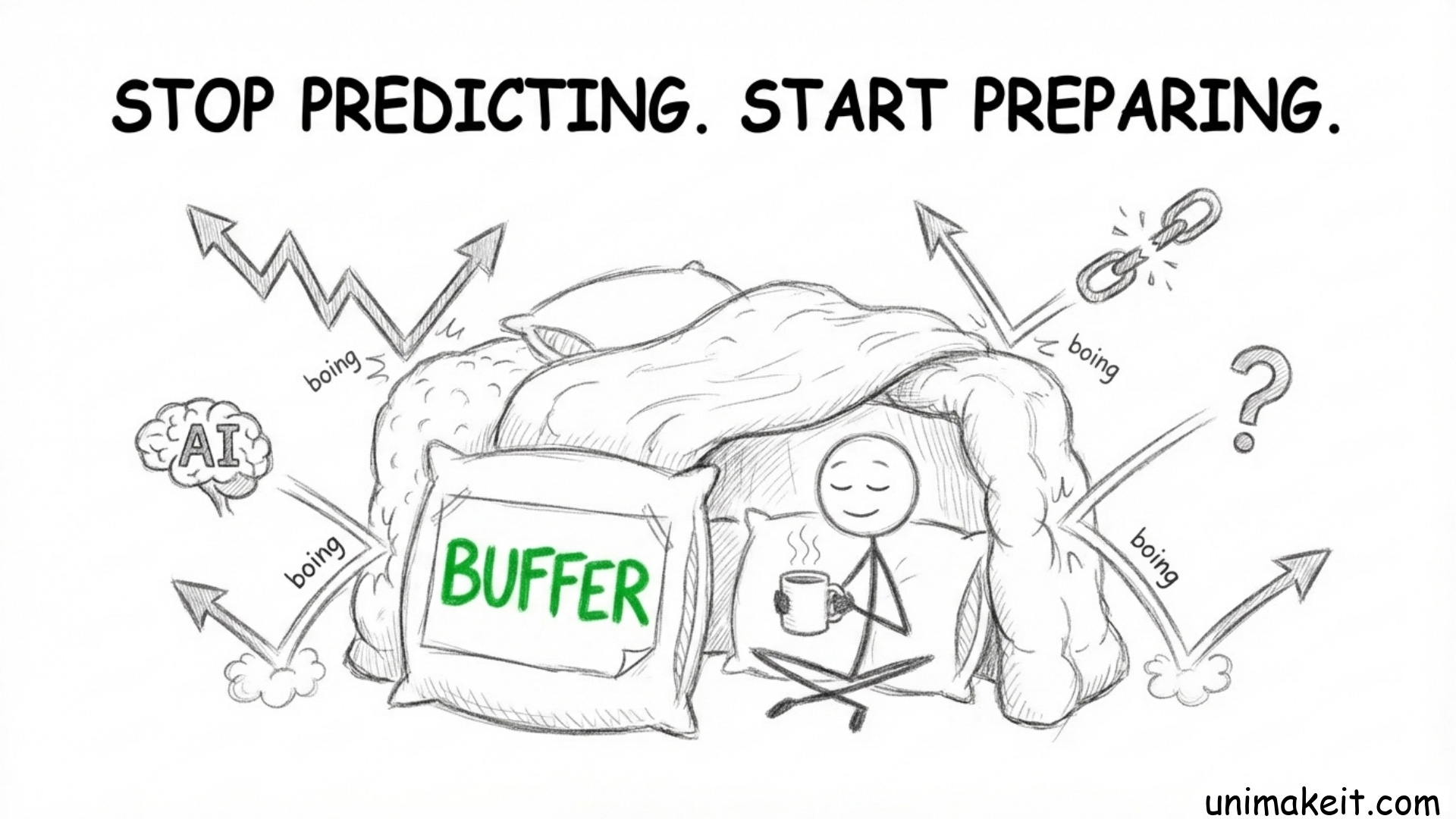
Don’t optimize for the “most likely” future. Optimize for a “maximum survival” future. Build a buffer so thick that even if the Boiler Room Guy flips the wrong switch, you’re still standing.
2. The “Exploding Fish” Theory of Career Growth
My brain has a resident terrible advisor. I call him the Efficiency Goblin.
The Efficiency Goblin loves shortcuts. He sees a “30 Days to Master Rust” course and screams “YES! DO THAT! WE DON’T HAVE TIME FOR THE HARD WAY!”
He wants me to scale my output, double my subscribers, and optimize my sleep schedule by tomorrow.
But Housel hits us with some biology that shuts the Goblin up.
Scientists did a test with fish.
Group A: Put in cold water. They grew slowly.
Group B: Put in warm water. They grew super fast.
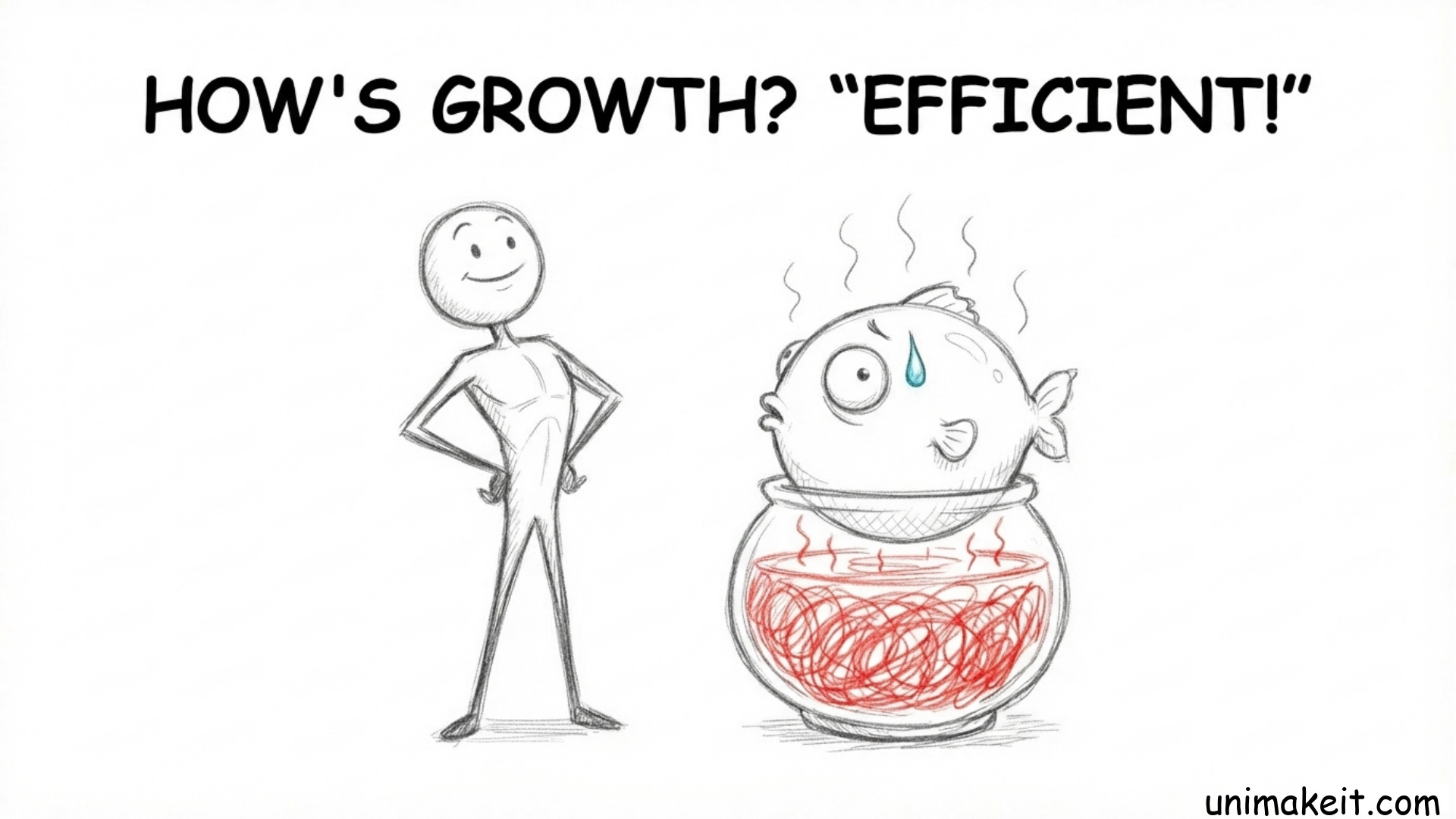
Later, they put both groups in a normal tank.
The slow-growth fish lived long, happy fish lives.
The fast-growth fish? They died. Immediately.
Why? Because when you grow too fast, your body uses all its resources for expansion and zero resources for repair. Their bones and organs were basically made of papier-mâché.
Efficiency is often just a fancy word for “fragile.”
In our careers, we look for hacks. We want the title without the politics, the salary without the stress, the audience without the bad first drafts.
But Housel reminds us: “It’s supposed to be hard.”
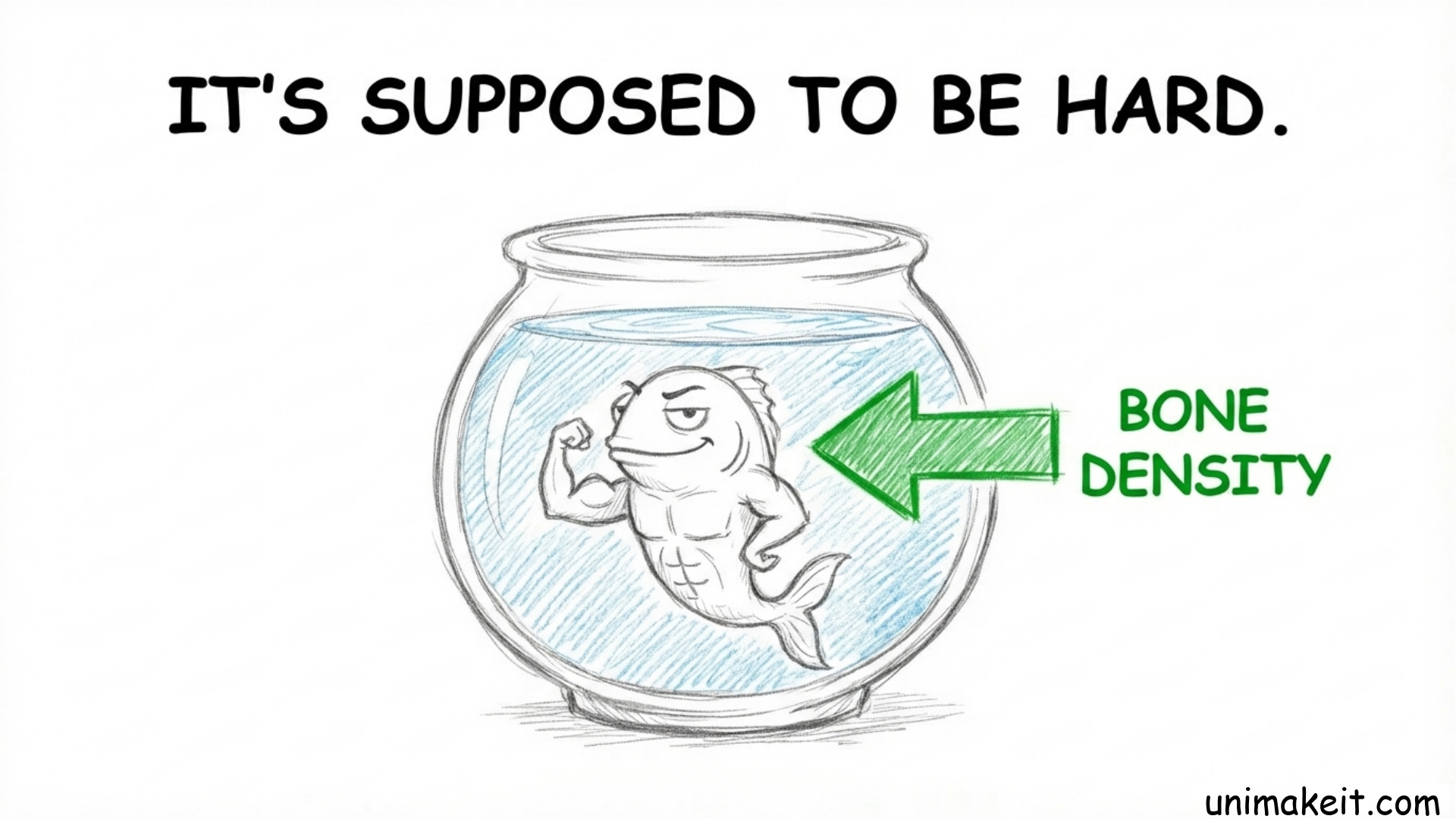
If your “Agency of One” is growing effortlessly, if everything feels easy and efficient, you might be a warm-water fish. You aren’t building bone density; you’re just getting puffy.
A good idea—or a good career—that accelerates too fast becomes a bad idea.
Embrace the “Inefficiency.”
The hours you spend struggling with a problem? That’s not wasted time. That’s bone density.
The slow growth of your client base? That’s structural integrity.
The shortcut isn’t a bridge; it’s a trap door. Take the stairs.
3. The Paranoia of the Survivor
I consider myself an optimist. I think things will work out! (Mostly because the alternative is curling up in a ball under my desk, which is bad for my posture).
But Housel introduces us to a weird concept: The Stockdale Paradox.
Admiral Stockdale was a POW in Vietnam. He was tortured for years but made it out sane.
When asked who didn’t make it out of the camp, he gave a surprising answer: “The optimists.”
The optimists were the ones who said, “We’ll be out by Christmas.”
Christmas came. They were still in a cell.
Then they said, “We’ll be out by Easter.”
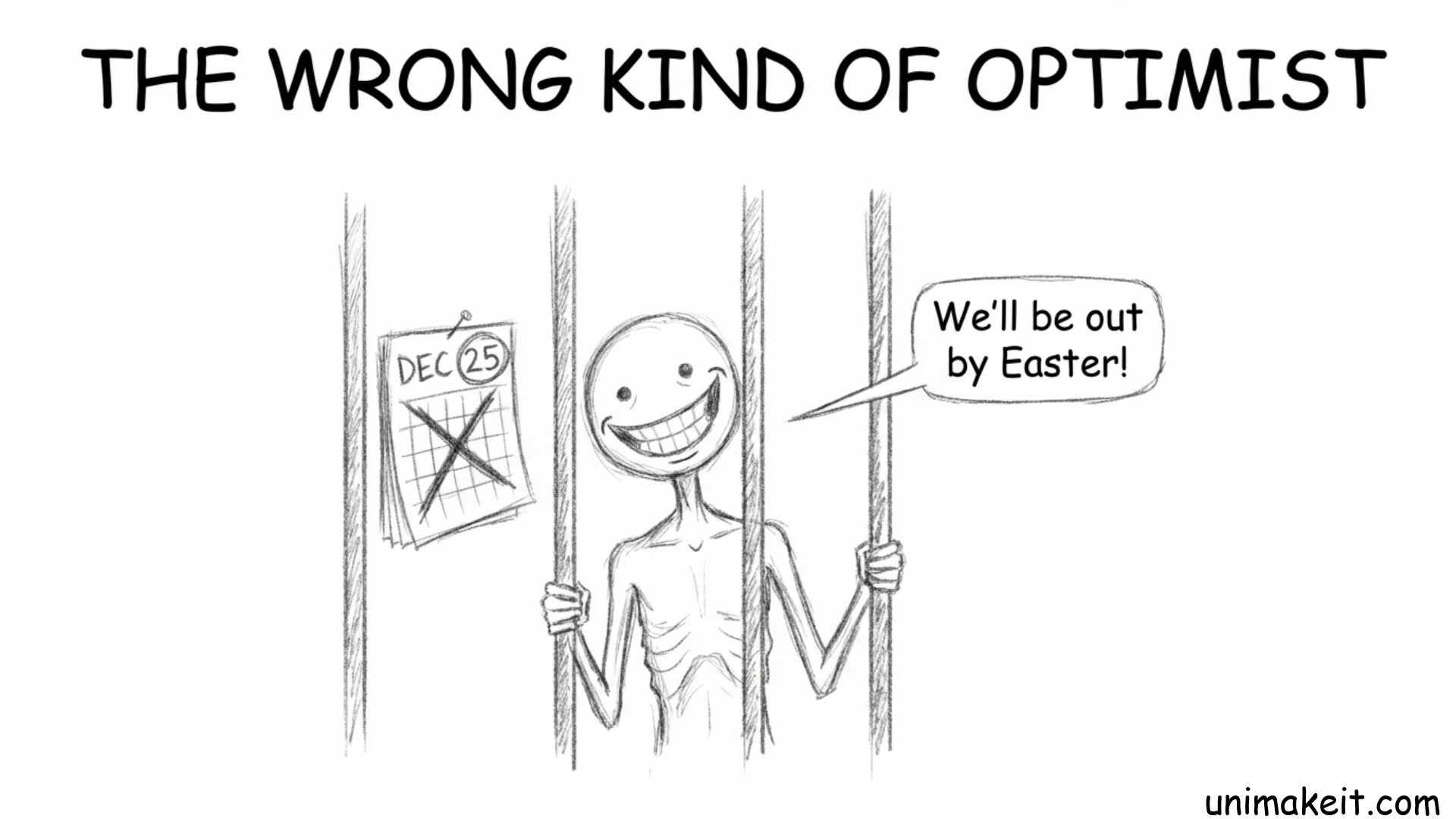
Easter came. Still in a cell.
Eventually, they died of a broken heart.
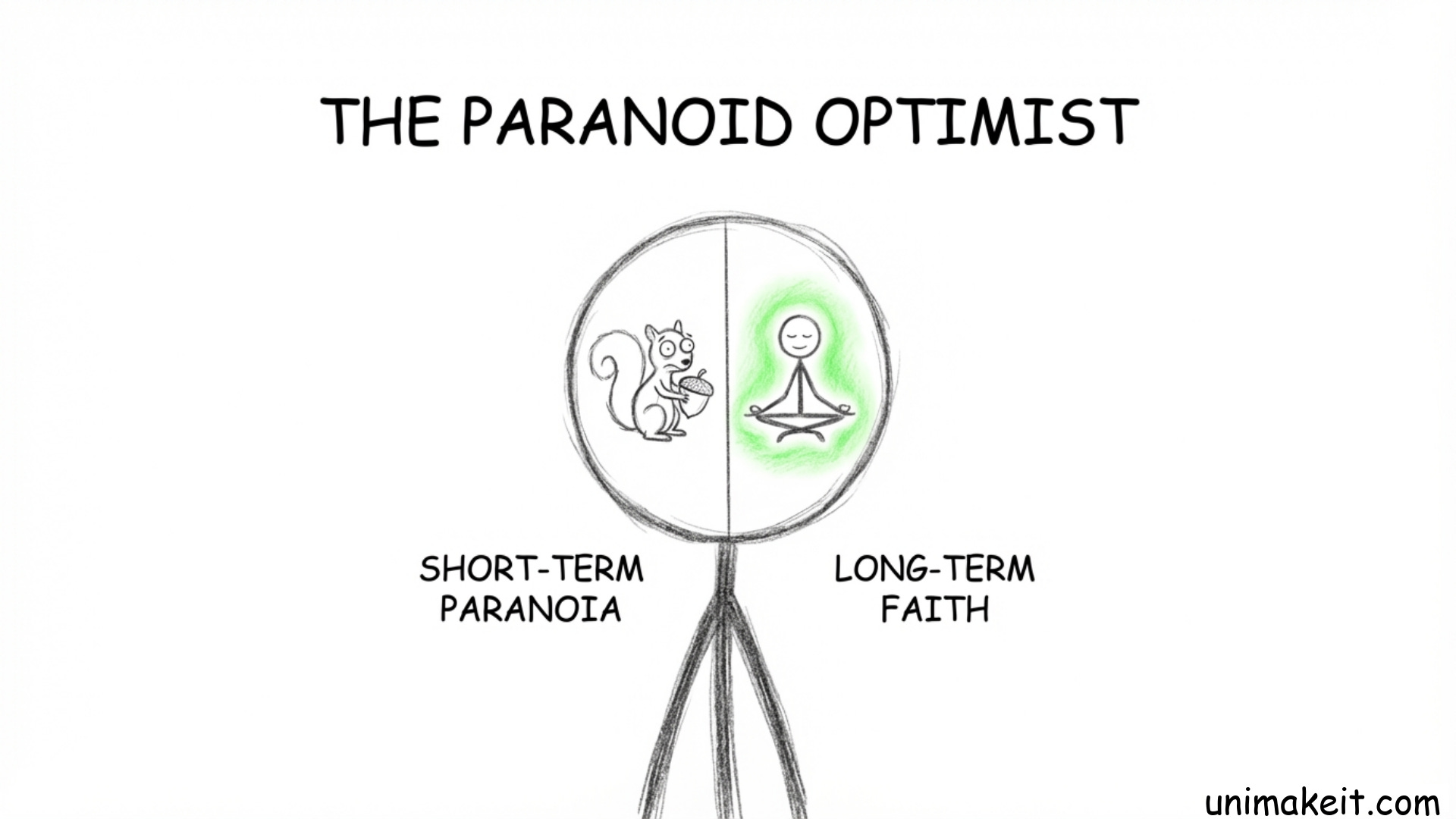
Stockdale survived because he held two opposing thoughts in his head at the exact same time:
Long-term Faith: “I will prevail in the end.”
Short-term Paranoia: “I am not getting out by Christmas, and today is going to be absolute hell.”
This is the hardest mental gymnastics for us to perform.
In your career, you need to be bi-polar (in a strategic sense).
If you are only a pessimist, you’ll never launch the product because “the economy is bad.”
If you are only an optimist, you’ll run out of cash in six months because “sales are just around the corner!”
You need to be a Paranoid Optimist.
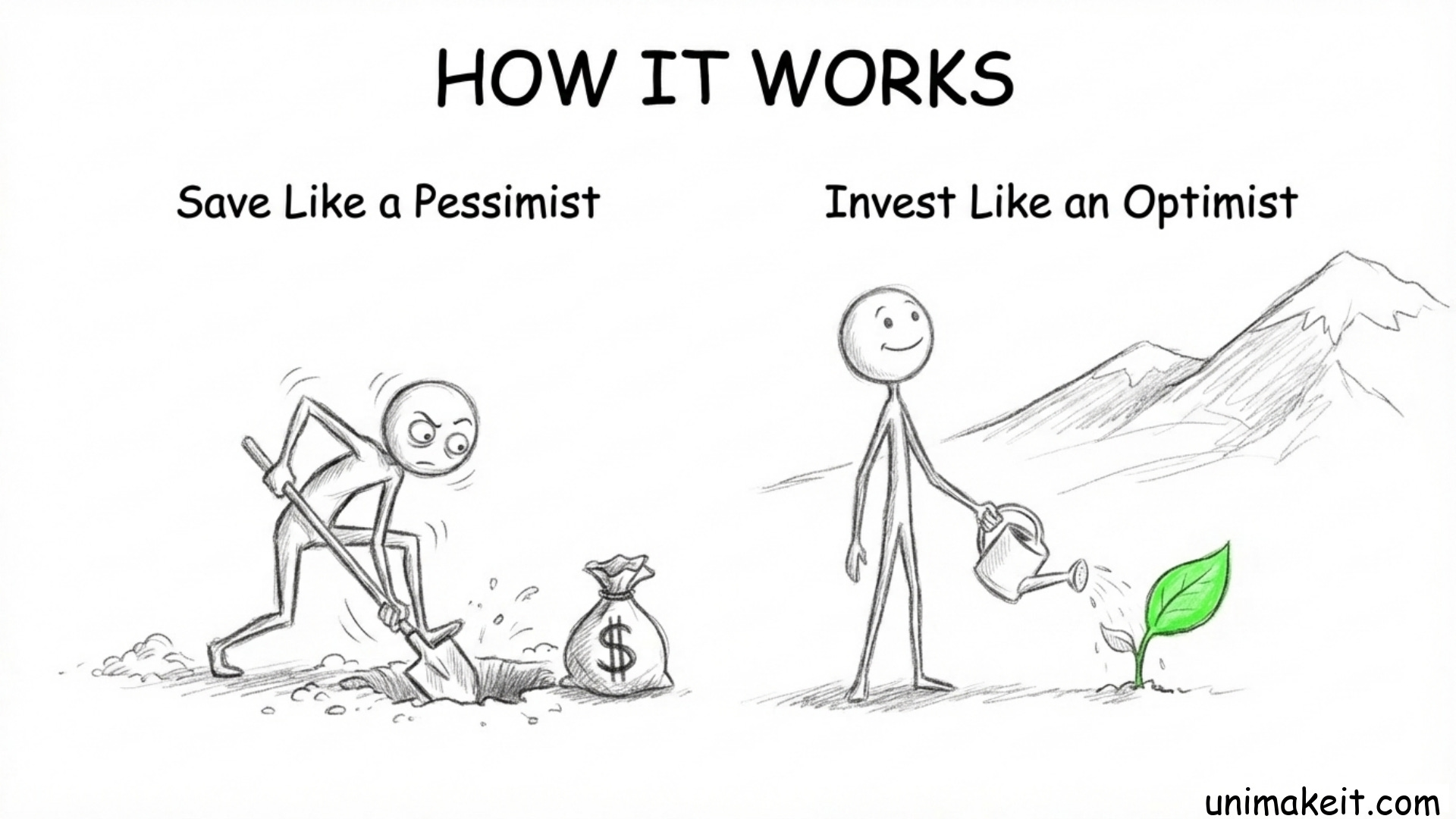
Save like a Pessimist: Assume the client will fire you. Assume the AI will get better. Assume your car will explode. Hoard cash and skills like a squirrel preparing for a nuclear winter.
Invest like an Optimist: Despite the hoarding, keep betting on yourself. Keep learning. Keep pitching. Belief that in 10 years, you’ll be on top of the mountain.
To wrap this up:
It’s 2026. The world is noisy.
But the math of a good life is actually pretty simple. Housel gives us this equation:
Happiness = Results - Expectations
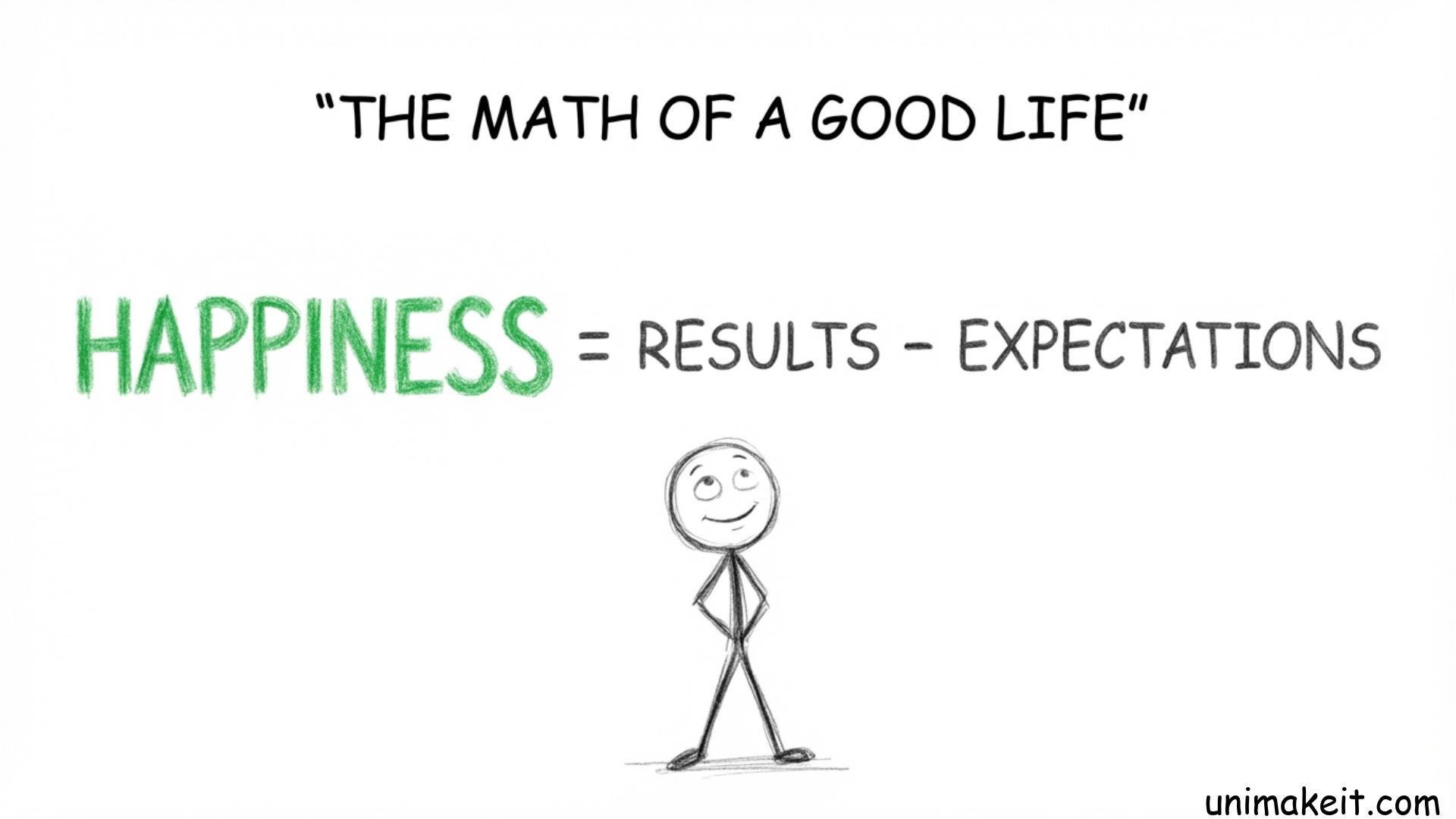
If you expect 2026 to be predictable, easy, and linear, you are going to have a bad time.
But if you expect it to be a chaotic mess that requires preparation, hard work and the mindset of a survivor?
You might just be the happiest person in the room.
Links:
https://www.morganhousel.com
https://www.amazon.com/Same-Ever-Guide-Never-Changes/dp/B0C1HRH2RH


