


Morning, CEO!
I just finished a book that made me rethink every career decision I’ve ever made.
It’s by a Nobel Prize winner who spent decades studying why smart, capable people end up with lives they didn’t really choose.
Turns out, the problem was never about what we want.
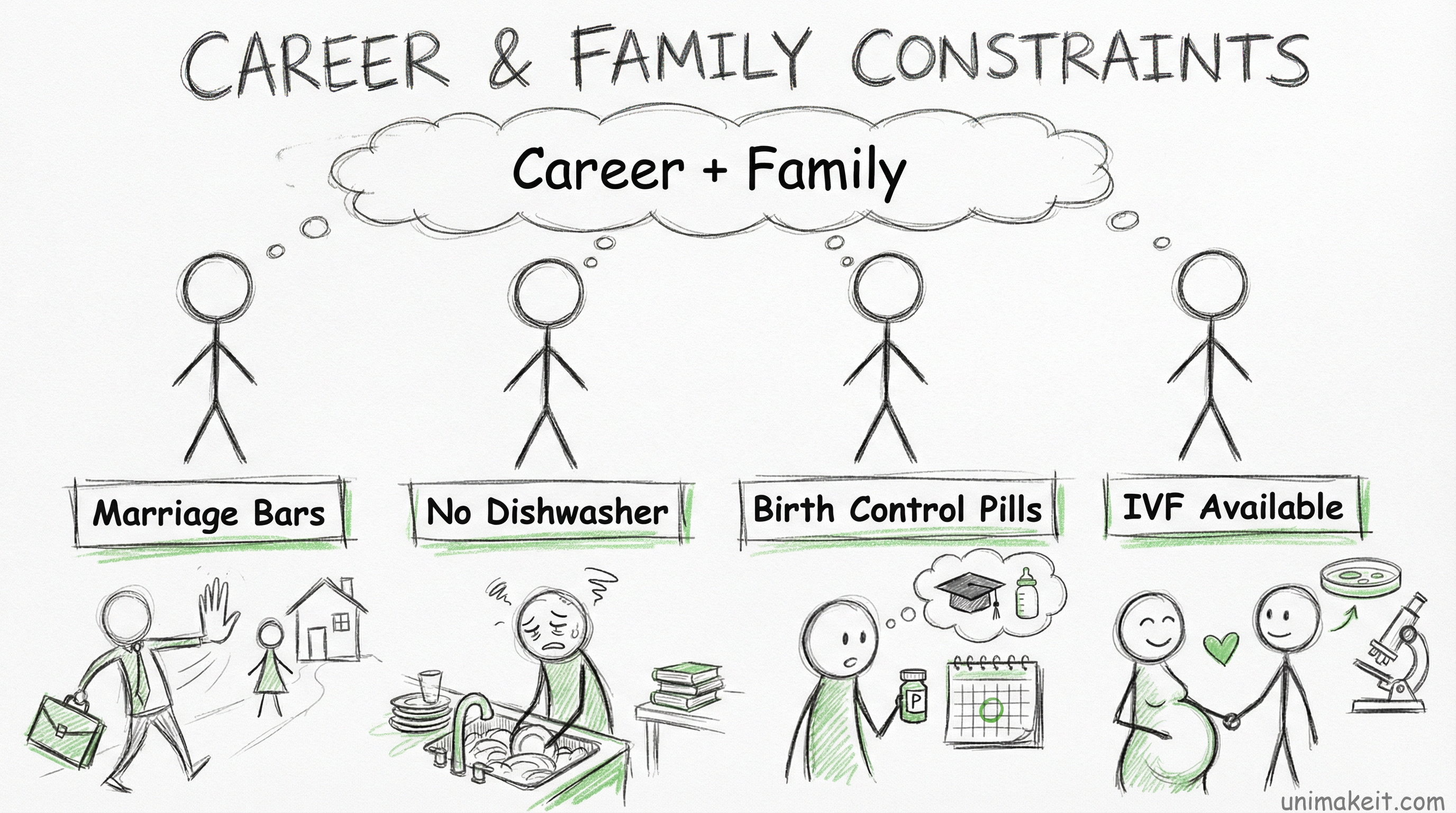
The real culprit? The invisible constraints we’re all operating under. And once you see them, you can’t unsee them.
The Constraint You Didn’t Know Was Running Your Life
Here’s a brain-bender: In 1900-1920, the first generation of college-educated women had the LOWEST marriage and birth rates of any generation since.
This makes no sense. Earlier times = more traditional = everyone married young, right?
Nope. Half never had kids. A third never married.
Claudia Goldin (2023 Nobel laureate) studied five generations of educated women from 1878-1978. What she found applies to anyone trying to build a career and a life at the same time.
Each generation wanted roughly the same thing: meaningful work AND a personal life. But their outcomes were wildly different.
Why? Because what changed wasn’t their preferences. It was their constraints.
Generation 1 faced “marriage bars” – actual policies banning married women from certain jobs. Plus no washing machines, so laundry took 6 hours. Choose one: career or family.

Generation 3 (the Baby Boom moms) got dishwashers and no marriage bars. Suddenly having both seemed possible! Marriage rate: 90%+. They’d work, have kids, quit, return later to “low-risk jobs” like teaching.
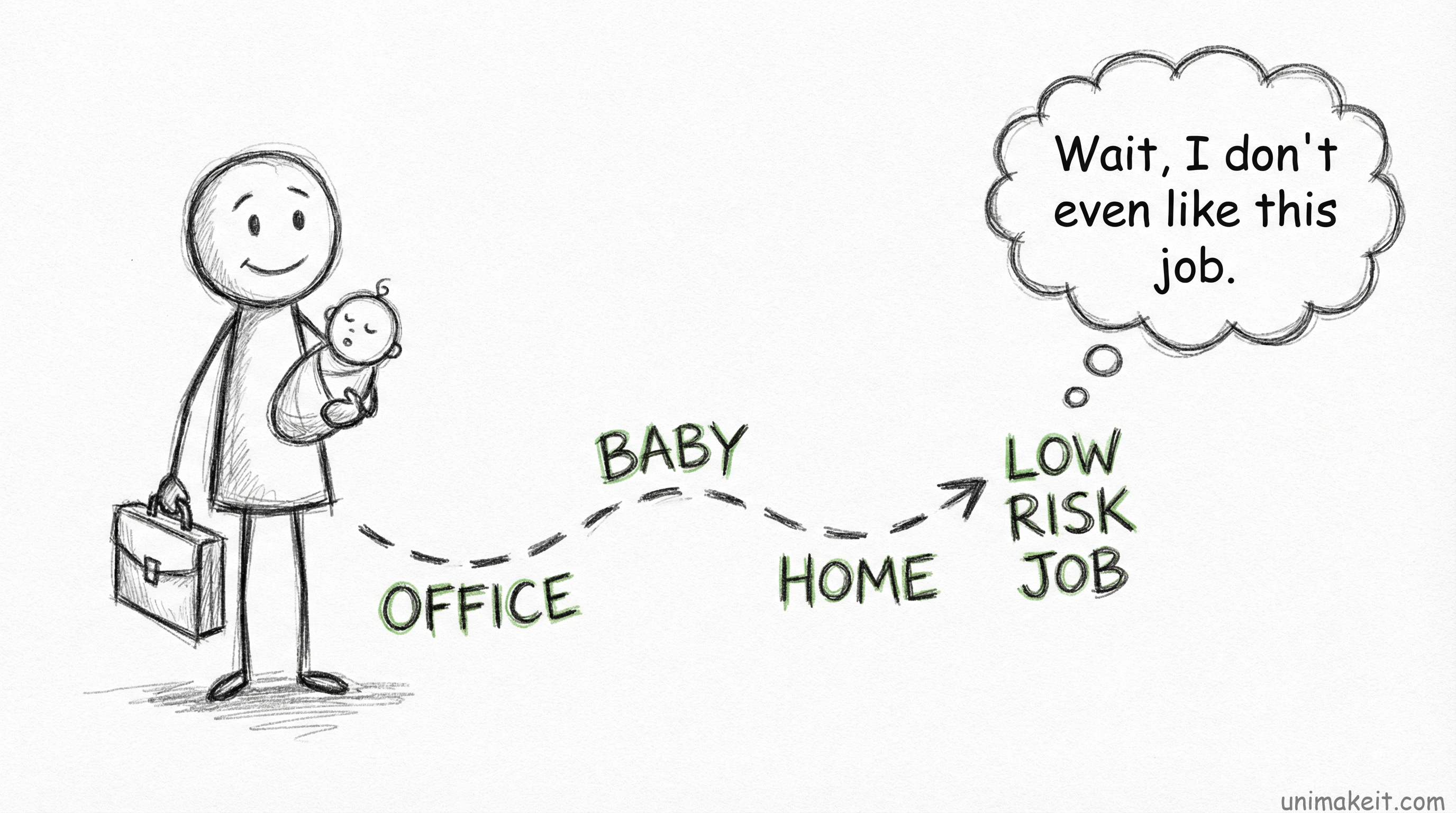
Generation 4 watched their moms do unfulfilling work and said “hard pass.” They wanted law, medicine, finance. They got birth control pills. They crushed their careers. Then looked up at 45 and... 28% had no kids. Oops.

Generation 5 learned from Gen 4’s mistakes. They got IVF and better maternity leave. Result: late marriage (age 27) but kids too (only 17% childless).
The pattern: People don’t actually change that much. But when the constraints change, suddenly different choices become possible.
This matters for you because you’re operating under constraints you probably can’t see. Your industry’s norms. Your company’s unwritten rules. The way your role is structured. The tech available to you.
You think you’re choosing based on preferences. But you’re mostly just optimizing within your constraints.
Your Job Might Be “Greedy” (And That’s Costing You)
Even with better constraints, Generation 5 women still earned 27% less than men with identical education.
Why? Everyone assumes: sexism.
Which... exists. (Michelle Williams got $100K while her male co-star got $1.5M for the same reshoots. )
But Goldin found the real driver: “greedy work.”
Here’s how it works. In some fields, the more hours you worked in the PAST, the more each hour is worth in the FUTURE. Your time compounds.

Law, medicine, finance, management – all greedy. A doctor who’s seen more patients? Each hour becomes more valuable. A lawyer who’s built client relationships? Gets the big cases.
But take time off – for kids, or burnout, or literally anything – and your hour-value drops. Permanently.
The pay gap doesn’t exist at age 25. It opens at age 28-29, right after people have their first kid. Then it grows.
Why? Because greedy jobs punish any career interruption. They demand you be available 24/7. Client relationships matter. Face time matters. Past hours worked matter.
And from a household perspective, having one person in a greedy job and one in a flexible job maximizes family income. That’s just math.
So millions of rational families independently make the same choice: one person goes greedy, one stays flexible. And the flexible one is usually the woman.

Here’s why this matters for you: Your field might be greedy without you realizing it.
If your value compounds based on relationships, face time, and uninterrupted experience accumulation – you’re in a greedy field. Every hour you work makes future hours more valuable. Every break costs you more than the time away.
This isn’t good or bad. It just IS. But knowing it lets you make better decisions.
Maybe you’re optimizing for the wrong thing. Maybe you should switch to a less greedy field. Maybe you should restructure how your team works so it’s less greedy for everyone.
You can’t fix what you can’t see.
The Counter-Intuitive Solution: Make Yourself Replaceable
Goldin’s solution to greedy work will sound insane: increase substitutability.
Translation: make it easier for someone else to do your job.
Every instinct screams this is wrong. Job security = being indispensable, right?
Wrong.
Look at pharmacists. High-paying job. Lots of customer interaction. But the gender pay gap? Tiny. Women earn 94% of what men earn.
Fifty years ago, pharmacy WAS a greedy job. Pharmacists had “their” customers. Personal relationships mattered. You’d get 2am calls for emergency prescriptions.
Now? Standardized medications. Electronic records. Any pharmacist can help any customer. They’re highly substitutable.
Result: Job stopped being greedy. Pay gap shrank. But pay DIDN’T drop.

The same thing is happening in consulting, accounting, finance, hospitals. Why?
Better knowledge management. Documentation. Slack histories. Handoff protocols.
When team members are more substitutable, everyone’s schedule can be more flexible. The work becomes less greedy. And paradoxically, this makes the team MORE valuable, not less.

For you, this means: Document everything. Build systems. Make your knowledge transferable. Create processes others can follow.
This feels like you’re making yourself expendable. But actually, you’re making your entire operation more resilient, more scalable, more attractive to clients (internal or external).
Plus, young professionals quit jobs with brutal hours now. If you want to keep good people, you HAVE to build substitutability in.
The thing we’re all afraid of – being replaceable – might actually be the thing that saves us.
The Thing That’ll Stick With You
Five generations. Same basic wants. Completely different outcomes.
What changed wasn’t people. It was constraints: laws, technology, social norms.
The problem isn’t preferences or individual bad actors. Which is good news – we can fix systems. Bad news – fixing systems is harder than blaming people.
A world that’s better for women turns out to be better for men too. Less greedy work. More flexible schedules. Better work-life balance for everyone.
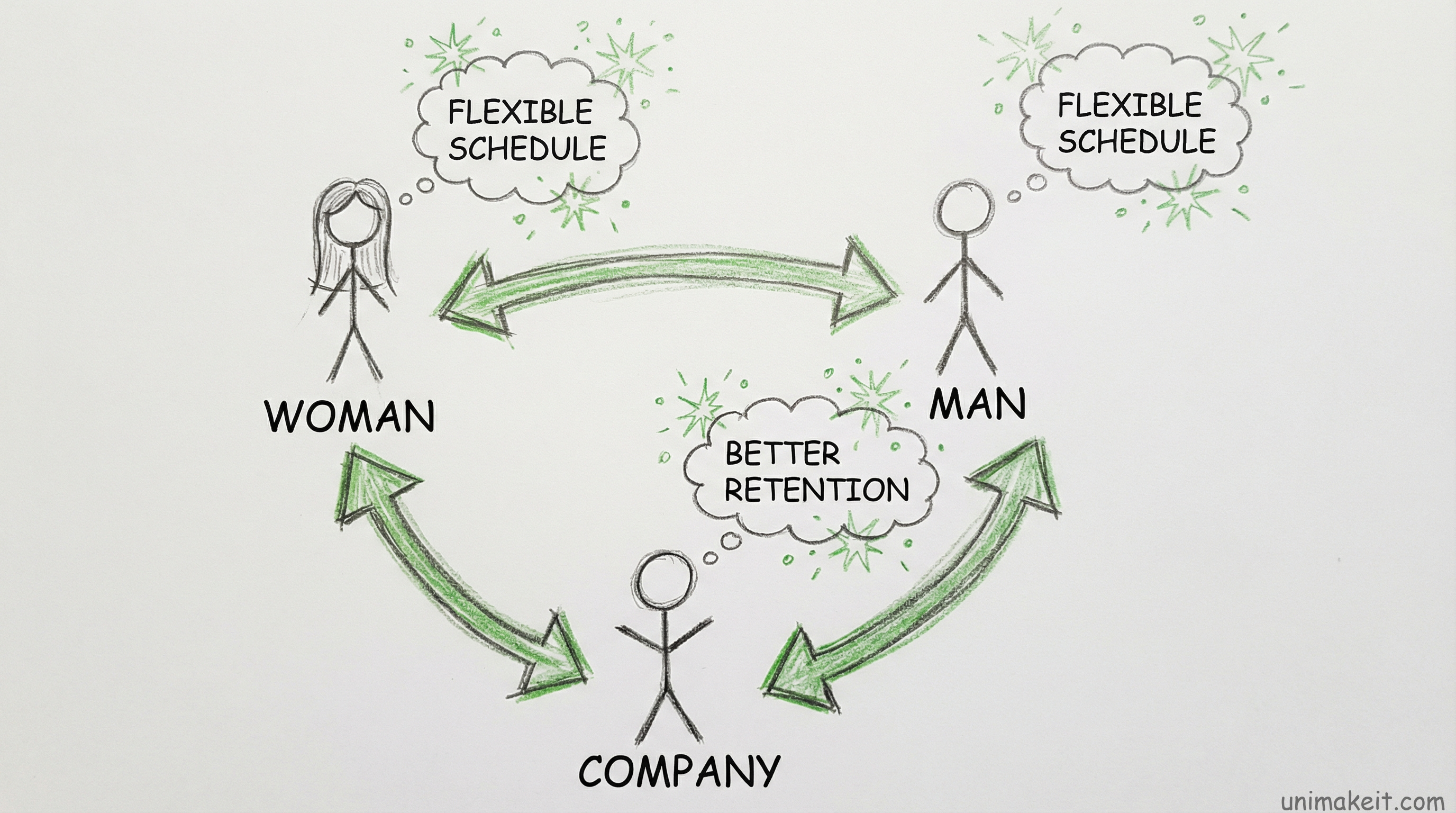
We just have to be willing to see the constraints we’re operating under. And then change them.
Wild how that works.
Links:
https://goldin.scholars.harvard.edu
https://www.amazon.com/Career-Family-Womens-Century-Long-Journey/dp/0691201781


