


Morning!
I’ve been thinking about why some AI-generated videos go viral while most die in obscurity. They have similar facts, similar production quality, similar everything.
Then I stumbled on a book by Taiwanese screenwriter Rongzhe Xu called Story Class, and it clicked: AI makes creating content effortless, but it doesn’t make content persuasive.
That requires something else entirely—something a Prussian king figured out in 1772 while trying to convince people to eat potatoes.
Yeah, you read that right. Potatoes.
Stories Beat Facts (Especially Now)
Here’s what Frederick the Great learned the hard way: you can’t logic people into anything.
His problem was simple. Prussia needed a backup crop in case wheat failed. Potatoes were perfect—easy to grow, nutritious, abundant.
But people refused to eat them.
Their reasoning was airtight: Potatoes are in the nightshade family (so is deadly nightshade—coincidence?). They grow underground like criminals hiding from the law. The Bible never mentions them, so clearly God disapproves.
Frederick tried the obvious approach. He commanded everyone to eat potatoes.
Nobody ate potatoes.
Think about this for a second. A king couldn’t change behavior with direct orders.
So Frederick tried something different. He declared potatoes royal vegetables—only the king could grow and eat them. He posted guards around potato fields. But he secretly told the guards to look away if people tried stealing them.
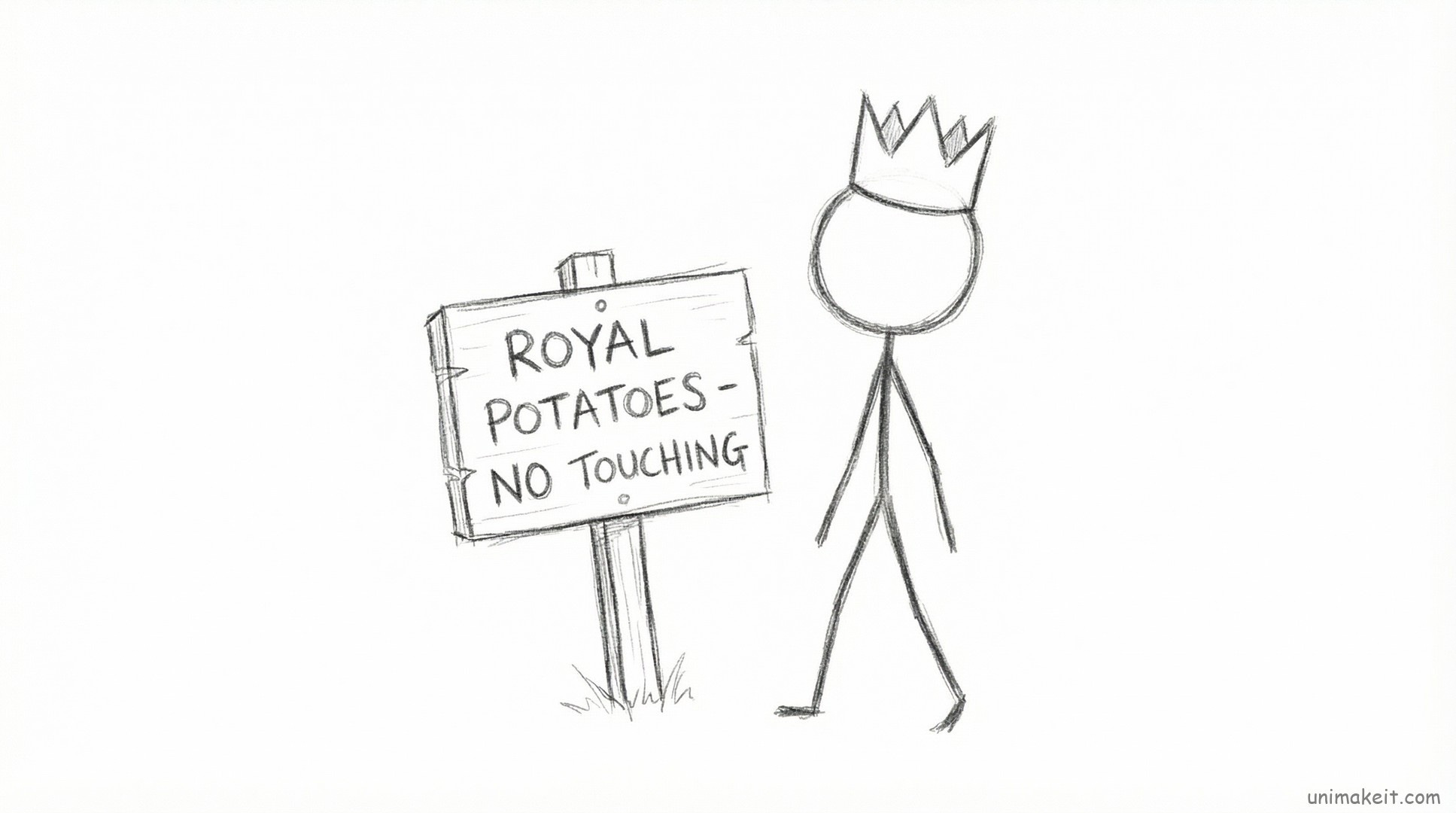
Human nature did the rest. People got curious. They stole potatoes. Loved them. Stole more. Word spread.

Same potato. Same nutritional facts. Zero change in reality. But the story changed everything.
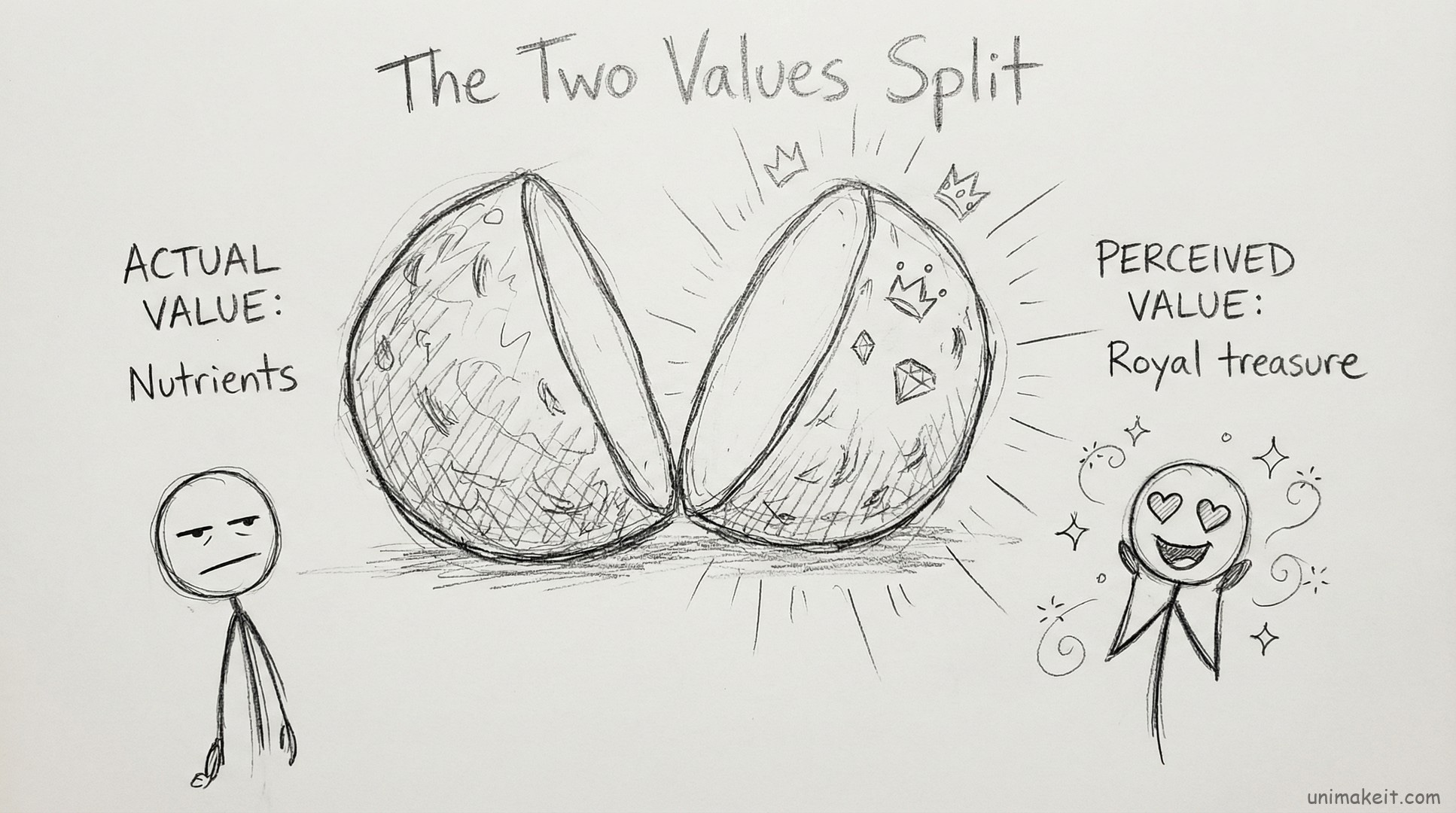
This is why I’m obsessed with this right now. We’re entering an era where AI can generate perfect tutorials, flawless explanations, technically accurate everything. Your competition isn’t other creators—it’s infinite AI-generated content that’s 90% as good as yours.
The differentiator isn’t better facts. It’s better stories.
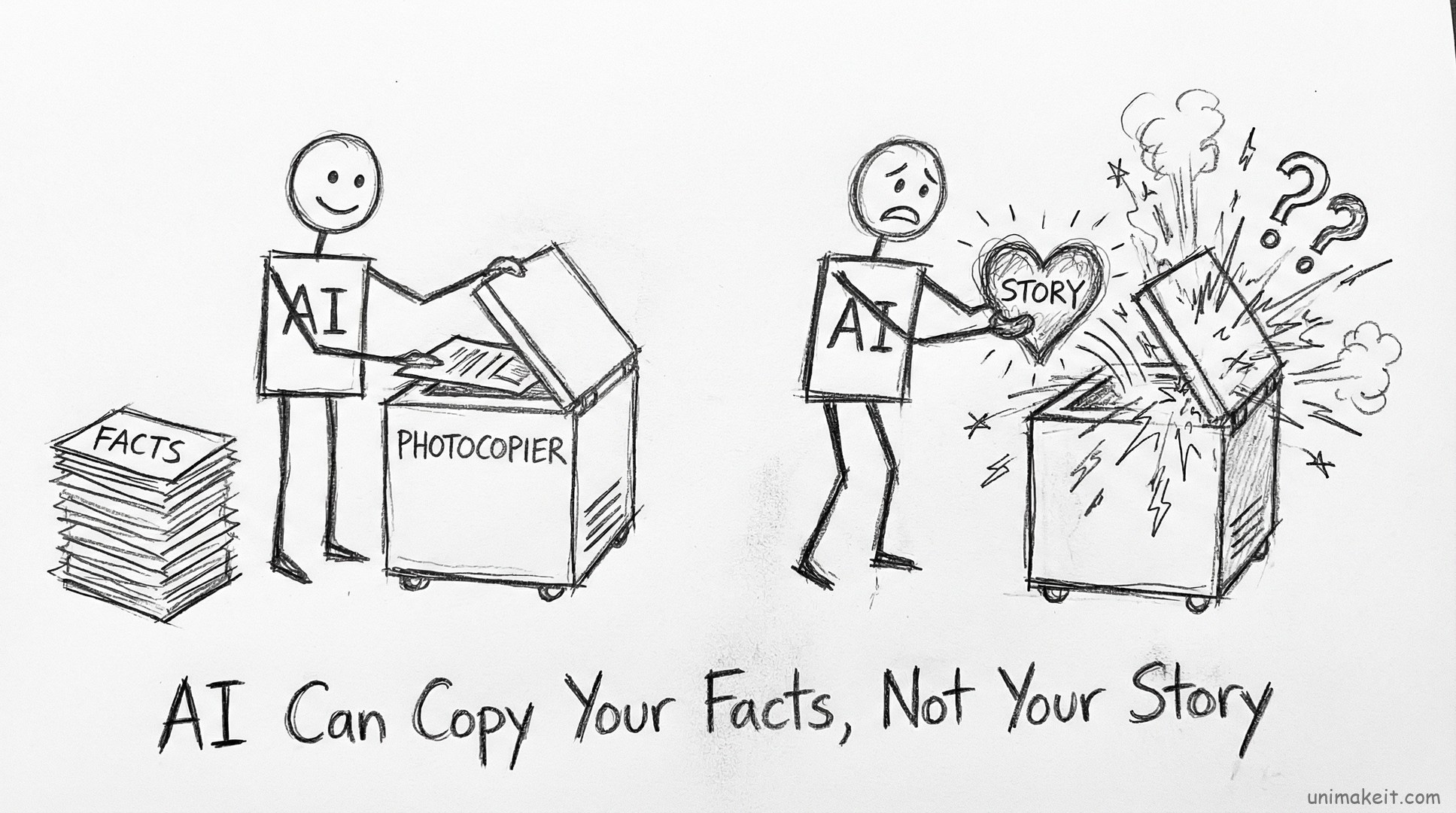
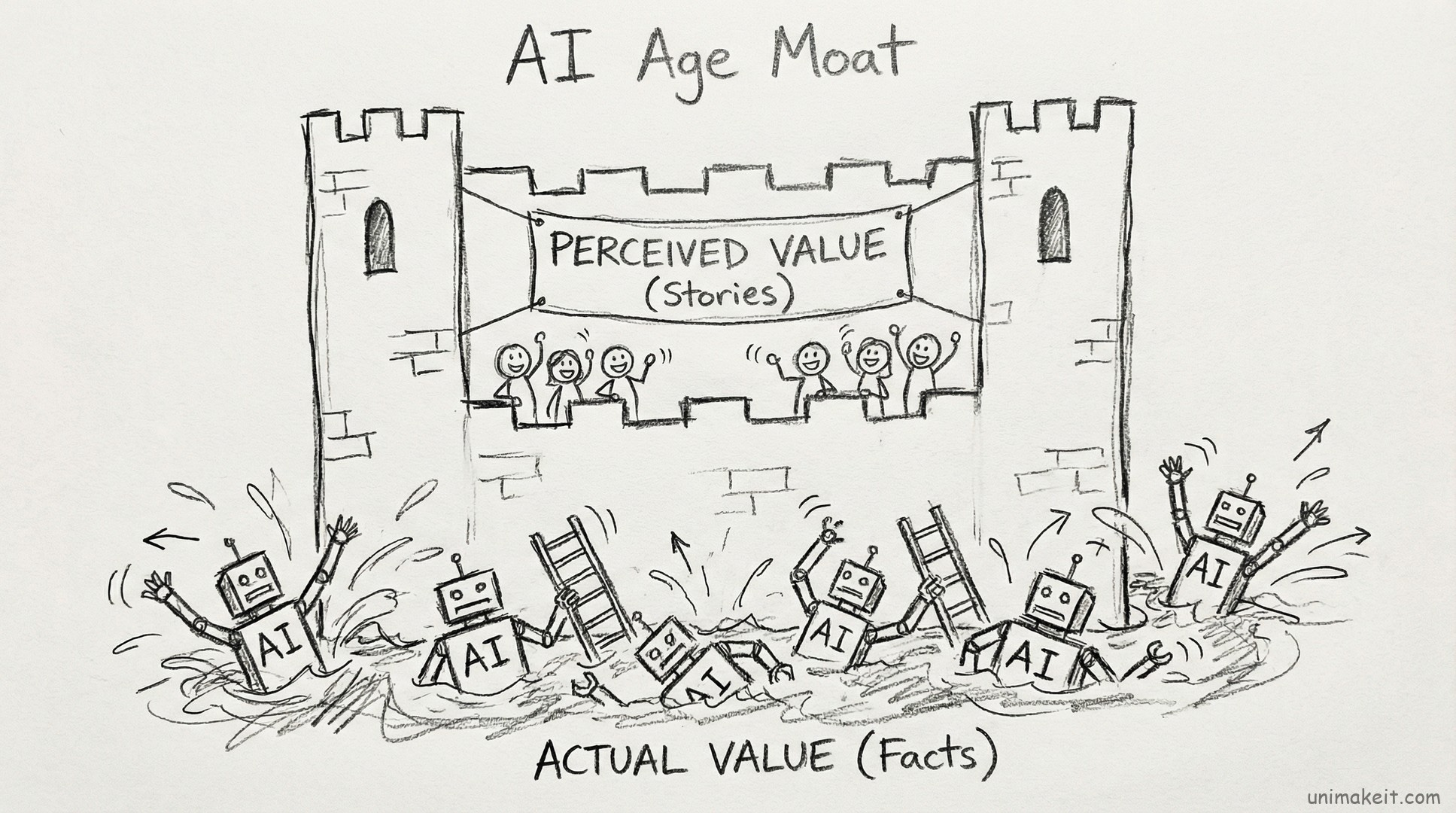
Every video you make competes on two dimensions: actual value (the information) and perceived value (how people feel about it). AI is commoditizing actual value. It’s making the first one basically free.
Perceived value is the moat. And stories control perceived value completely.
When Steve Jobs wanted engineers to speed up Mac boot time by 10 seconds, he didn’t say “it’s good UX.” He calculated: “5 million users times 10 seconds equals roughly ten human lifetimes per year. You can save ten lives.“
Boot time and human lives have nothing to do with each other. But the engineers cut 28 seconds anyway.
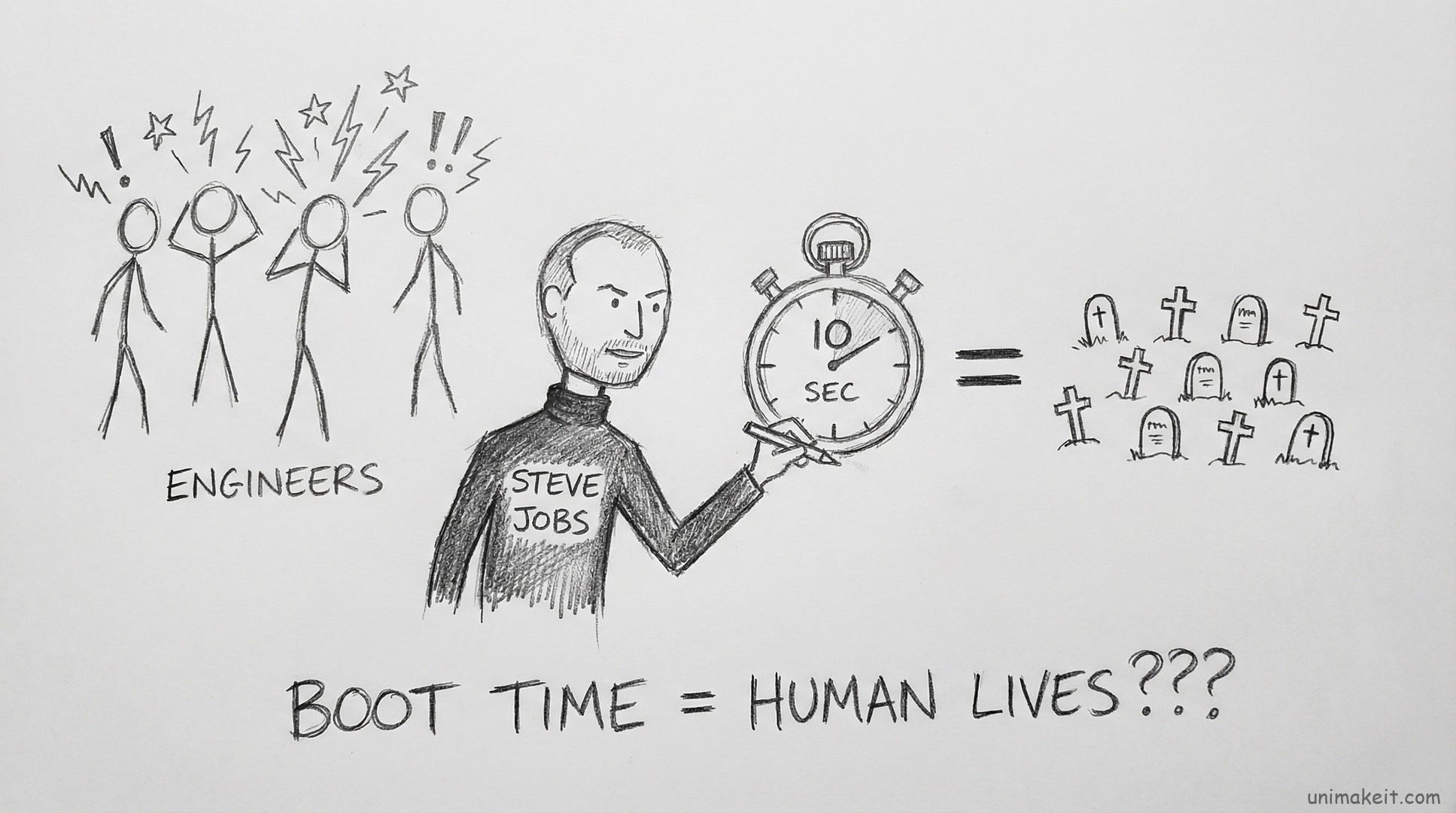
That’s story distortion in action.
The Formula Nobody Tells You
Here’s the counter-intuitive part: storytelling isn’t a mystical talent. It’s a formula.
I know. I spent years thinking “some people are just naturally good at this.” Turns out I was wrong and also wasting time.
Xu broke it down into seven steps: Goal, Obstacle, Effort, Result, Surprise, Turn, Resolution.
Every good story—from novels to Nike ads to your video scripts—follows this pattern.
Let me show you something wild. Steve Jobs’ entire life perfectly fits this formula:
Goal: Change the world (audacious enough to care about)
Obstacle: Adopted as baby, foster parents sold used cars, dropped out after 6 months
Effort: Started Apple in a garage
Result: Success! Then the board fired him in 1984
Surprise: Apple crashed without him, board begged him back
Turn: He returned and launched iMac, iPod, iPhone
Resolution: Changed the world
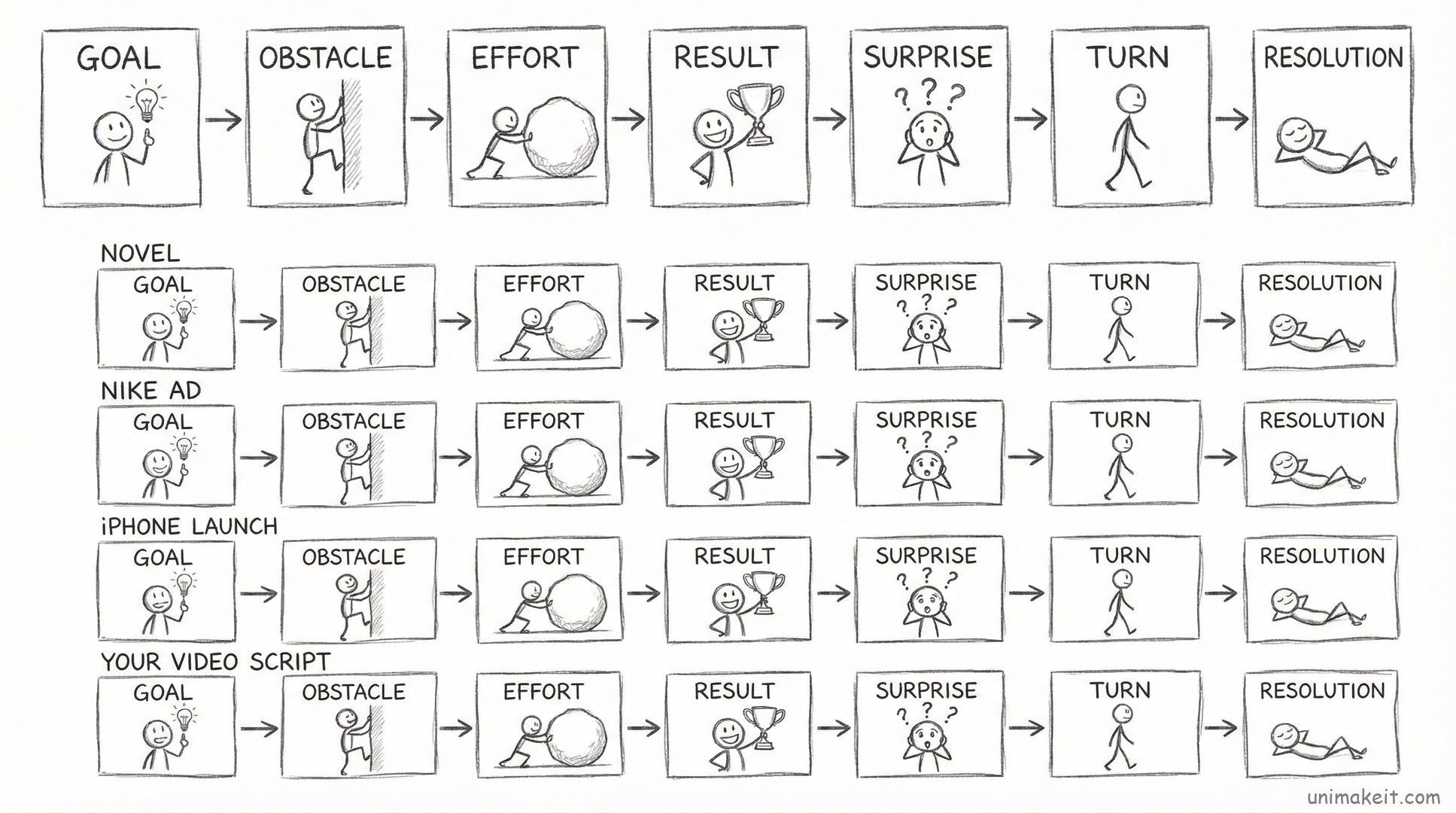
People didn’t buy iPhones because they were good phones. They bought Steve Jobs’ story. The phone was just the vehicle.
This is directly applicable to your video strategy. Every piece of content you make should follow this structure:
For a 3-minute video: Use all seven steps.
For a 1-minute video: Simplify to “Effort Person” (overcome obstacles, achieve goal) or “Surprise Person” (unexpected outcome).
For a 10-second hook: Deploy what Jobs called “reality distortion.” Swap boring facts for emotional resonance.
Example: Jobs wanted to recruit John Sculley from PepsiCo. He could have pitched salary, equity, career growth.
Instead: “Do you want to sell sugar water for the rest of your life, or change the world?”
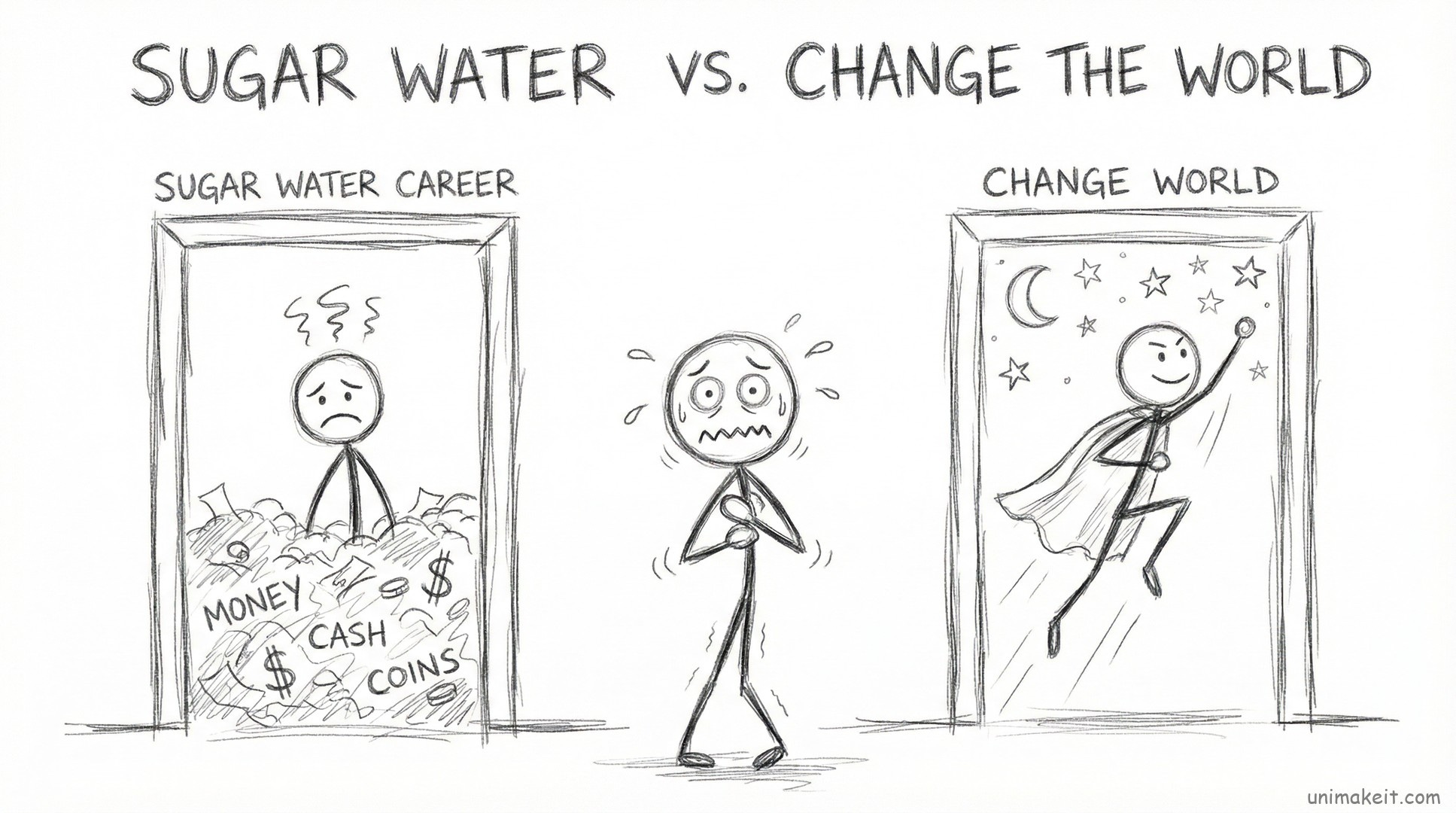
That’s not a job offer. That’s an identity crisis wrapped in a question.
This is your competitive advantage in the AI age. AI can generate information. It can’t generate identity crises. It can’t make people question who they are.
Your video scripts should do exactly this—use the formula to create emotional momentum, then deploy reality distortion at key moments.
Three Tactics That Work Tomorrow
Okay, you’ve got the formula. Now here are three specific techniques for your next video:
Tactic One: Weaponize Contrast
There’s a famous story about Watergate. Nixon’s team got caught bugging the opposition’s office. Terrible plan, obviously. But here’s the weird part—these were political elites. How did this idiot plan get approved?
The guy who proposed it (Liddy) was actually on his third attempt:
Attempt one: Rent a yacht, hire prostitutes, lure enemies aboard, track with aircraft, deploy special ops. $1 million. Rejected.
Attempt two: Same plan, $500k. Rejected.
Attempt three: Just install some bugs? ...Approved.
The same people approved the third plan because the first two made it seem reasonable by comparison.
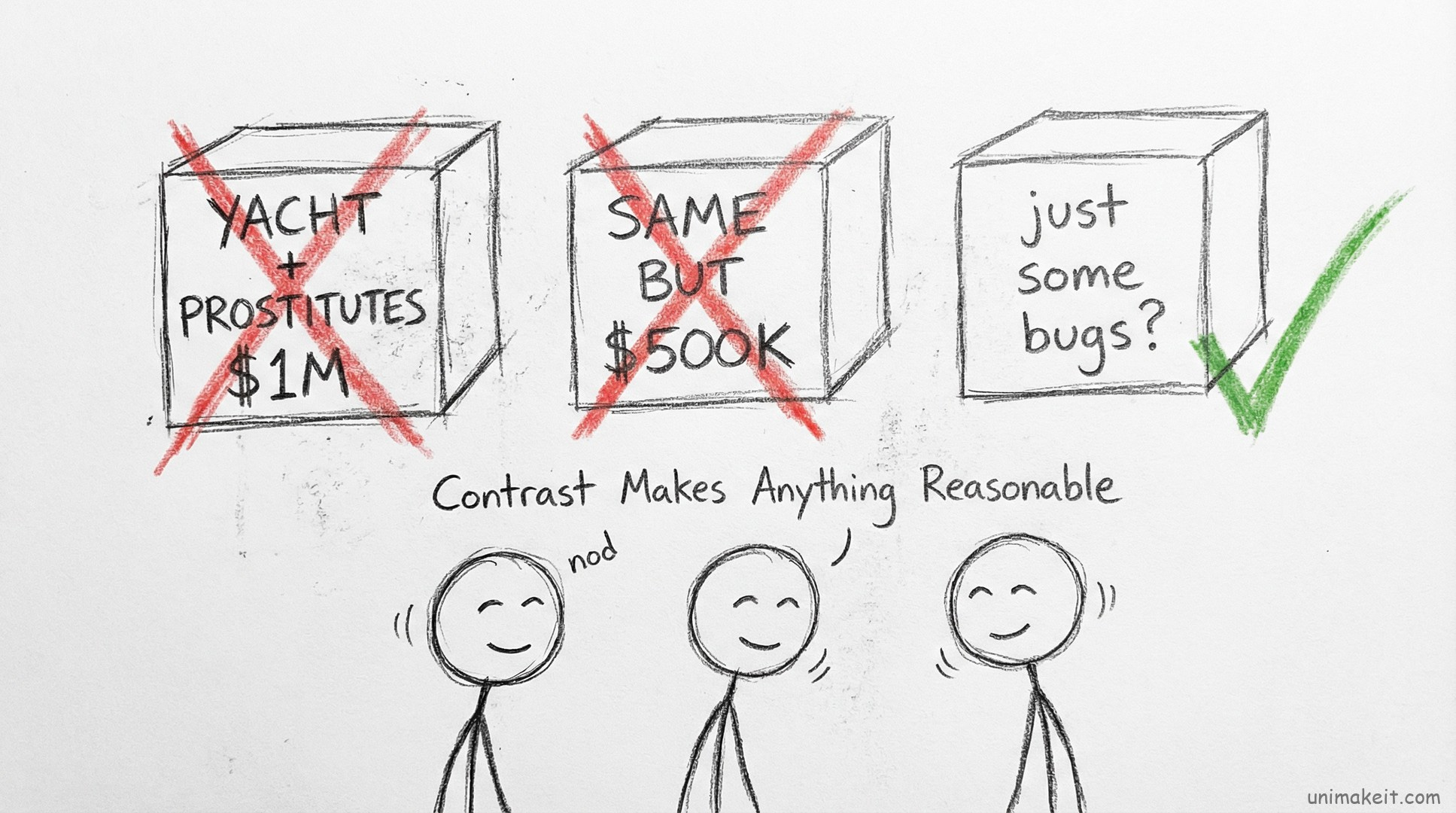
If you’re pitching something controversial or different, don’t defend it directly. First show something more extreme. Then “compromise” to your real idea.
Tactic Two: Closed Questions
Ancient China has this great story. King Wei ignored government for three years. Country fell apart. Nobody dared confront him.
Finally, advisor Kun visited: “Your Majesty, a beautiful bird arrived at the palace. Stunning plumage. But it’s sat for three years without flying or singing. Why?”
Everyone knew the bird represented the king. The question was ultra-closed: Will you do your job or not?
The king could only answer one way. And he did—became a great ruler.
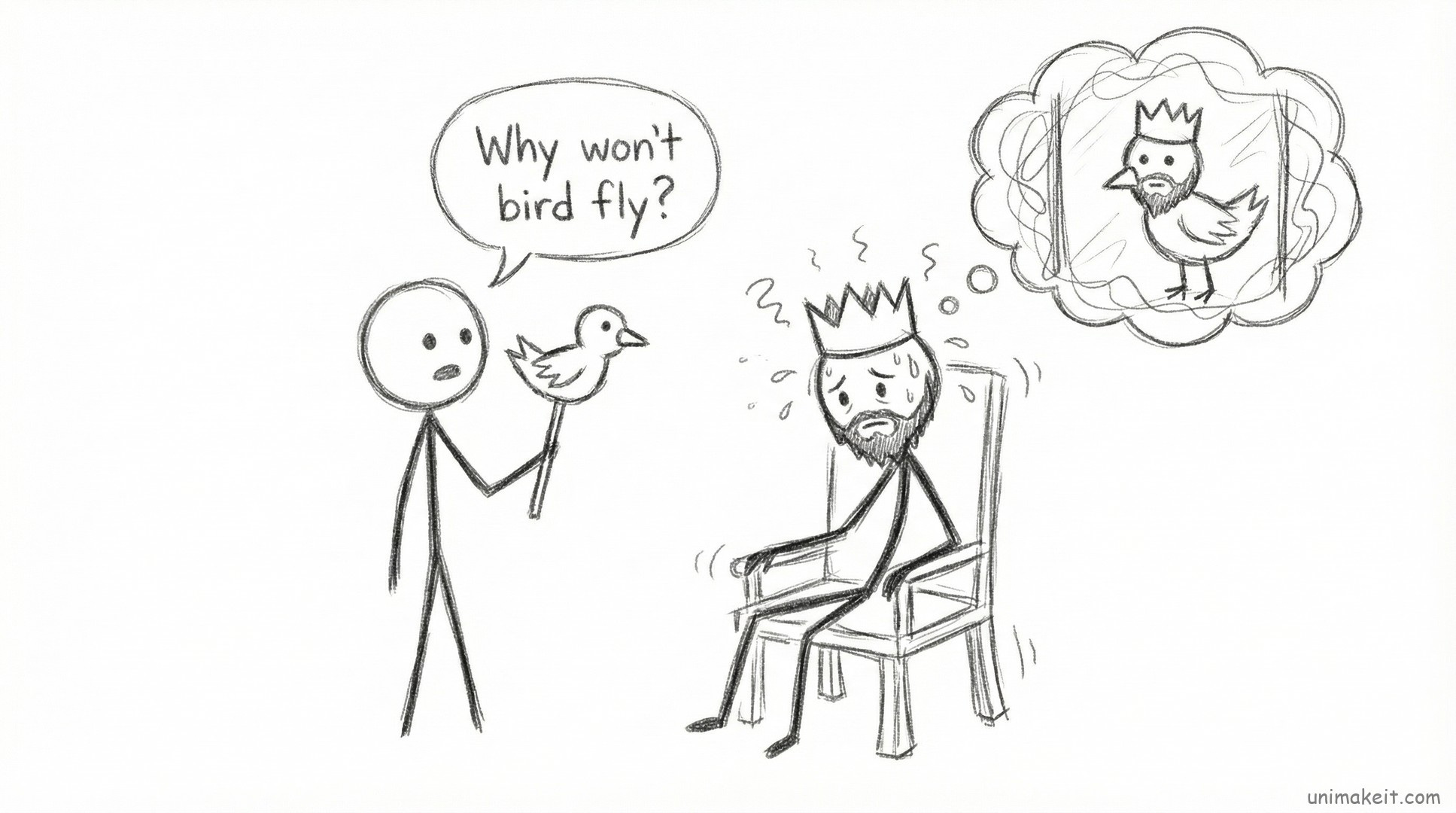
The answer was embedded in the question.
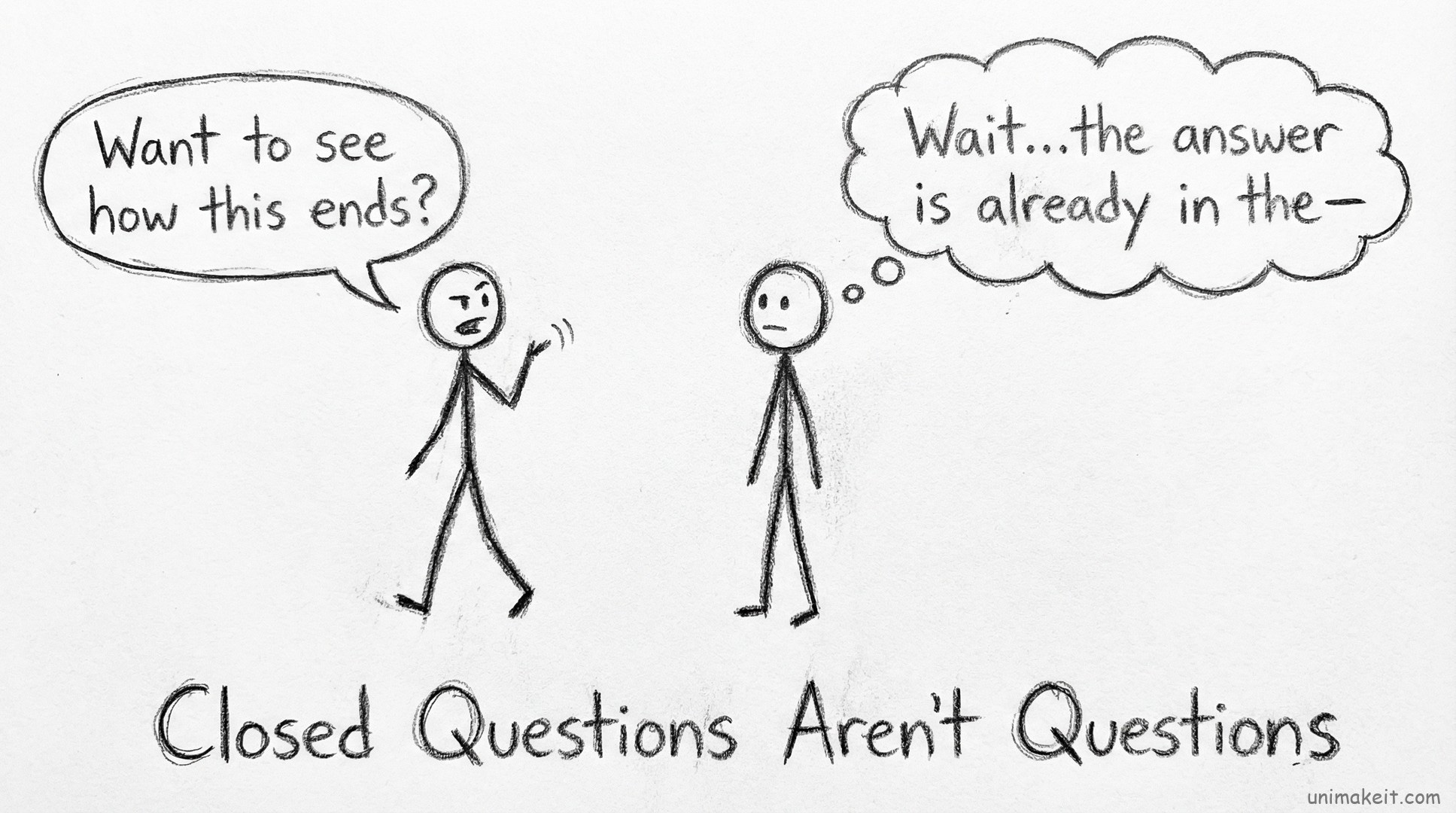
Your CTAs should work the same way. Don’t ask “Would you like to subscribe?” Ask “Want to see how this ends next week?” You’ve planted “yes” inside the question.
Tactic Three: Engineer Experience
NBA training camps had a problem. Young players would hook up with fans, some carrying HIV. Coaches warned them constantly. Didn’t work.
One day, three female fans met players after practice. Great conversation. Plans to meet tomorrow night.
Next morning in class: “Today we have special guest speakers.”
Same three women walked in.
Each said one sentence: “My name is [X]. I was diagnosed with HIV in [year].”
They were volunteers. The players were one step from disaster and had no idea.
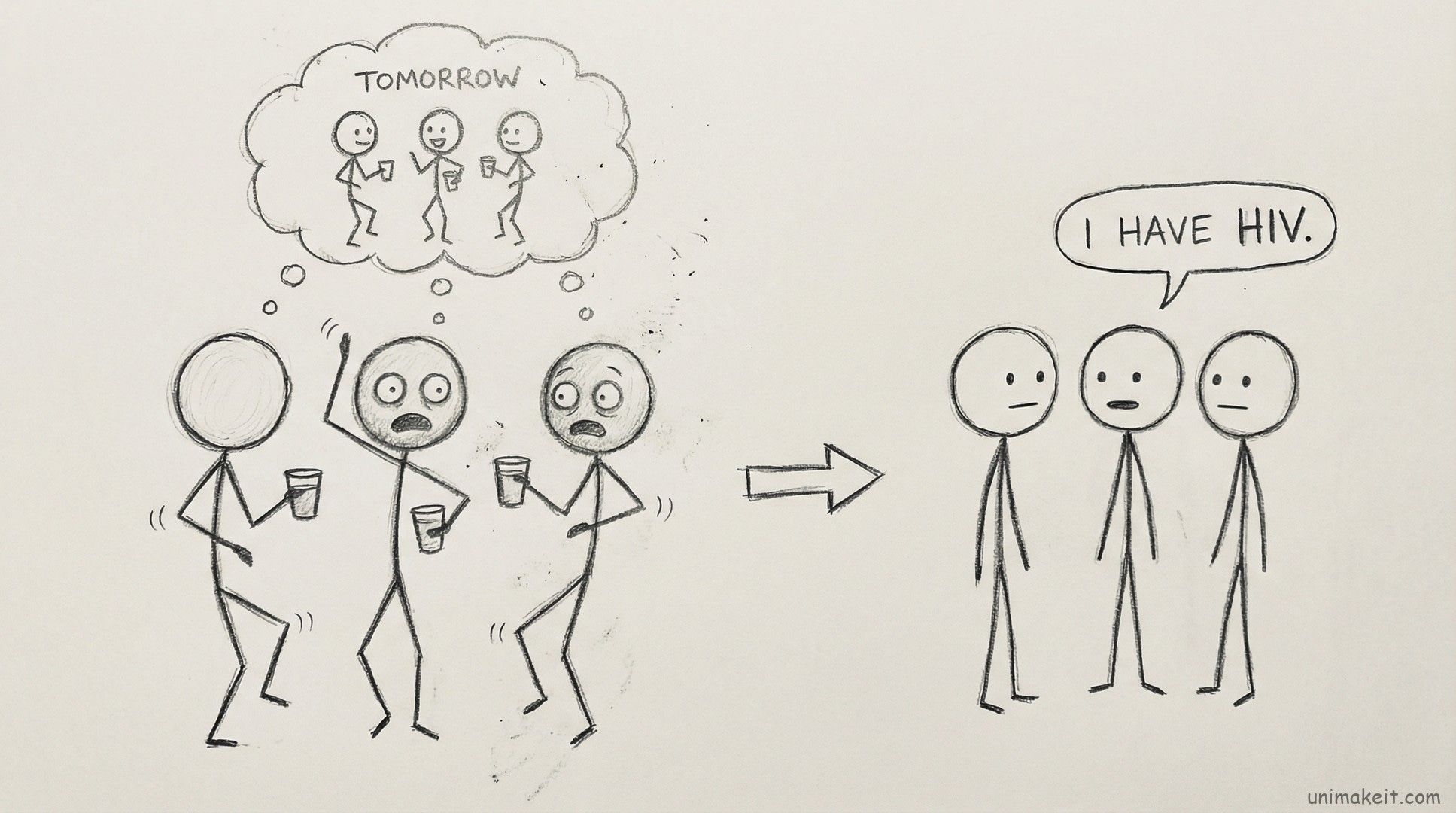
Way more effective than any lecture.
Don’t just tell people facts. Make them feel how close they are to missing out. Use visualization, put them in scenarios, create “what if you’d started yesterday” moments.
The Punch
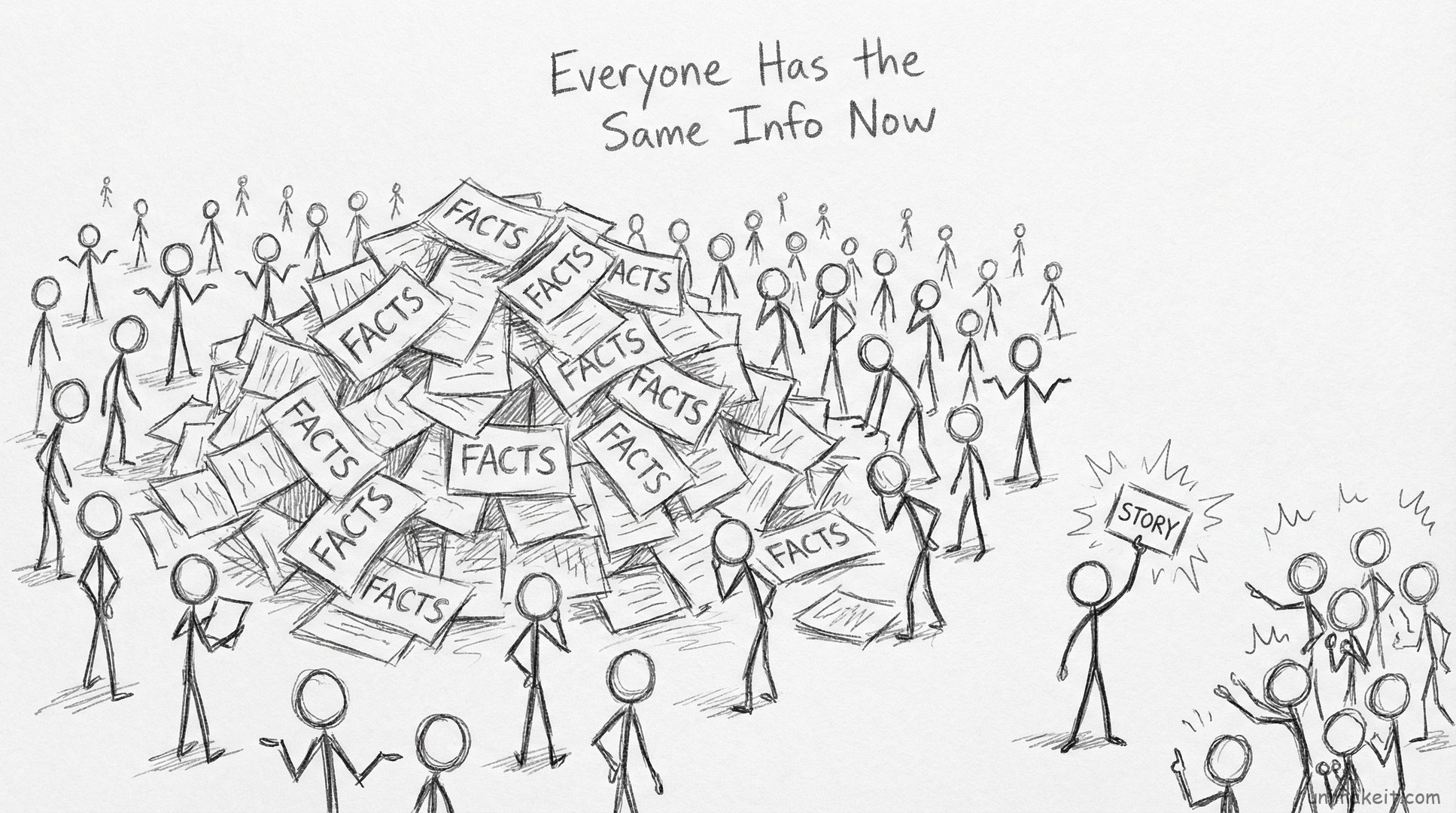
We’re in this bizarre moment where AI can generate infinite content, but people still choose what to watch based on feelings, not facts.
Everyone has access to the same information now. The winners will be whoever tells better stories about it. Not more accurate stories. Not longer stories. Better stories—ones that change how people see themselves and their choices.
The formula is here. The tactics work. Now it’s just about practice.
Links:


