

Morning, CEO!
While I spent the last week of December trying to determine if “leftover pie” is a legitimate breakfast food (the data suggests: yes), Mark Zuckerberg was busy rewriting the laws of physics for our careers.
Meta dropped billions to buy Manus.
Why does this matter to you, sitting there with your coffee?
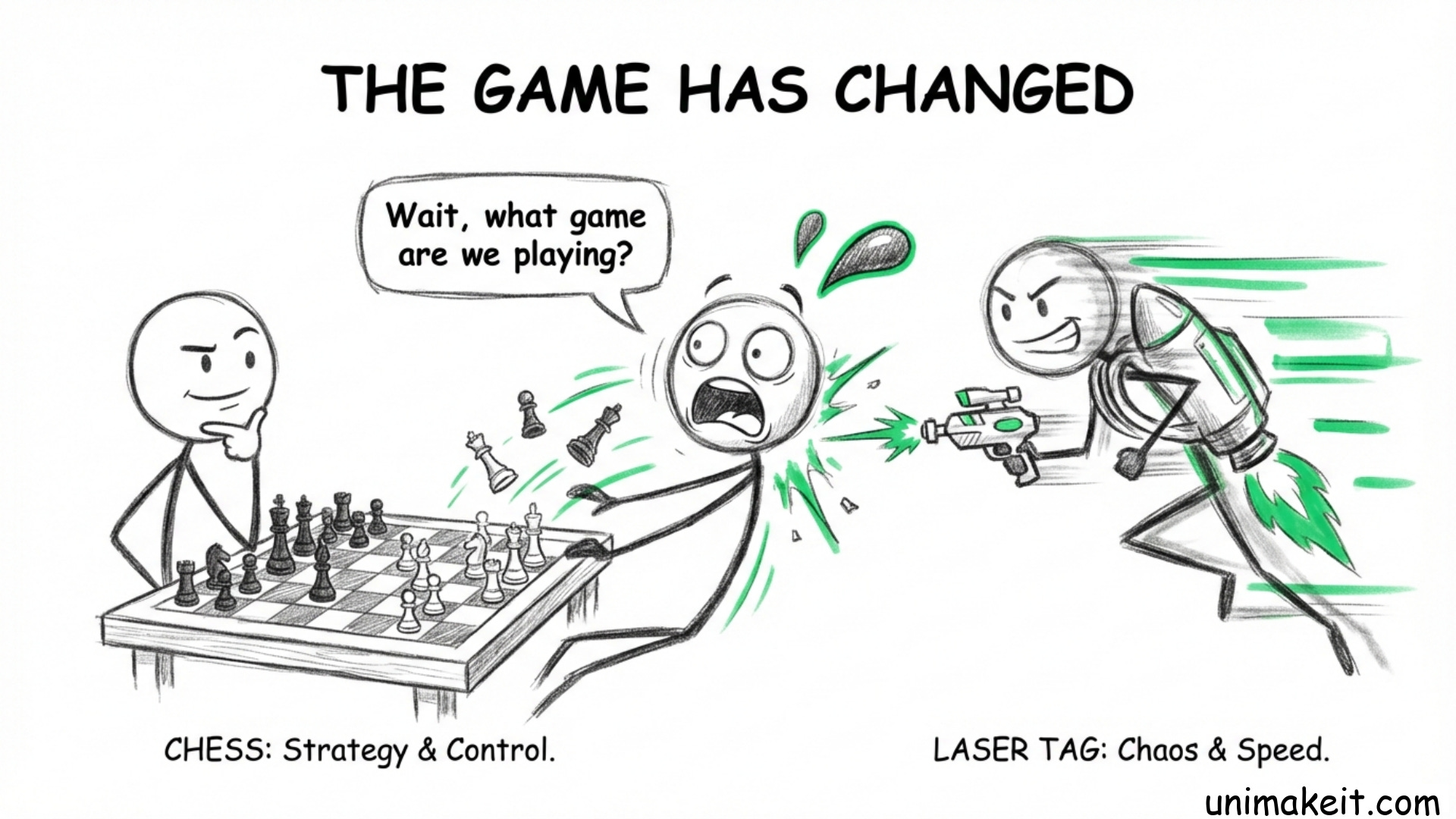
Because the rules of the game just changed. And if we don’t update our internal operating systems, we’re going to be playing Chess while the rest of the world is playing Laser Tag.
Let’s dig in.
1. The Death of the “Smartest Person in the Room”
For the last few years, we’ve been obsessed with IQ.
We looked at AI like it was a super-genius Professor trapped in a glass box. We asked it hard questions. We marveled at its essays. We felt insecure because it knew more about 14th-century French poetry than we did.
But here’s the thing about the Professor in the glass box: He can’t open the door.
Manus—the company Zuck just bought—didn’t try to make the Professor smarter. They gave the Professor hands.
They realized that Action Intelligence is worth infinitely more than Chatty Intelligence.
Manus doesn’t just talk about market research; it opens a browser, clicks the buttons, fights the pop-ups, downloads the spreadsheet, and makes the graph.
The Wisdom for You:
Stop trying to be the “Smartest Person in the Room.”
In your current role, you might be tempted to hoard knowledge. To be the one who knows the obscure Excel formula or the historical context of the Q3 project.
That asset is depreciating faster than a new car driven off a cliff.
The market no longer pays a premium for the person who knows the answer. They pay for the person who executes the solution.
We are moving from an economy of Explanation to an economy of Completion.
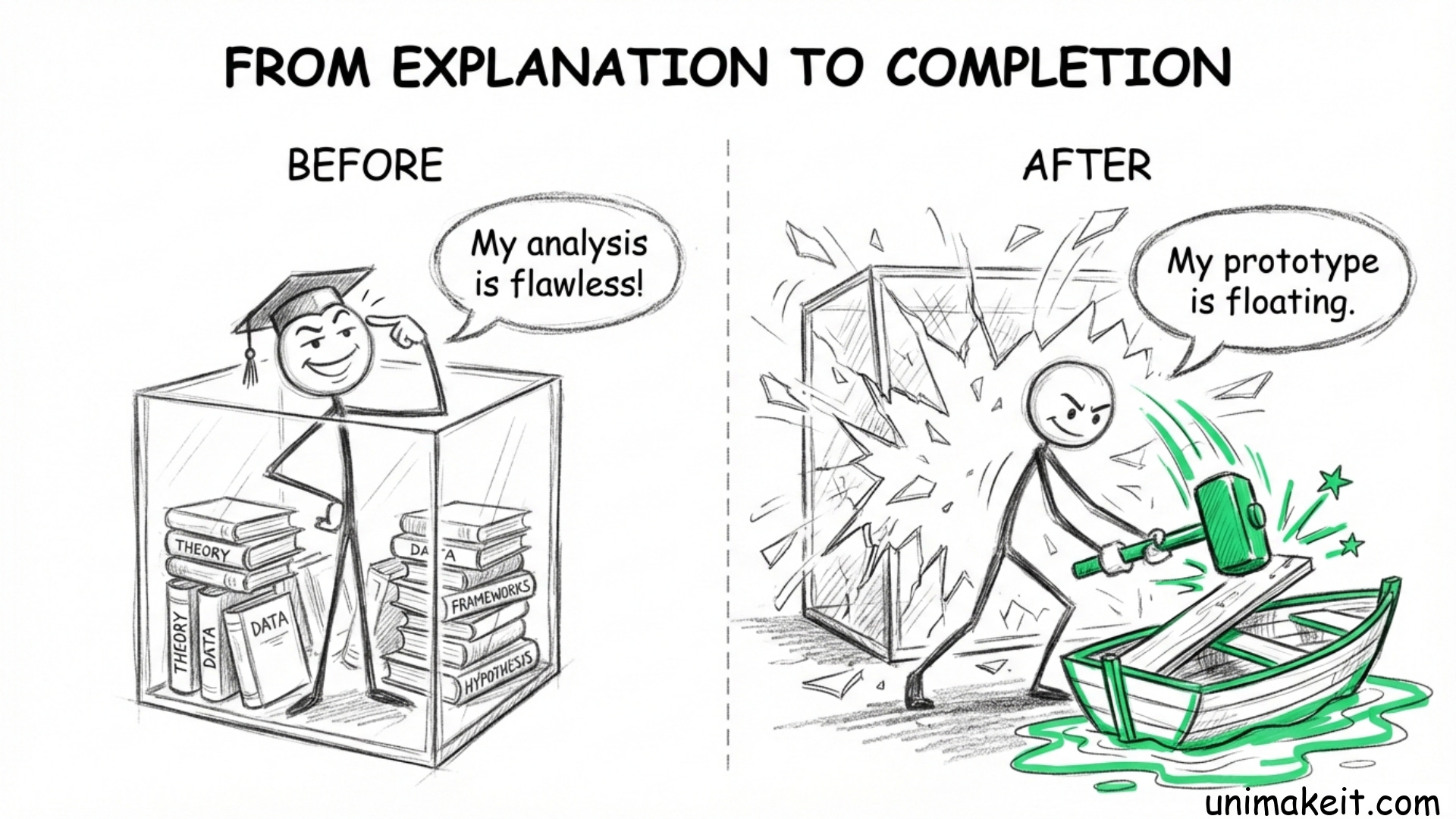
If your deliverables are just “really good ideas” or “thorough analysis,” you are the Professor in the glass box.
Break the glass. Don’t just suggest the strategy; build the prototype. Don’t just analyze the problem; deploy the fix.
Be the hands, not just the mouth.
2. Inefficiency is the New Luxury
Here is a weird thing about Manus.
It is incredibly inefficient.
To do a simple task, the AI might loop fifty times. It checks its work. It realizes it clicked the wrong link. It goes back. It tries again. It burns through computing power like a bonfire burns dry pine.
A year ago, everyone said, “That’s too expensive! You’re wasting resources!”
But the founders made a counter-intuitive bet: Compute is cheap. Trust is expensive.
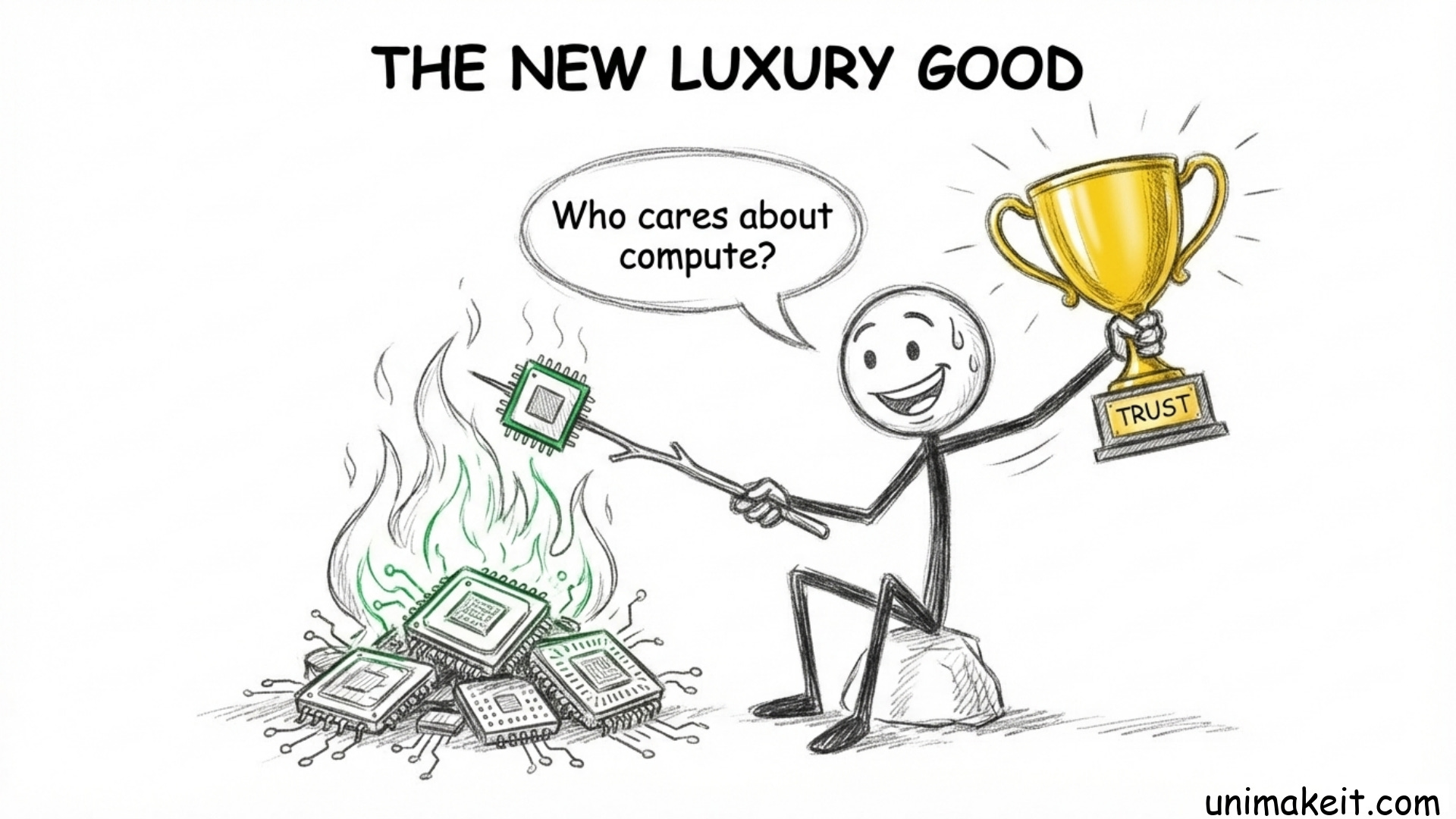
They realized that a client doesn’t care if you wasted 10,000 units of energy to get the job done. They care that the job is done right and they didn’t have to babysit you.
The Wisdom for You:
We have been trained to be efficient. To minimize effort. To get things done “quick and dirty.”
But in a world of infinite, cheap labor (AI), Reliability becomes the ultimate luxury good.
If you are running your career like a business, stop obsessing over how fast you can do a task. Start obsessing over the fidelity of the result.
If you turn in work that is 90% there, you are creating a “management debt” for your client. They have to check it. They have to fix that last 10%.
That 10% is annoying. It creates friction.
The “Manus Mindset” is to burn your own energy—your own “compute”—to vigorously self-correct, verify, and polish before you ever hit send.
Be the person who creates Zero Friction.
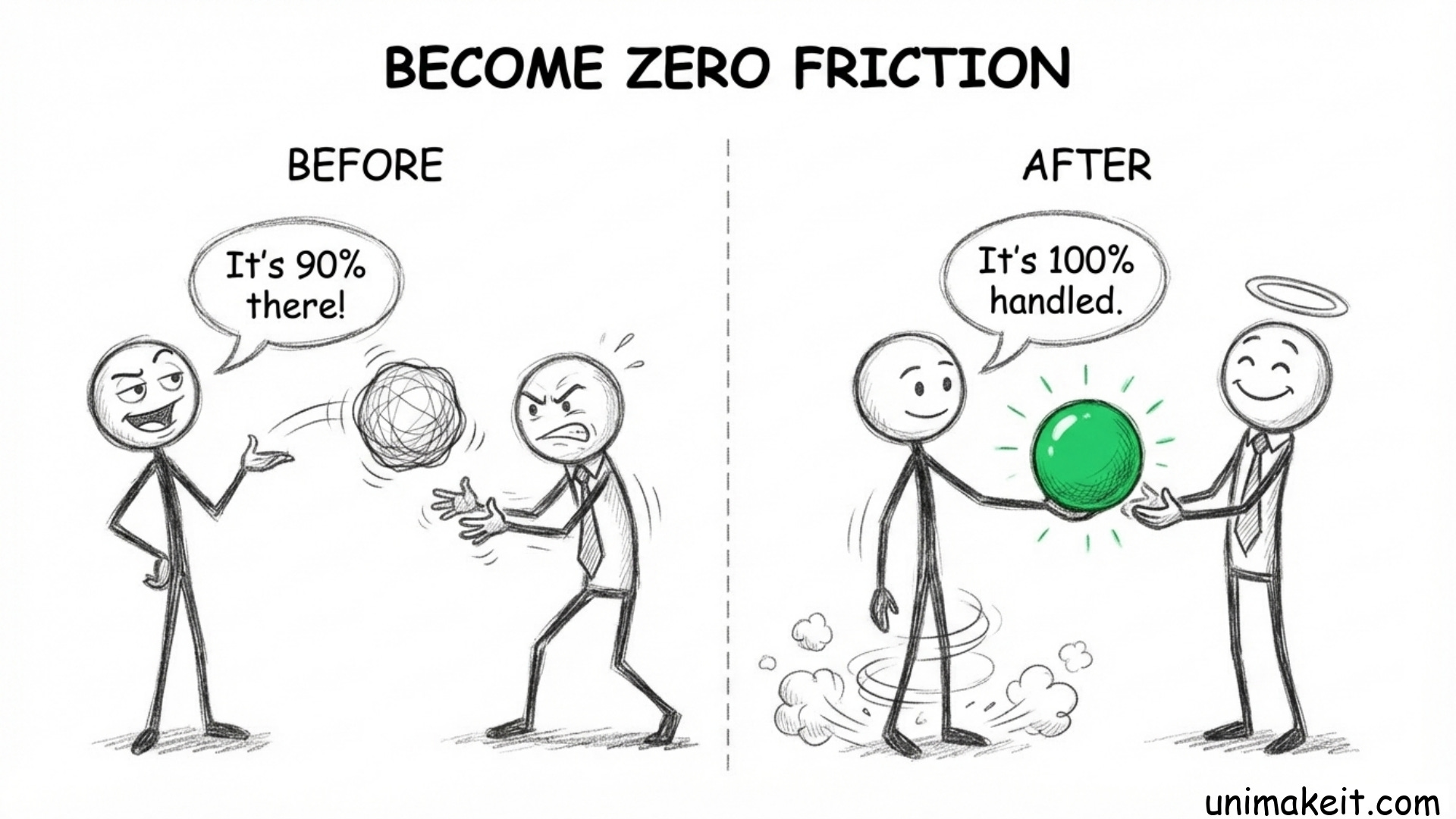
If your boss knows that when they hand you a ball, you will not drop it—even if you have to run in circles five times to catch it—you become invaluable.
Inefficiency in the process is fine, as long as it guarantees perfection in the outcome.
3. The “Conductor” Theory of Value
Manus had about 100 employees when it was bought. It was generating $100 million a year.
That math shouldn’t exist.
How? Because 80% of their code was written by AI.
The humans weren’t “coders” in the traditional sense. They were Commanders.
They weren’t playing the instruments; they were conducting the orchestra.
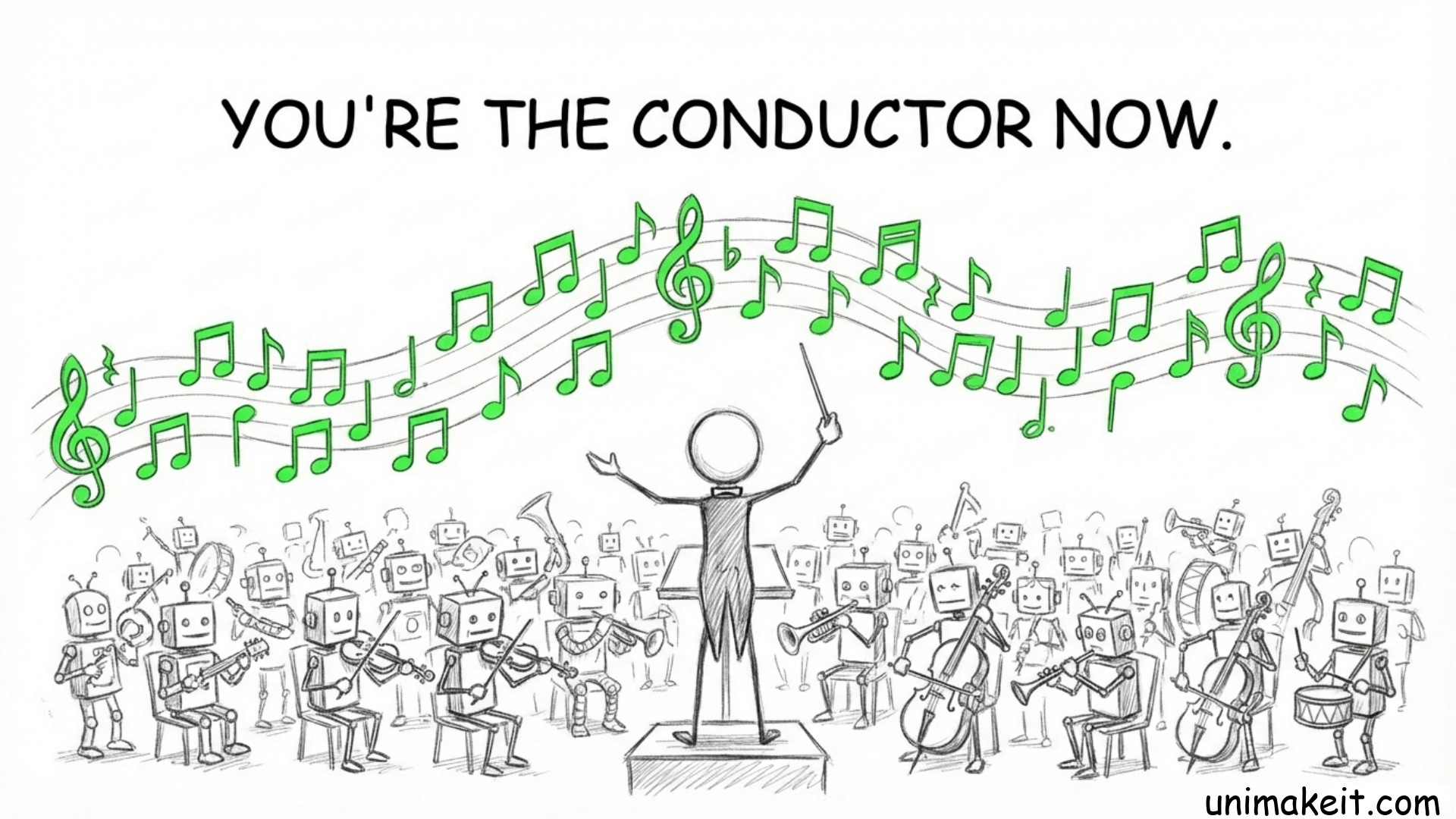
This is the scary part for those of us who pride ourselves on our craft. We like “doing the thing.” We like writing the sentence, designing the slide, writing the function.
But the leverage has shifted.
The Wisdom for You:
The most valuable skill in 2026 isn’t Creation; it’s Volition.
Volition is the will. It is the ability to decide what matters.
If an army of digital interns can do 80% of the work, your value is entirely contained in the remaining 20%.
And that 20% isn’t “checking for typos.”
That 20% is Taste and Direction.
Taste: Knowing what “good” actually looks like so you can tell the AI when it’s wrong.
Direction: Knowing which mountain is worth climbing in the first place.
You need to stop viewing yourself as the “Worker Bee” who is judged by how much pollen you carry.
You are the Queen Bee. You are judged by where you tell the hive to go.
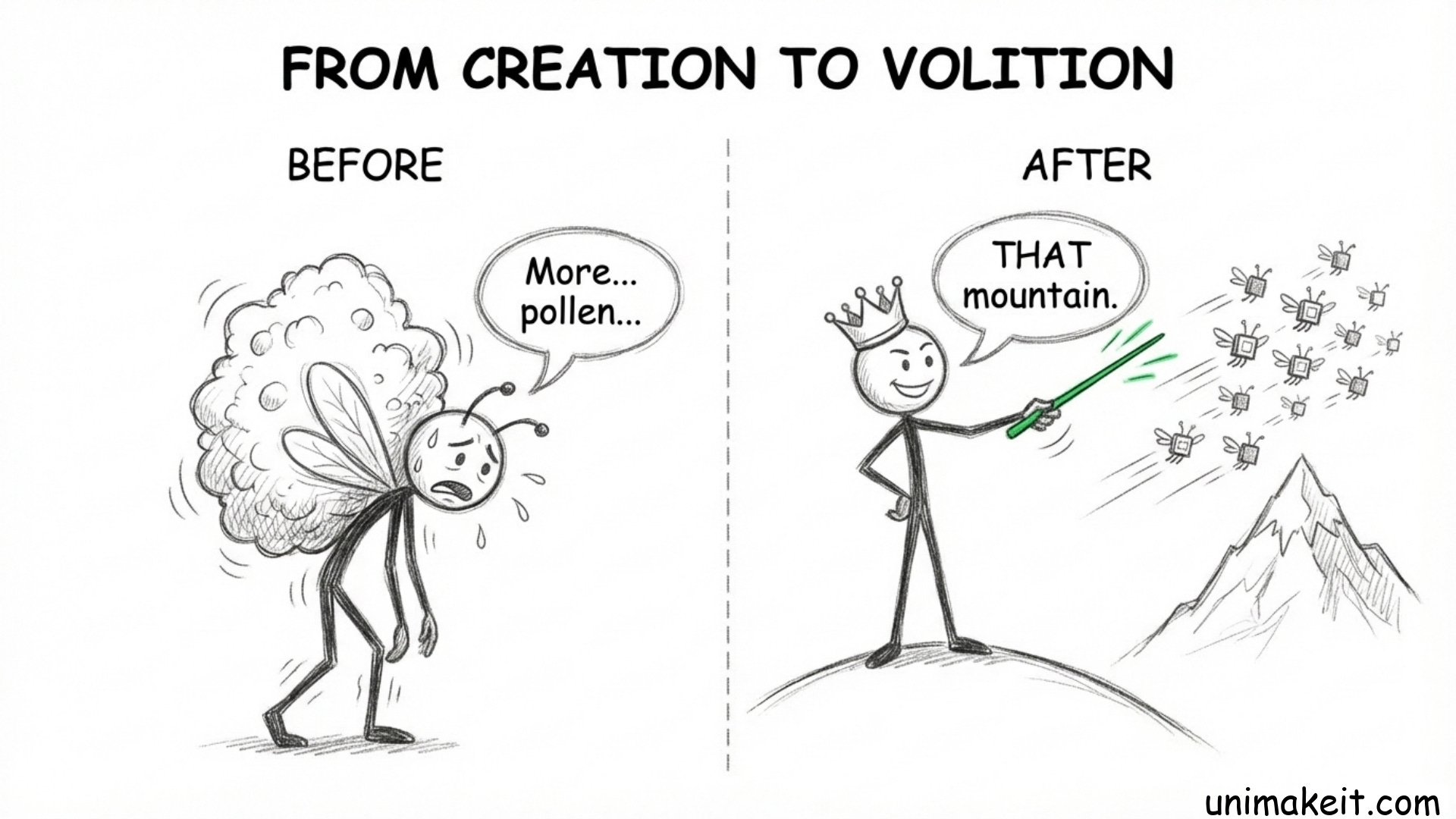
If you don’t have a strong opinion on where your project/department/company should go, you are liable to be replaced by a script that can run faster than you.
Develop a point of view. That is the one thing the machine can’t generate.
The Punchline:
The era of “I’m valuable because I know things” is over.
The era of “I’m valuable because I get things done” has begun.
The tools will change next month. But the human who has Taste, Reliability, and the Guts to make a decision?
That human is never going out of style.
Now, if you’ll excuse me, I have to go ask an AI to help me figure out how to burn off this holiday pie.
Links:
https://zh.wikipedia.org/wiki/肖弘
https://manus.im
https://www.bbc.com/news/articles/ce3k11q9qe1o
https://www.wsj.com/tech/ai/meta-buys-ai-startup-manus-adding-millions-of-paying-users-f1dc7ef8


