


Evening, CEO!
Let’s talk about the dream. You build a brilliant AI tool. It’s elegant. It’s efficient. Then, you hire a slick salesperson named “Chad” to go sell it while you sit back, sip espresso, and watch your Stripe notifications go ding.
Here is the cold shower: Chad is going to fail.
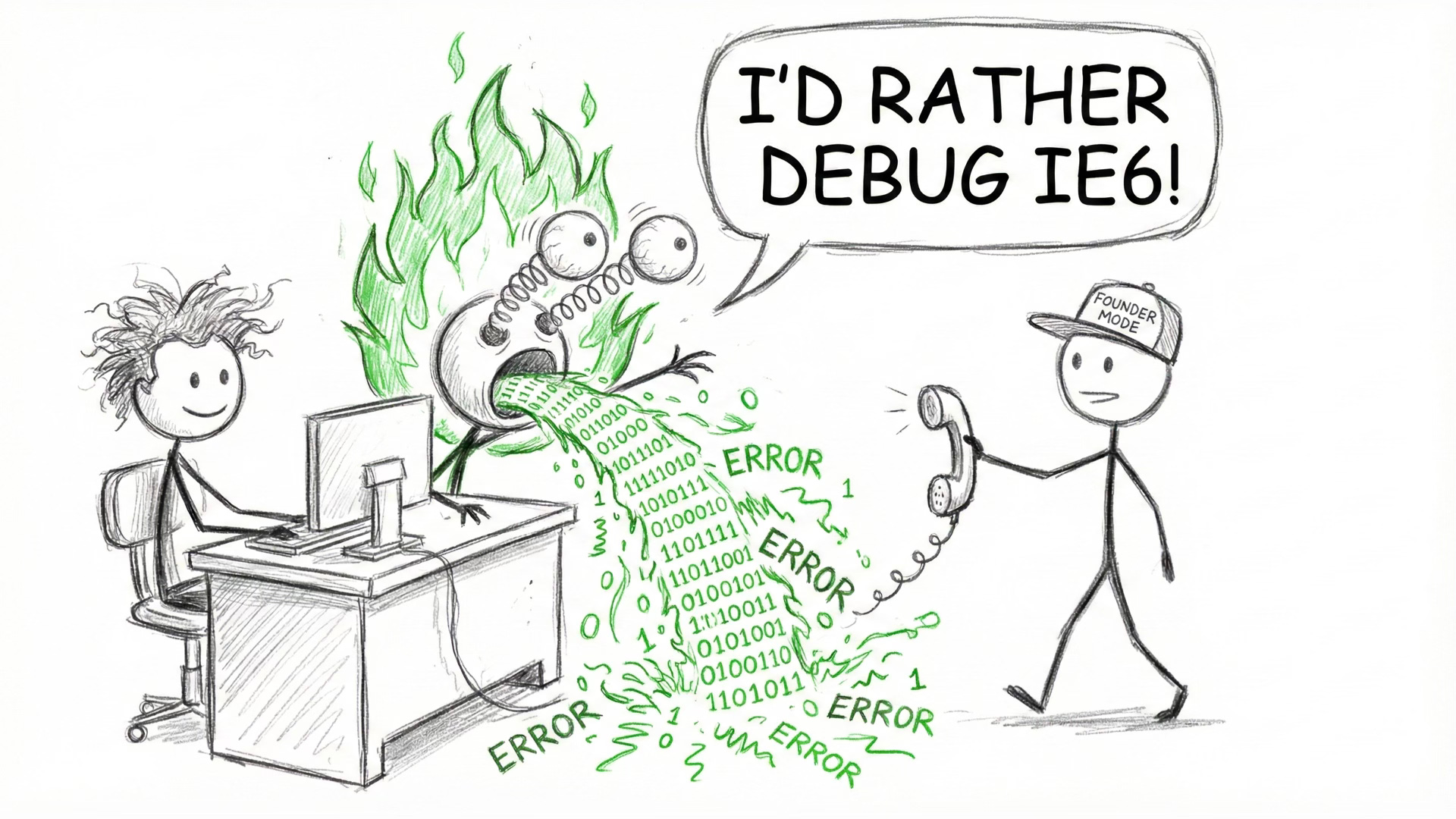
Today we are stealing the playbook from Jen Abel, the co-founder of Jellyfish. She specializes in dragging B2B founders to their first $1M ARR. Her main lesson? You can’t outsource the hustle. If you want that massive valuation, you have to do the one thing most of us engineers are allergic to: picking up the phone.
1. The “I’ll Just Hire Someone” Trap
I became an engineer for a reason: machines listen to logic; humans are unpredictable and scary. My happy place is a terminal window with zero notifications.
I want to dig a hole and hide in it whenever the word sales comes up.
Naturally, my instinct is to hire a salesperson immediately.
Jen Abel says this is a death sentence.
Why? Because a hired gun sells a product. In the early days, your product is likely half-baked, slightly buggy, and impossible to explain. A salesperson hits a roadblock and says, “Let me check with the team.” Momentum dies.
You, however, sell a Vision.
When you are on the phone, you aren’t just selling; you are doing Research. This is the mental shift. Founder-led sales isn’t about revenue; it’s about learning.
When a prospect says, “This doesn’t solve my problem,” a salesperson apologizes.
You say, “Cool, tell me exactly how it should work, and I’ll recode it tonight.”
That is a superpower “Chad” will never have. You can hear the “budding insights”—the things they aren’t saying—and pivot the entire company in real-time. You have to be the heartbeat before you can hire the muscle.
2. The “Better” Fallacy (Or: How to Not Be Boring)
If I wrote a cold outreach email today, I would explain, logically, why my solution is 14% more efficient than the competitor.
And the recipient would delete it before they finished the first sentence.
We are obsessed with “Better.” We think if we build a better mousetrap, the world will beat a path to our door.
The reality? No one cares about “Better.”
“Better” is homework. “Better” requires the client to open a spreadsheet and compare features. “Better” implies the status quo is okay, but you are slightly improved.
Don’t be “Better.” Be “Different.”
Jen’s playbook for the perfect outreach is terrifyingly simple:
Relevance: Why them?
The Counterintuitive Insight: Say something shocking. (e.g., “We believe zero-to-one sales talent simply doesn’t exist.”)
The Problem: Focus on their pain, not your solution.
The Length: 3 to 4 sentences. Max.
If they have to scroll on their iPhone, you have lost.
Stop trying to convince them you are the “Best.” Just convince them you are the only one seeing the world this specific, weird way.
3. The Trojan Horse: Services as Strategy
We all want “Passive Income,” right? We want the SaaS money printer. The idea of trading time for money—consulting, services, actual work—feels like moving backward.
But here is the dirty secret of the AI boom: Big companies are confused.
They know they need AI. They have the budget for AI. But they have absolutely no idea how to implement it. If you try to sell them a software tool, they won’t buy it because they don’t know who is going to run it.
So, you pull a Trojan Horse.
You sell the Service to sell the Tech.
Jen points out that 40-50% of startups have to sell services first. You pitch a 90-day “implementation” or “consulting” contract.
You get paid to learn their internal mess.
You get their logo on your site.
You build the process for them.
Once the 90 days are up? They are addicted to the process you built. Buying your software becomes the natural next step.
It feels “unscalable” to do consulting work. But in the beginning, doing things that don’t scale is the only way to eventually scale. You have to teach the tortoise how to eat the lettuce before you can sell it the salad spinner.
The Bottom Line:
I know, I know. You wanted me to tell you which API key unlocks a million dollars. But the “Agency of One” playbook isn’t about code. It’s about swallowing the fear of rejection and doing the dirty work yourself.
We can’t code our way out of a sales call.
Go be the heartbeat.
Links:
https://www.linkedin.com/in/earlystagesales
https://www.jjellyfish.com


