


Morning, CEO!
I’m currently staring at a calendar that looks less like a schedule and more like a crime scene.
We spend a lot of time optimizing our “billable hours” (aka the day job). We optimize our sleep (hello, Oura ring).
But then there’s that weird, gray sludge of time between 6:00 PM and bedtime.
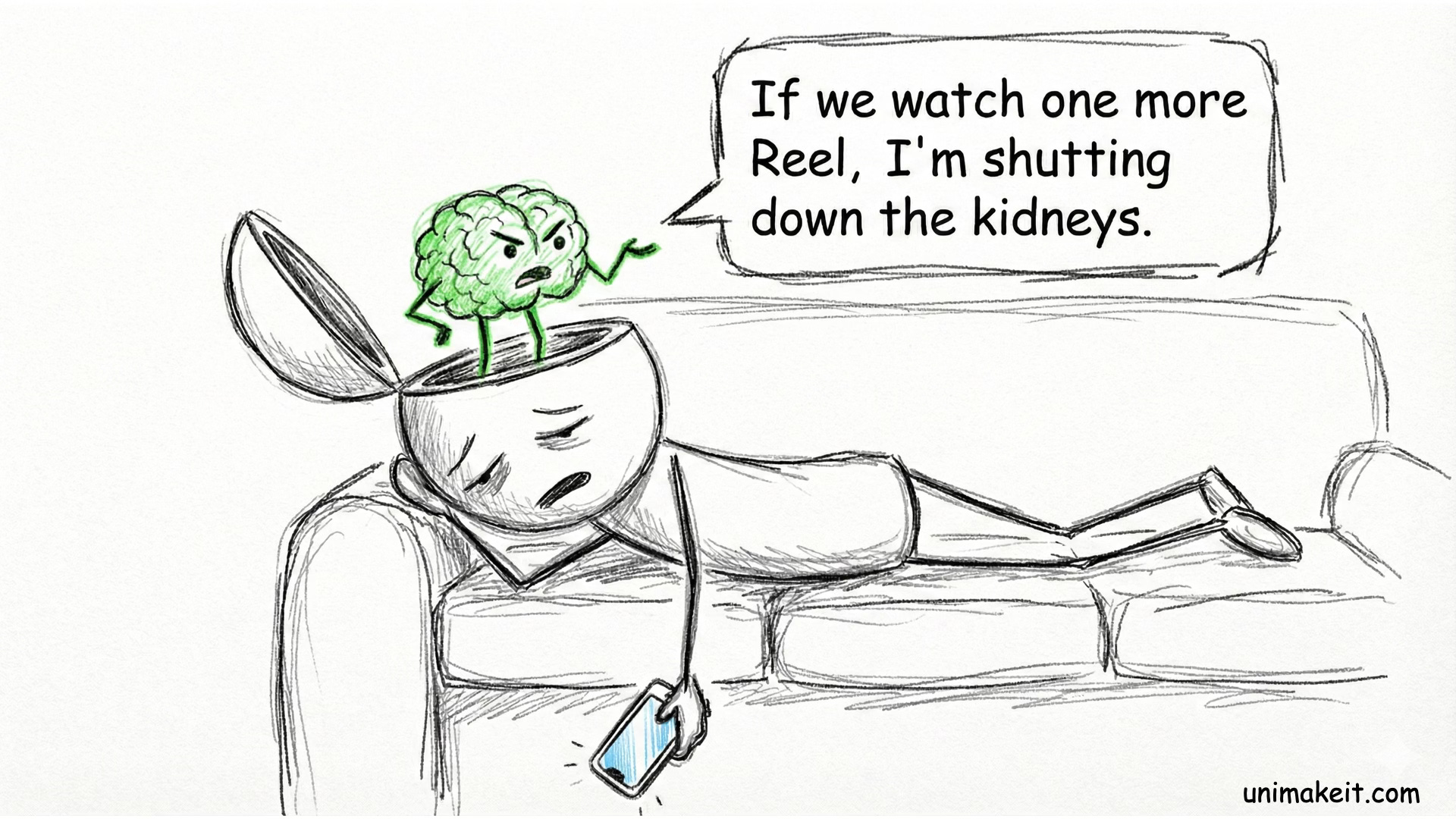
I usually treat this time with the respect of a raccoon rummaging through a dumpster. I doom-scroll until my retinas burn, telling myself I’m “decompressing.”
But 100 years ago, a British guy named Arnold Bennett called me out. He wrote a little manual called How to Live on 24 Hours a Day.
I hate to admit it, but the Victorian guy is right.
The “Waiting Room” Fallacy
Here is a fun fact about me: I am 41 years old, and for approximately 20 of those years, I have been bad at math.
Not the “AI algorithm” kind of math. The “Life Math.”
Bennett points out that most of us treat our day like a sandwich where the bread is stale and the meat is the only thing that matters. We view the 8 hours we spend at our desks (or Zoom calls) as “The Day.”
The time before work? That’s just the commute to The Day.
The time after work? That’s recovery from The Day.
We treat 16 hours of our daily existence—literally two-thirds of our time alive—as a waiting room.
I am guilty of this. I finish coding, close my laptop, and tell myself, “I am mentally exhausted. I deserve to stare at a screen until my eyes dry out.”
Bennett calls this nonsense. He says that if you are tired after work, it’s not because your brain is out of gas. It’s because your brain is bored. It’s been running the same “Work.exe” program for 8 hours.
The solution isn’t to shut the machine down (vegetating). The solution is to open a different app.
If you treat the 5:00 PM to 10:00 PM block as “leftovers,” you will feel like a leftover. If you treat it as the actual movie, and work as just the trailers, the whole vibe shifts.
The Great 7-Hour Heist
So, how do we fix this without having a nervous breakdown?
Usually, when I decide to “fix my life,” I go Full Goggins. I decide I’m going to wake up at 4 AM, run a marathon, learn Rust, and meditate for an hour.
This lasts exactly three days. On Day 4, I am eating a block of cheese for dinner.
Bennett, bless his heart, suggests we lower the bar. He suggests a heist.
We aren’t trying to reclaim every second. We are just going to steal back 7 hours a week.
Here is the heist plan:
Five mornings a week: Claim 30 minutes.
Three evenings a week: Claim 90 minutes.
That’s it.
But here is the trick: You need a ritual. Bennett talks about tea and alcohol lamps because it was 1910, but the logic holds.
You need a trigger that tells your brain, “The CEO is clocking in for the real work now.”
Maybe it’s making a pour-over coffee. Maybe it’s putting on a specific pair of noise-canceling headphones.
For those 90 minutes, you are untouchable. You aren’t a mom, a dad, an employee, or a citizen. You are a sovereign nation.
If you use that time to read poetry, study history, or analyze stocks (my personal vice), you aren’t just “doing a hobby.” You are proving to yourself that you exist outside of your Outlook calendar.
The ROI Trap (Don’t Be a Weirdo)
Here is where I usually ruin everything.
I am an engineer. I like efficiency. If I am going to spend 90 minutes reading about history, my brain immediately asks: “Okay, but how does this help me build a better AI Agent? How do I monetize this?”
This is the “ROI Zombie” talking.
We live in a culture obsessed with the hustle. If you aren’t optimizing, you’re dying.
Bennett warns us about this trap explicitly. He says if you try to turn your self-cultivation into a transaction, you will fail.
If you read philosophy just to sound smart at dinner parties, you’re missing the point.
If you learn to paint just to sell stuff on Etsy, you’re missing the point.
The point of the 7 hours is uselessness.
Well, “uselessness” in the capitalist sense.
Its function is to remind you that you are a sentient being capable of reason and wonder, not just a productivity node in a cloud server.
Bennett also advises us to shut up about it.
When we start a new routine, we want to announce it. “Hey everyone, I’m starting my ‘New Me’ era!”
Don’t.
External validation is a flimsy fuel source. Keep your 7 hours a secret. Build in silence. The only person you need to impress with this new operating system is the person looking back at you in the mirror.
The Bottom Line
We can’t add more hours to the day. The universe is stingy like that.
But we can stop treating the majority of our hours like trash.
Start small. 30 minutes tomorrow morning. Don’t do it to get ahead. Don’t do it to get rich. Do it just to prove that the machine doesn’t own you.
Links:
https://en.wikipedia.org/wiki/Arnold_Bennett
https://www.amazon.com/How-Live-24-Hours-Day/dp/1250250676


