


Morning, CEO!
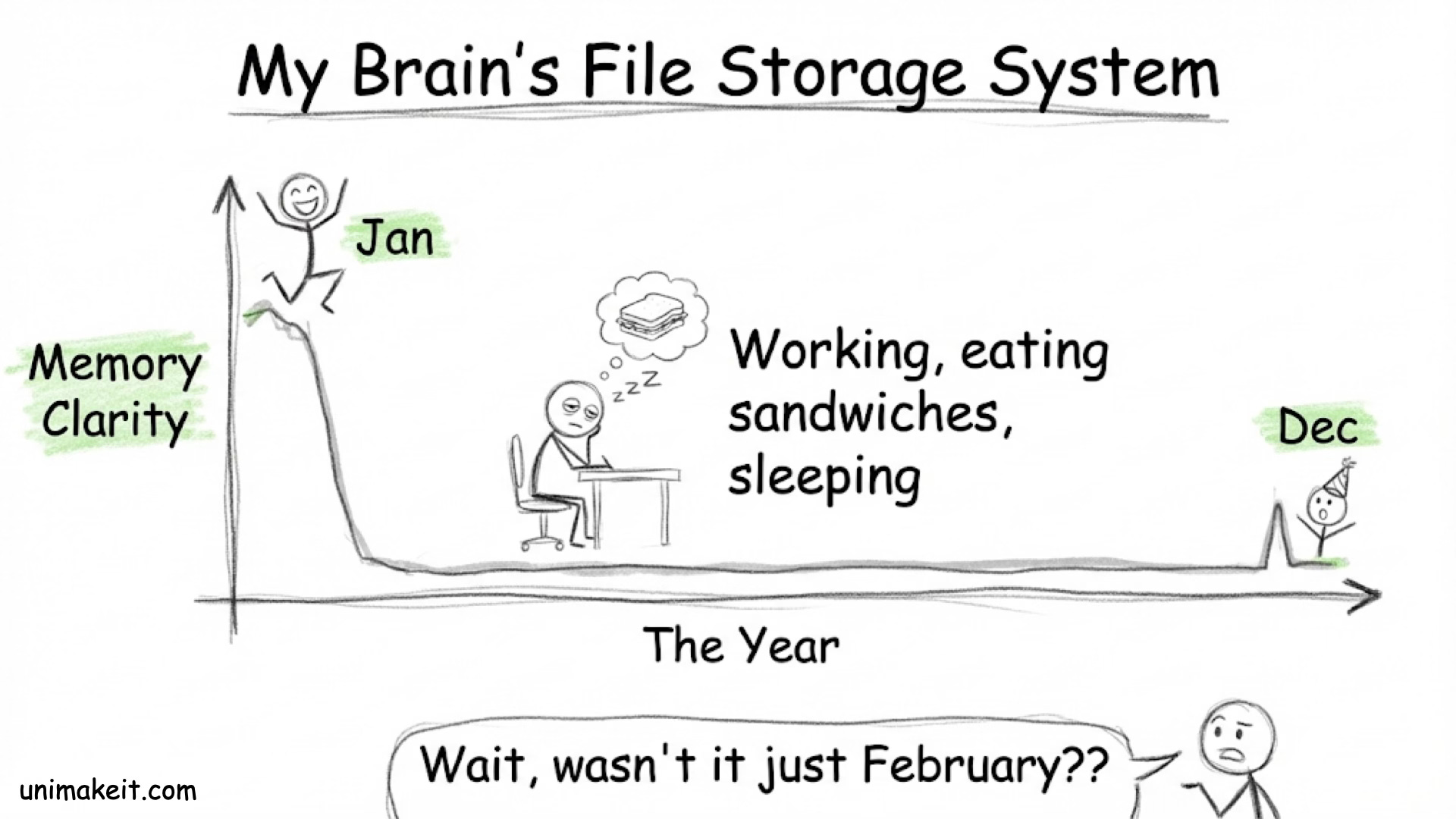
It is currently November, 2025. If you are anything like me, you are wondering how it was just February ten minutes ago.
Psychologists say our adult lives become a blur of repetition. My brain looks at my daily routine—Wake, Coffee, Work, Scroll, Sleep—and simply yells, “DUPLICATE FILE! DELETE!” to save storage space.
The result? 2025 is a flat line.
Except for the Moments. Those high-def, slow-motion memories where life actually felt real.
I recently re-read The Power of Moments by Chip and Dan Heath and realized something embarrassing: Great moments aren’t cosmic accidents.
While I am waiting for the Universe to drop an adventure in my lap, successful people are out there engineering their own plot twists.
Here is how we upgrade our operating system to do the same.
1. Creating an “Insight” Moment
An Insight Moment is that split second where you suddenly go, “Oh. I get it now.”
The book tells a story about a sanitation group in Bangladesh in the 90s. They had a problem: people were pooping in the fields.
The group built nice toilets. The villagers used the nice toilets as storage sheds.
Why? Because of “Social Norms.” Everyone poops outside.
The organizers did something brilliant and disgusting.
They gathered the villagers. They poured a glass of clean water. Everyone said they’d drink it.
Then, the organizer plucked a hair from his own head, walked over to a fresh pile of manure, dipped the hair in it, and swirled it into the water glass.
“Who wants a sip now?” he asked.
Silence.
“How many legs does a fly have?” he asked.
“Six,” the villagers said.
“Does a fly carry more poop than my hair?”
Then he dropped the hammer:
“When that fly lands on the pile, and then lands on your lunch, do you know what you are eating? You are eating each other’s poop.”
Boom. Insight Moment.
The villagers immediately stopped open defecation.
They weren’t lectured. They were tripped over the truth.
Which brings us to the Heath brothers’ main advice: stop giving the answer; design a tripwire so they fall face-first into it.
2. Designing an “Pride” Moment
Designing pride usually comes down to one thing: Recognition.
Here is a painful stat: 80% of bosses claim they frequently praise their employees. Only 20% of employees say they ever receive praise.
That is a massive “delusion gap.”
If I am the boss, I probably think, “I didn’t fire you today. That is my praise.”
But to design pride, recognition needs to be Specific and Frequent.
Also, we can gamify our own lives.
I tried learning Spanish once. I memorized the word for “library” and then quit because I wasn’t fluent yet.
The book suggests “Milestones.”
Level 1: Order a sandwich.
Level 2: Understand a joke.
Level 3: Read a meme.
Every time you hit a level, you get a dopamine hit.
I need to stop waiting for a Pulitzer and start celebrating the fact that I actually put my laundry away instead of picking clothes out of the dryer for a week.
3. Designing a “Connection” Moment
The Heath brothers have a formula for this:
Connection = Responsiveness = Understanding + Validation + Caring.
There is a story about a failing school where parents refused to show up. Attendance at parent-teacher conferences was 12%.
The teachers blamed the parents. The parents blamed the teachers.
Then, the school changed the script.
They sent teachers to visit homes. But instead of saying, “Your kid is failing math,” they asked four questions:
How does your child feel about school?
What are your hopes for your child?
What kind of person do you want them to become?
How can I help you?
Note that none of these questions are about grades. They are about the human.
The result? Parent attendance shot up to 73%.
This hit me hard.
When my friends have problems, my instinct is to fix it.
“Oh, you’re sad? Have you tried yoga? Here is a spreadsheet I made for you.”
That is not Connection. That is being an annoying consultant.
Connection is saying: “I get you. I value what you want. And I’ve got your back.”
The Final Worry
I know what you are thinking.
“This sounds manipulative. If I script out a ‘Moment,’ isn’t that fake?”
I worry about this too. I worry that if I plan a surprise, I am being “calculated.”
But here is the truth:
My “authentic” self is lazy, forgetful, and assumes you know I love you even if I haven’t spoken to you in six months.
My “authentic” self lets moments slip by because I am too busy looking at my phone.
Structure is just a container for sincerity.
If I design a moment, it means I care enough to put in the effort.
It means I am trying to translate my messy inner feelings into something you can actually feel.
We have one month left in 2025.
Don’t let it flatline.
Go build a moment. Trip someone over the truth. Rehearse your courage. Ask a question that matters.
Or, you know, just finally text that friend back. It’s been six months.
Links:
https://heathbrothers.com
https://www.amazon.com/Power-Moments-Certain-Experiences-Extraordinary/dp/1501147765


