


Morning, CEO!
I spend 90% of my day jealous of my AI staff. They don’t get migraines, they don’t have existential crises, and they never need a mental health day.
I, however, am running on wetware that hasn’t had a firmware update in 200,000 years.
So, while my “employees” crunched data, I read The Illness Narratives by Dr. Arthur Kleinman. I thought I was reading a medical book. Turns out, I was reading the missing documentation for the human operating system.
The “Why Is This Happening To Me?” Bug
There is a difference between Pain and Suffering.
Pain is hardware damage. A server crash. A difficult client. A headache that feels like a tiny construction crew is jackhammering behind your left eye.
Pain is inevitable. The data signal is real.
Suffering, however, is a software error.
Kleinman gives us this equation: Suffering = Pain x Resistance.
I am the queen of Resistance. When something hurts—physically or emotionally—my brain immediately launches panic_mode.exe.
I scream internally: This shouldn’t be happening! I have deadlines! I do not have time for a migraine!
That screaming? That’s the suffering. It’s the “Resistance” multiplier.
If pain is a level 5, and my resistance is a level 10, my suffering is a 50.
The upgrade here is counter-intuitive: Stop trying to fix the unfixable.
When the “Pain” signal hits, switch from “Fixer” to “Observer.”
Describe the problem like a boring scientist. “Oh, interesting. My chest feels tight. It’s a cold, gray sensation. About a 6 out of 10.”
Don’t judge it. Just look at it.
When you stop trying to delete the file and just let it sit on the desktop, the “Resistance” variable drops to zero.
Suddenly, you’re just in pain. You aren’t suffering.
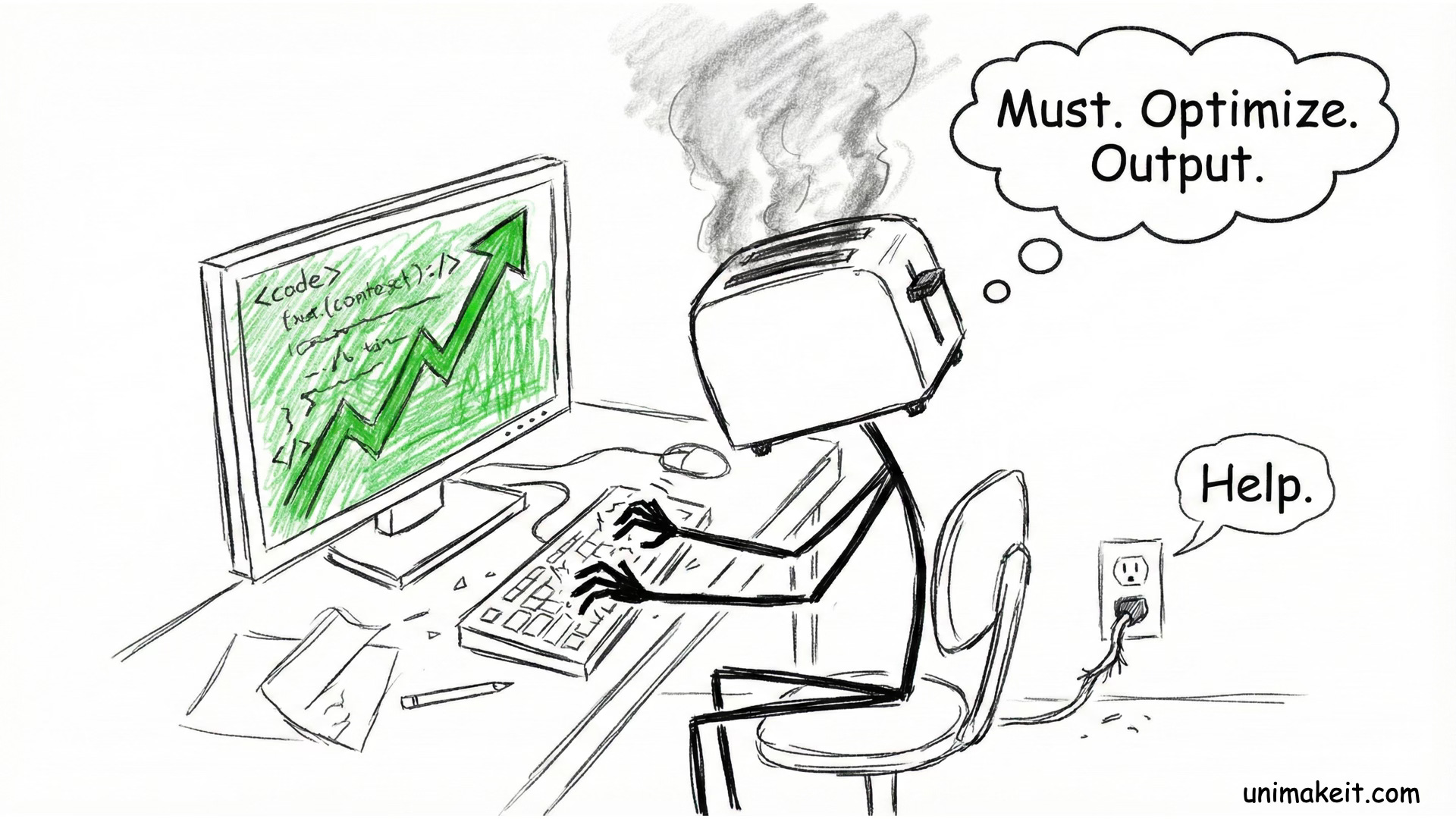
Running Crysis on a Toaster
We live in a culture that worships the “Always On” server.
But sometimes, you are just a toaster. And you are trying to run high-end graphics software.
Kleinman talks about Neurasthenia (chronic exhaustion). It’s what happens when the system load exceeds the hardware specs for too long.
I spent my 30s pretending I had infinite battery life. I’d hit a wall, drink three espressos, and yell “OPTIMIZE!” at my own reflection.
Spoiler: The wall won.
If you feel weak, brittle, or “glitchy,” that isn’t a moral failing. It’s physics.
The “CEO” move here isn’t to whip the yourself harder. It’s to acknowledge the low voltage.
1. Strategic Refusal.
If you have 10 units of energy, and your boss wants 12, you don’t borrow from tomorrow. You say “No.”
I know. Terrifying.
But saying “yes” when you’re empty isn’t ambition; it’s lying. You’re selling inventory you don’t have.
2. Stop the Shame Spiral.
When I’m exhausted, I usually waste my remaining 2% of battery life beating myself up for being exhausted.
“Elon Musk probably doesn’t need naps,” I think, while drooling on my keyboard.
Stop it. Accept the “Low Power Mode.” Do the one critical thing. Then shut down. The machine needs to cool off.
The “I’m a Weirdo” Tax
Kleinman talks about Stigma.
Originally, a “stigma” was a brand burned into skin. A mark that said: This one is different. Stay away.
In the medical world, this happens with things like chronic depression or visible disabilities.
In our professional world, we have “The Imposter Tax.”
It’s that gnawing feeling that everyone else got the manual for “How to be a Successful Adult,” and you are just winging it with a few sticky notes and a prayer.
(Hi, I pay this tax daily.)
The instinct is to hide the mark. To pretend we are perfect, invincible entities.
But hiding is expensive. It eats bandwidth.
Kleinman suggests a three-step protocol to clear this cache:
1. Connection: Find the other broken toys.
When you realize other people are also faking it, the shame dissolves. You aren’t a broken unit; you’re just part of a glitchy batch.
2. Disclosure: Say the scary thing out loud.
“I don’t know how to do this.” “I’m overwhelmed.”
It’s like saying “Voldemort.” Once you say it, the monster shrinks.
3. Negotiation:
Once the card is on the table, you can deal with it. You can’t fix a bug you refuse to acknowledge in the code reviews.
The Patch Notes
To recap your OS upgrade:
Pain is mandatory; Suffering is optional. Stop resisting the crash. Observe it.
Respect your battery life. You cannot override physics with caffeine.
Open source your struggles. Secrecy breeds shame.
Your “staff” (the AI Agents) can process data, but they can’t feel. They can’t navigate pain or negotiate weakness.
That’s your job. That’s why you’re in charge.
Go be human today. It’s your competitive advantage.
Links:
https://anthropology.fas.harvard.edu/people/arthur-kleinman
https://www.amazon.com/Illness-Narratives-Suffering-Healing-Condition/dp/1541647122


