


Morning, CEO!
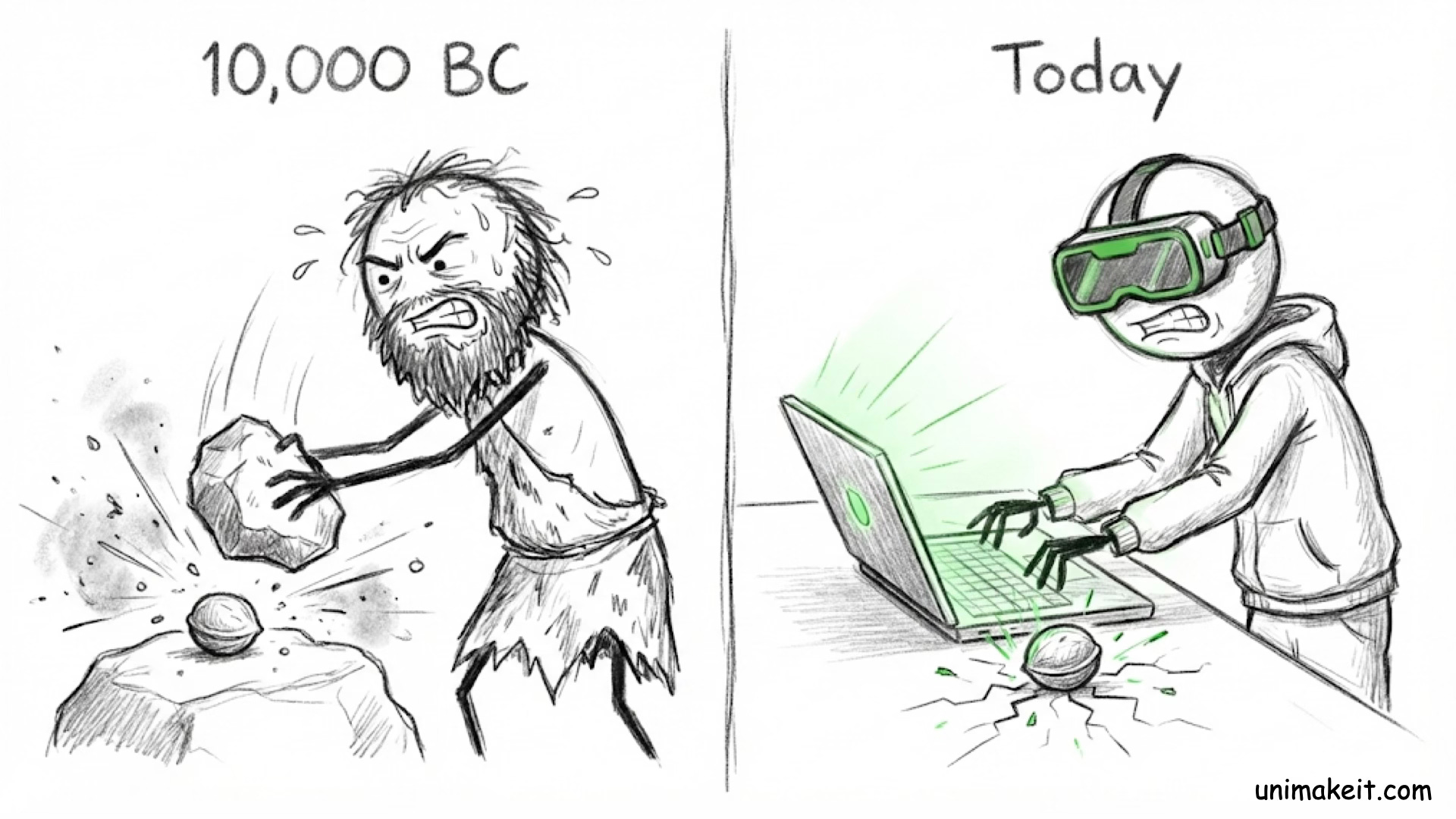
I used to think being “innovative” meant I had to invent something completely new—like a toaster that also does my taxes.
Then I read Fifty Things that Made the Modern Economy by Tim Harford, and I felt a little silly.
It turns out, the biggest shifts in history didn’t happen just because the tech was cool. They happened because humans figured out how to actually use it.
I’ve distilled three massive lessons from the book that aren’t about how to push the buttons faster, but knowing which buttons are actually worth pushing in the first place.
1. The Barbed Wire Principle (Or: Why Your “Open Door Policy” is destroying you)
Let’s go back to the American West in 1862. The government passed the Homestead Act, basically saying: “Hey, free land! 160 acres! Just come live here!”
It was the deal of the century. But nobody wanted it.
Why? Because cows are anarchists. The ‘West’ was basically a giant, chaotic buffet.
You could plant a beautiful field of corn, sweating in the sun for months, only for a random herd of cattle to wander through and turn your hard work into a salad bar.
You needed a fence.
But wood was too expensive to ship, and trying to grow a “hedge fence” takes years (and I can’t even keep a succulent alive for a week, so good luck with that).
Enter: Barbed Wire.
It was cheap. It was nasty. And it hurt.
Suddenly, you could define what was yours. The “Wild West” became an economy because people could finally control the fruits of their labor.
In your career, your “land” is your time and your attention.
Most of us are living in the pre-barbed-wire era. We let “cattle” (pointless meetings, Slack notifications, “quick pick your brain” coffees) trample our cornfields all day long.
We think the solution is to plant more corn (work harder).
Harford’s lesson is that value requires boundaries.
If you don’t have a “technological” way to enforce your boundaries—whether that’s an auto-responder, a strict calendar block, or the word “No”—you don’t own your career. You’re just farming for someone else’s cows.
2. The Dynamo Paradox (Or: Why you’re using AI wrong)
I love this story because it makes me feel better about my own procrastination.
When electric motors (dynamos) arrived in the 1880s, they were objectively better than steam engines. Steam engines were loud, dirty, and required a giant coal fire. Electricity was clean and quiet.
So, factory owners did the logical thing: They ripped out the steam engines and dropped in electric motors.
And... productivity didn’t move. For thirty years.
Economists were scratching their heads. Was electricity a scam?
No. The problem was the layout.
Steam factories were designed around a single, massive driveshaft. Machines had to be huddled together like penguins to reach the power source. When owners added electricity, they kept the “penguin huddle” layout.
They replaced the engine, but they didn’t change the workflow.
It wasn’t until a new generation of architects said, “Wait, with wires, we can put machines anywhere,” that the modern assembly line was born. They spread things out. They followed the flow of the product, not the flow of the power.
Then productivity skyrocketed.
We are currently in the “1910 Factory” phase of AI.
I see so many smart professionals using ChatGPT to write the same boring emails they used to write manually. They are swapping a steam engine for a dynamo, but keeping the clunky, outdated workflow.
If you simply use new tools to do old tasks slightly faster, you gain inches.
If you want to gain miles, you have to tear down the factory.
Don’t ask, “How can AI help me write this report?”
Ask, “If I have infinite intelligence on tap, do I even need this report?”
3. The iPhone Illusion (Or: You don’t need to be a Genius, you need to be a Curator)
We all worship at the altar of Steve Jobs. We imagine him forging the iPhone out of pure willpower and black turtlenecks.
But Harford points out something that hurts my ego as a “creator”:
Apple didn’t invent the technology inside the iPhone.
Let’s look at the receipt:
The Internet: Created by ARPANET (US Defense Department).
GPS: Created by the Navy for nuclear subs.
Touchscreen: Developed by the Royal Radar Establishment (and later CERN/CIA).
Siri: Born from a DARPA artificial intelligence project.
The government paid for the expensive, risky, “is this even possible?” science. They ran the first leg of the relay race—the hardest leg.
Steve Jobs didn’t invent the ingredients; he was the world’s greatest Chef. He combined existing, government-funded ingredients into a meal that everyone wanted to eat.
I spend way too much time trying to be “original.” I feel like if I didn’t code it from scratch, or come up with the idea in a fever dream, it doesn’t count.
That is “Lone Genius” vanity.
Your job isn’t to invent the GPS or the Touchscreen. Your job is to look at the tools lying around—the open-source models, the no-code platforms, the research papers—and package them.
The most successful “Agency of One” aren’t inventors. They are integrators.
Stop trying to build the internet. Just build the phone.
The Bottom Line
Technology is seductive. It tricks us into thinking it does the work for us.
But Barbed Wire didn’t stop the cows; the law did.
Electricity didn’t speed up the factory; the layout did.
The iPhone components didn’t change the world; the package did.
You have the tools. But the tools are useless without your wisdom.
Go build your fences, rearrange your floor plan, and cook with someone else’s groceries.
Links:
https://timharford.com/
https://www.amazon.com/Fifty-Things-that-Modern-Economy/dp/1408709112


