


Morning, CEO!
Let’s be real for a second.
Sometimes I scroll through LinkedIn, see a 22-year-old who just sold their third startup for a GDP of a small country, and I feel… tired.
I feel like a very slow, very old computer trying to run Cyberpunk 2077 on Windows 95.
We tell ourselves this story: “Well, they’re just geniuses. They have the ‘It Factor.’ I missed the boat.”
But I recently read Hidden Potential by Adam Grant, and it turns out that story is total garbage.
It’s not about the hardware (your raw talent). It’s about the operating system (your character).
And the best part? We can upgrade the OS whenever we want.
1. Character is a Skill (And it Pays Better than IQ)
Here’s a fun fact that made me feel better about my mediocrity.
Researchers tracked 11,000 kindergarteners all the way to adulthood. They wanted to know what predicted who would make the big bucks later in life.
Was it the kids who could read “War and Peace” at age four? Nope.
It was the kids who had experienced teachers who taught them character skills.
Things like:
Raising your hand.
Waiting your turn.
Not melting down when the glue stick dries out.
Technically, they call this Proactivity, Prosociality, Discipline, and Determination.
In the long run, these skills were 2.4 times more valuable for future income than math or reading scores.
We tend to think of “character” as your personality—something you’re stuck with, like your height or your irrational fear of moths (just me?).
But Grant argues that character is a skill. It’s a muscle.
Talent is just your starting speed. Character is how far you can drive the car before the wheels fall off.
As a professional running your own show, this is huge.
Your “clients” (aka your boss or stakeholders) don’t actually care if you’re the smartest person in the room. They care if you have the discipline to deliver when you don’t feel like it, and the prosocial skills not to be a jerk about it.
Your cognitive skills might get you the contract. Your character skills keep the retainer.
2. Embrace the “Ick” Factor
I am a recovering perfectionist.
If I decide to learn a new language, my strategy is usually:
Buy three textbooks.
Download Duolingo.
Study in a dark room for six months so nobody hears me mispronounce “library.”
Quit because I’m not fluent yet.
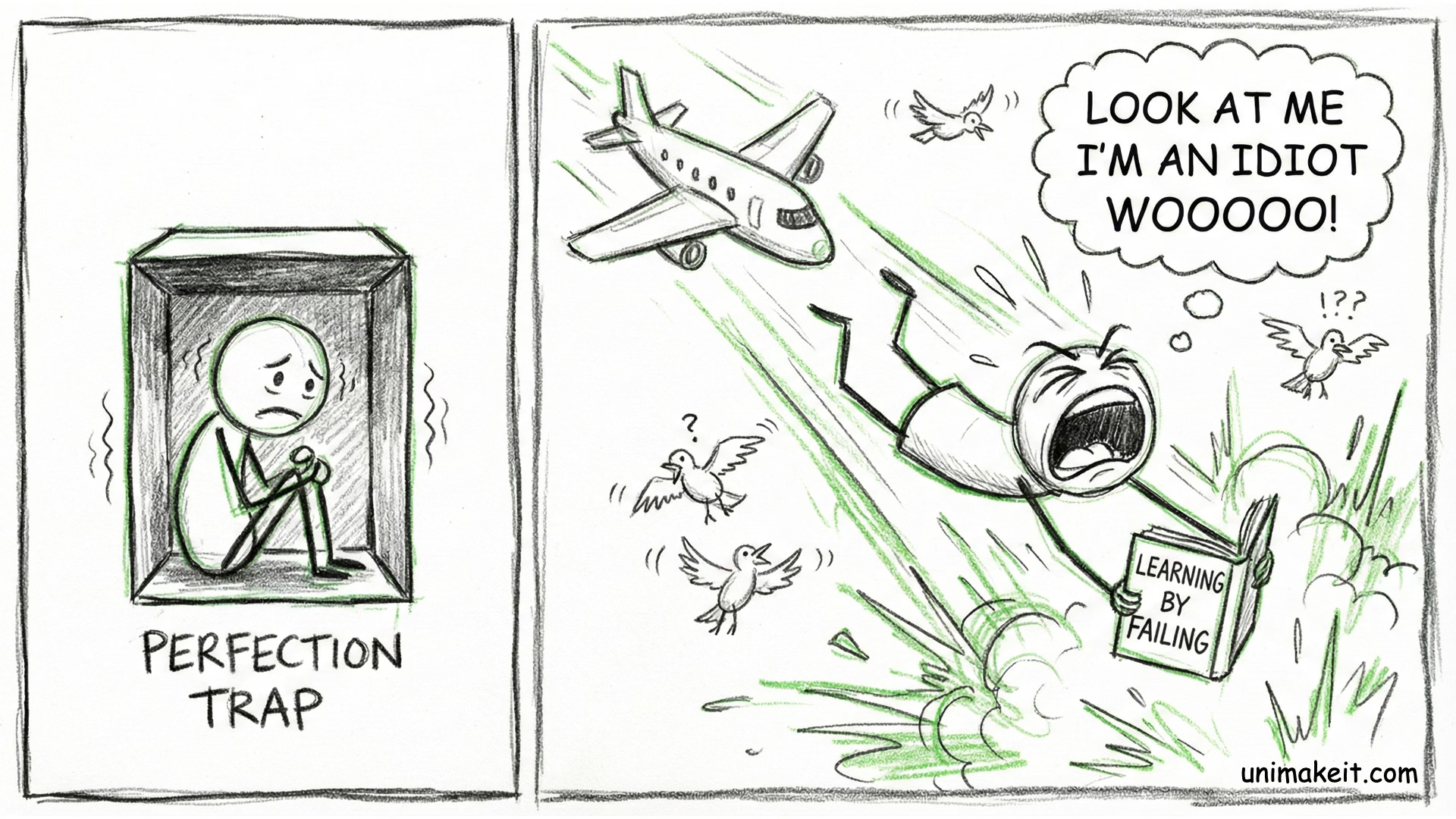
I call this “preparing.” Adam Grant calls this “hiding.”
The book highlights polyglots—people who learn languages in months, not years. Their secret isn’t a special brain gene.
Their secret is that they are willing to look like idiots. Immediately.
One guy, Benny, aims to make 200 mistakes a day. He calls it “Social Skydiving.” He walks up to strangers and butchers their language enthusiastically.
This applies to everything we do.
We obsess over “learning styles.” We say, “Oh, I’m a visual learner,” or “I need a quiet environment.”
Grant says that’s nonsense. Comfortable learning is barely learning.
If you aren’t feeling that cringey, awkward, “I have no idea what I’m doing” sensation in your stomach, you aren’t growing. You’re just consuming content.
To leverage your hidden potential, you have to stop waiting until you feel “ready.”
You don’t prepare to launch. You launch to prepare.
3. Be a Sponge (But Spit Out the Bad Stuff)
We need to talk about feedback.
I used to think being “coachable” meant taking everyone’s opinion, putting it in a blender, and drinking the slurry.
Result: A stomach ache and a confused project.
Grant introduces the concept of being a Sponge.
Sponges have been around for 500 million years. They survived mass extinctions that wiped out the dinosaurs. Why? Because they are masters of filtering.
They suck in nutrients and expel toxins.
To upgrade your judgment, you need to change how you ask for input.
When I finish a project, my insecure brain wants to ask: “Was that okay? Did you like it?”
That’s asking for feedback. Feedback looks at the rearview mirror. It usually leads to people being nice to you (which is useless) or critiquing things you can’t change (which is depressing).
Instead, Grant suggests asking for advice.
“What’s one thing I could do better next time?”
Advice focuses on the windshield. It forces the other person to be a coach, not a critic.
Also, stop trying to be perfect.
Grant points out that if perfectionism were a drug, the FDA would ban it for causing “stunted growth.”
Focus on your high standards, not your strict requirements.
People judge you by your peaks (your best work), not your valleys. Shakespeare wrote some absolute duds, but nobody cancels Hamlet because The Merry Wives of Windsor was kind of mid.
Summary
Talent is overrated.
The “geniuses” are usually just people who are willing to be uncomfortable, willing to filter advice, and willing to play the game long enough to get good.
So, go out there today and be a little bit awkward.
Make a mistake. Ask for advice.
And if you feel like a potato? Just remember—potatoes can be turned into vodka, fries, or batteries. That’s a lot of potential.
Links:
https://adamgrant.net
https://www.amazon.com/Hidden-Potential-Science-Achieving-Greater/dp/0593653149


