


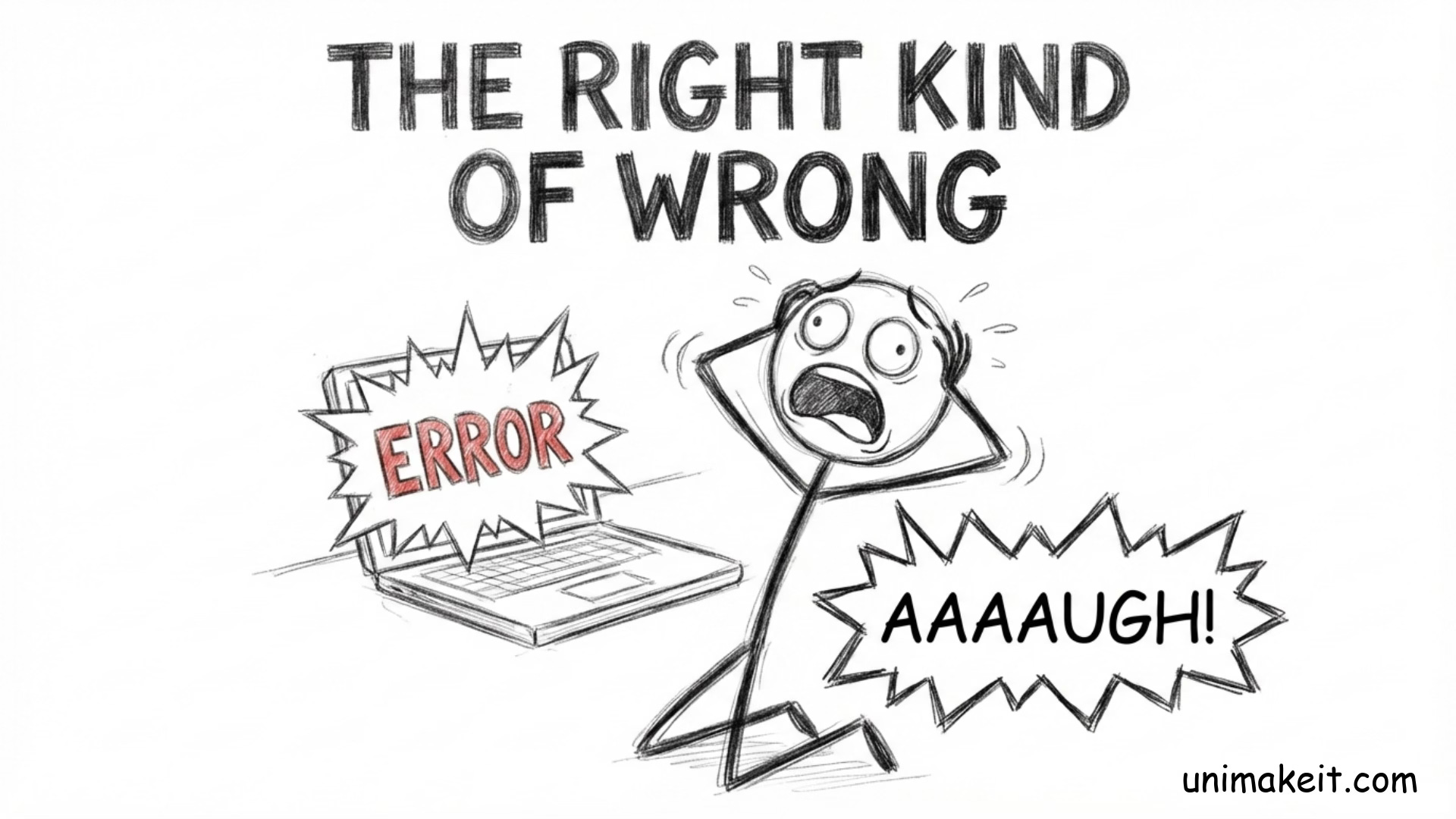
Morning, CEO!
Happy New Year.
If you’re anything like me, you’re currently staring at a blank page of “2026 Goals,” vibrating with a mix of caffeine and existential dread.
We are obsessed with winning. We want the promotion, the launch, the hockey-stick graph.
But today, I want to talk about something I am personally a world-class expert at.
Losing.
Specifically, failing.
I recently read Right Kind of Wrong by Amy Edmondson. I read it hoping it would justify the time I tried to fix a plumbing leak myself and ended up creating an indoor swimming pool.
But it did teach me that my internal Operating System is buggy. It hates failure. And if you want to run your career like a business, you need to patch that code immediately.
Here is why failing sucks, and how to do it without hating yourself.
The Caveman in the C-Suite
First, let’s acknowledge a design flaw in our hardware.
The brain is a scared lizard.
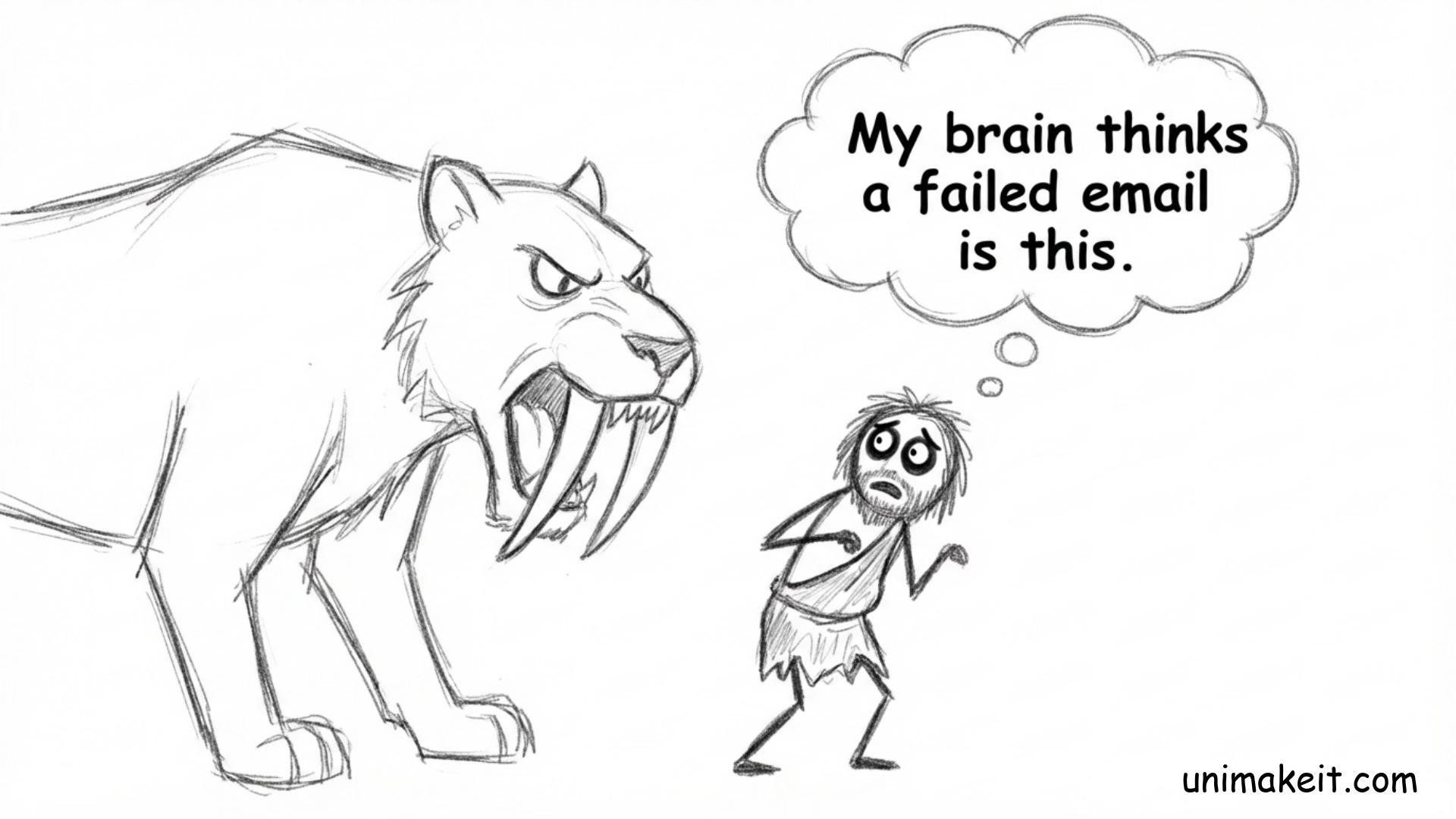
We run on a biological operating system I call “Caveman OS v1.0.” This system has one primary KPI: Do not die.
To a caveman, making a mistake—like eating the bright red berry or petting the fuzzy saber-toothed tiger—meant game over. So, we evolved a deep, visceral, panicked reaction to failure.
Edmondson tells a story about a dad driving his toddler to school. He accidentally bumps the car in front of him. Immediately, the 3-year-old in the back seat screams:
“Daddy, I didn’t do it!”
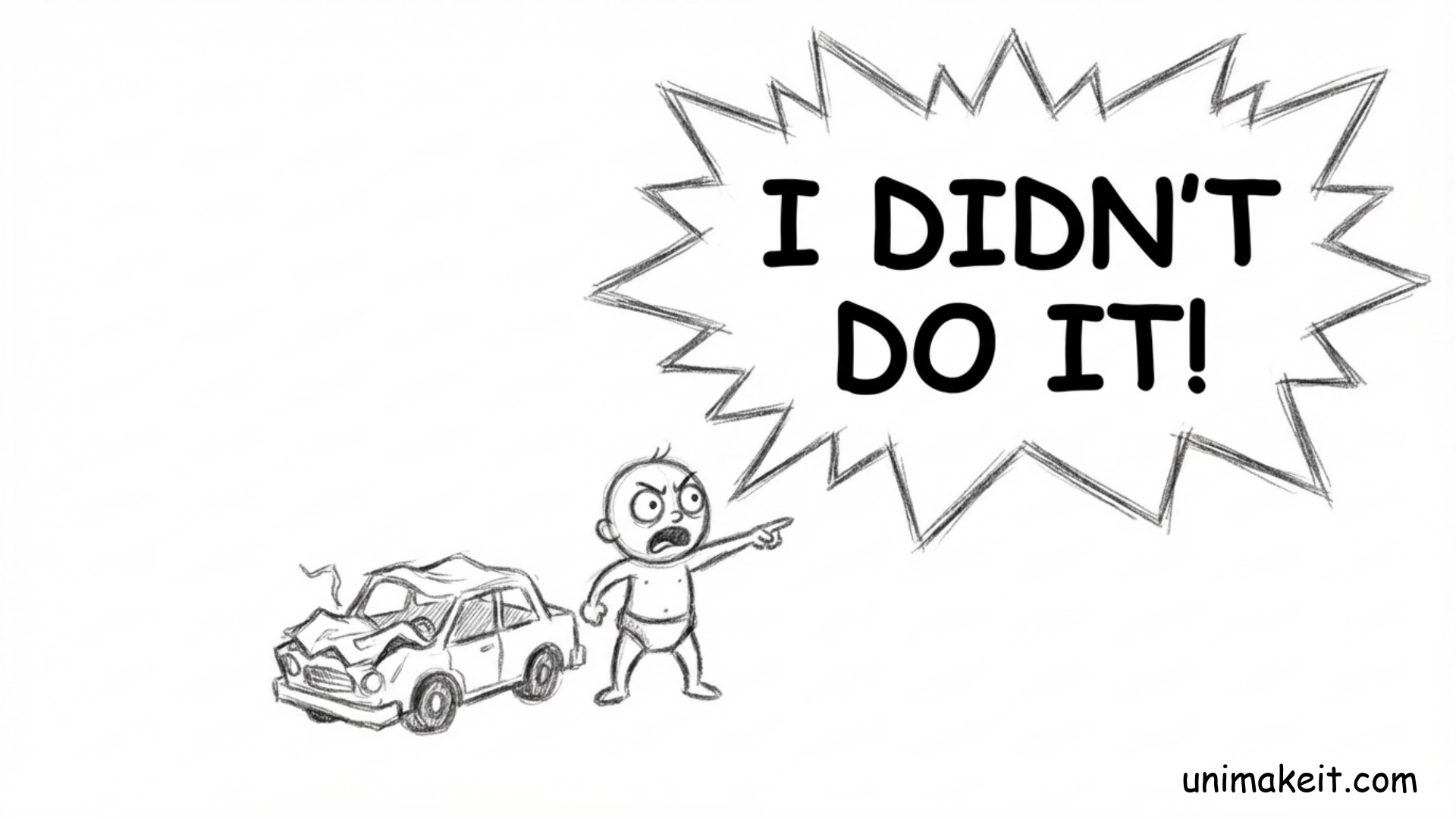
That toddler is my spirit animal.
Whenever something breaks in my life—a project stalls, a deploy fails, a relationship hits a snag—my first instinct isn’t a calm, rational Root Cause Analysis.
My first instinct is a primitive screech from the back of my brain that says: It wasn’t me! It was the wifi! It was the mercury retrograde! I was in the bathroom!
Scientists call this “loss aversion.” I call it “The Blue Screen of Death.”
When we encounter failure, our brains go into an “Away State.” We shut down. We get defensive. We hide the data.
If you are running your own career, this is a disaster. You can’t optimize a system if the CEO (you) refuses to look at the error logs because they make you feel bad.
You have to drag that Caveman out of the C-Suite and remind him that a failed cold email is not a tiger. It’s just data.
The Imposter Syndrome Trap
The second bug in our system is social fear.
Back in the tribal days, if you messed up, the group might kick you out. And in the wild, being alone meant being eaten.
Today, we don’t have tribes. We have Slack channels. But the fear feels exactly the same.
If I admit I made a mistake in a meeting, my Lizard Brain whispers, “They are going to realize you are a fraud, exile you to the parking lot, and you will starve.”
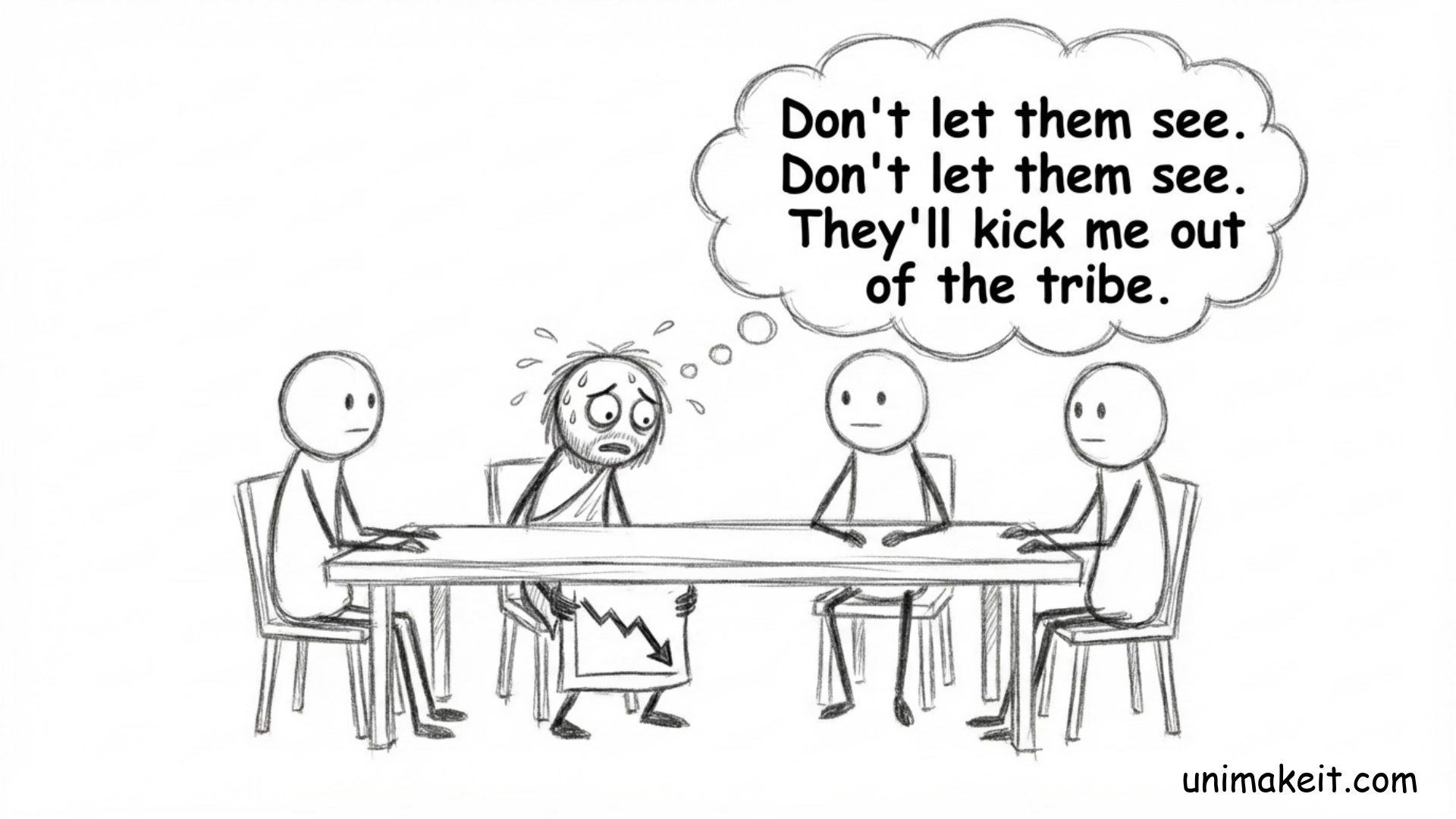
This leads to the Imposter Trap.
To protect our egos, we hide our mistakes. We nod along in meetings when we have zero idea what an acronym means. We pretend everything is “on track” until the building is literally on fire.
Edmondson found something counter-intuitive when she studied hospital teams.
The best teams reported MORE errors than the bad teams.
Wait. What?
Was the best team just a disaster zone of nurses tripping over cords? No.
They just had Psychological Safety. They felt safe enough to say, “Hey, I almost gave the patient the wrong pill.”
The bad teams were terrified. They hid their mistakes to look competent. And because they hid them, nobody learned, and patients got hurt.
Here is the hard truth for your career: If you aren’t logging errors, you aren’t “crushing it.” You’re just lying to yourself.
I often prioritize “looking smart” over “getting smarter.” I will spend three hours Googling something privately rather than asking a five-minute question publicly.
That is bad management. You need to fire your inner PR person who spins everything as a “win,” and hire an inner Scientist who gets excited about the mess.
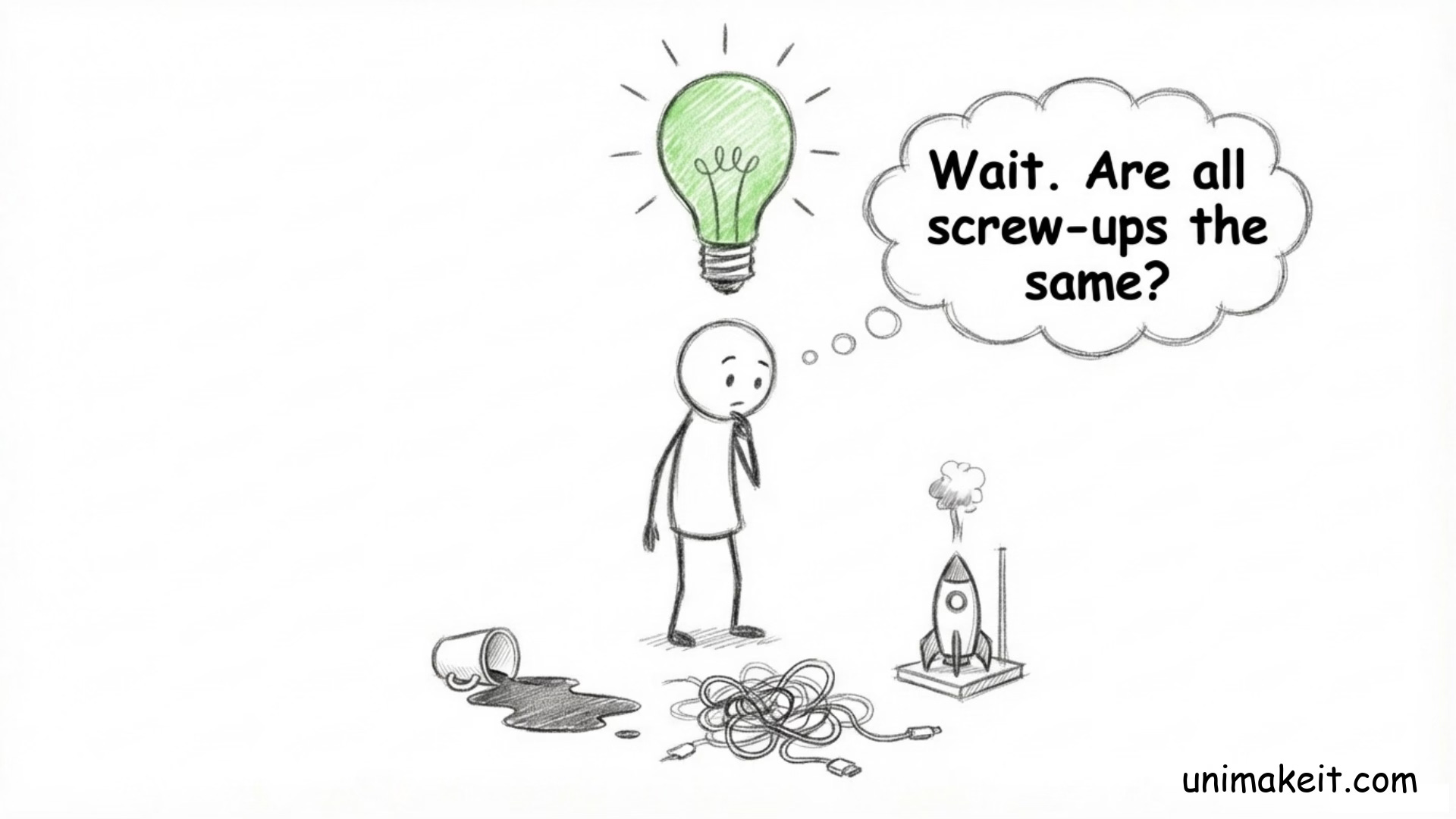
Not All Screw-Ups Are Created Equal
We tend to think failure is binary. You win or you lose.
But Edmondson argues there are three types of failure.
1. Basic Failure (The Facepalm)
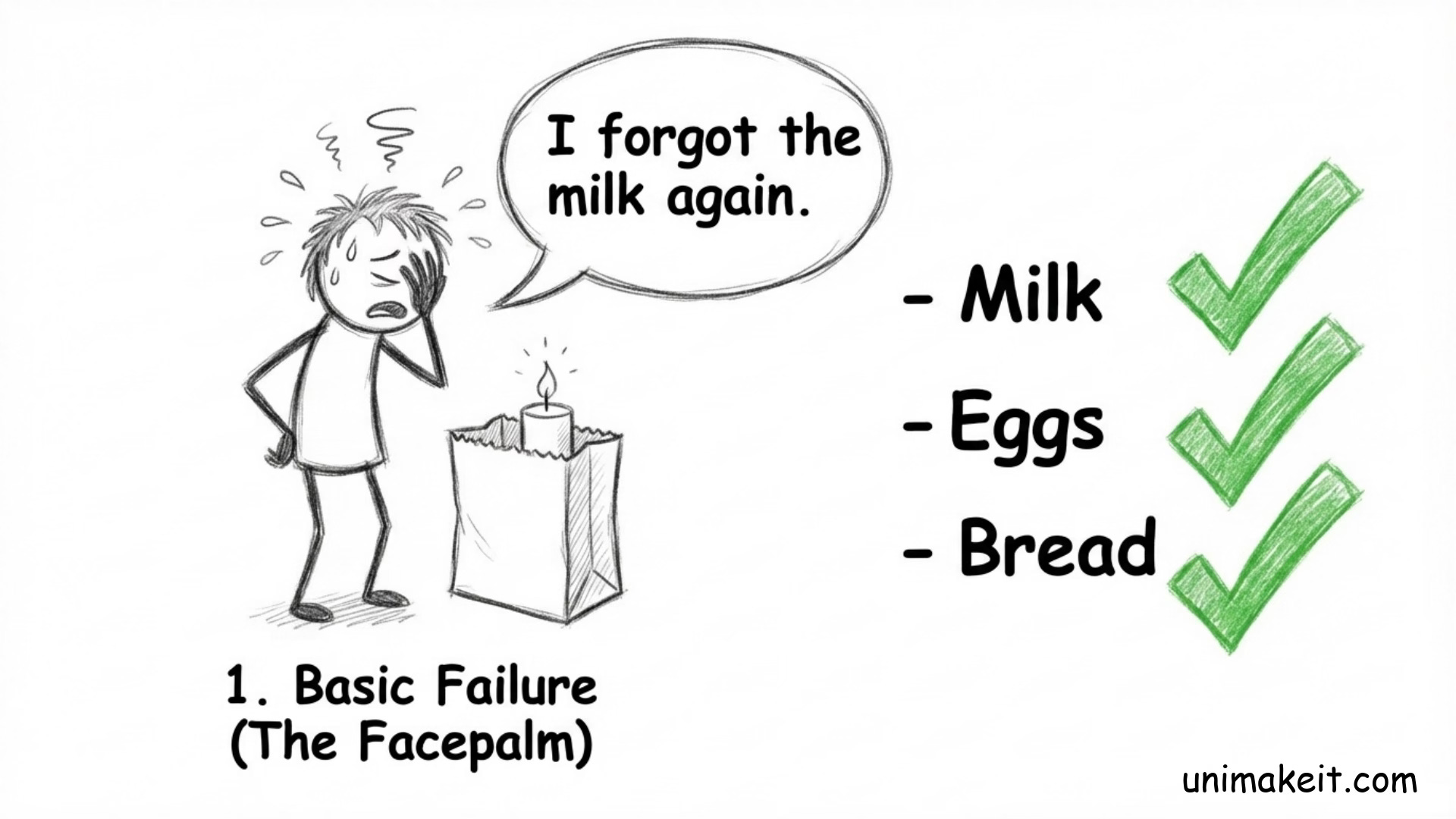
This happens in known territory. You know exactly what to do. You just... didn’t do it.
You forgot to check the timezone on the invite. You uploaded the wrong file.
In 2020, Citibank accidentally wired $900 million instead of $8 million because of a confusing UI. That is a Basic Failure.
The solution here isn’t “try harder.” It’s Checklists.
Sometimes I think I’m too smart for them. Then I go to the store for three things and come back with zero of them, but I did buy a scented candle.
Don’t trust your brain. Use a checklist.
2. Complex Failure (The Perfect Storm)
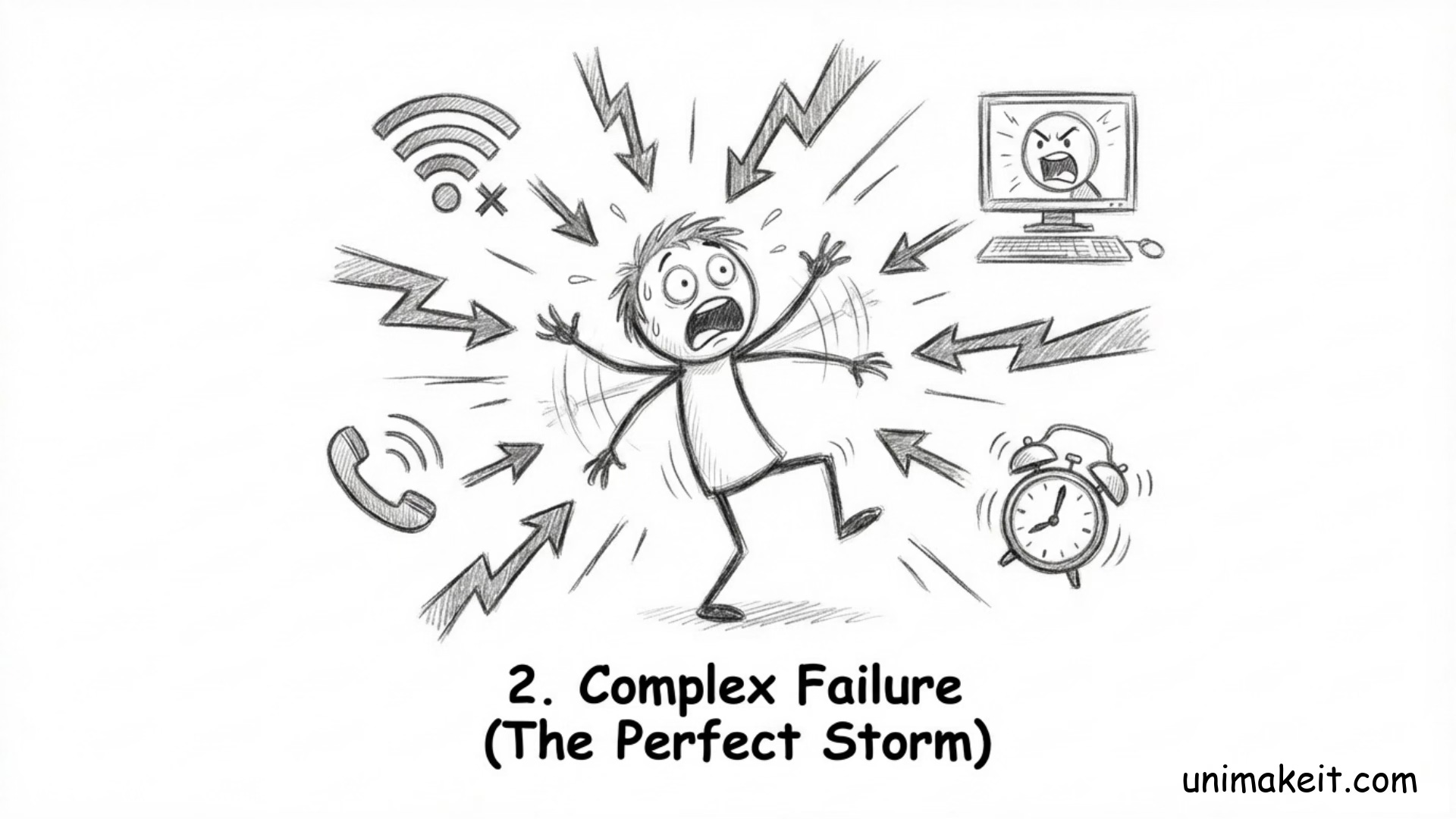
This is the Titanic. It’s not one big thing; it’s a bunch of small things lining up.
The captain is tired + the radio is broken + there is fog + a random iceberg.
In your career, this looks like: Burnout + a bad internet connection + a difficult client + missed alarm = Meltdown.
You can’t prevent these easily, but you can catch the small signals early. You have to be the annoying person who says, “Hey, that iceberg looks kind of close,” even if everyone else is partying.
3. Intelligent Failure (The Good Stuff)
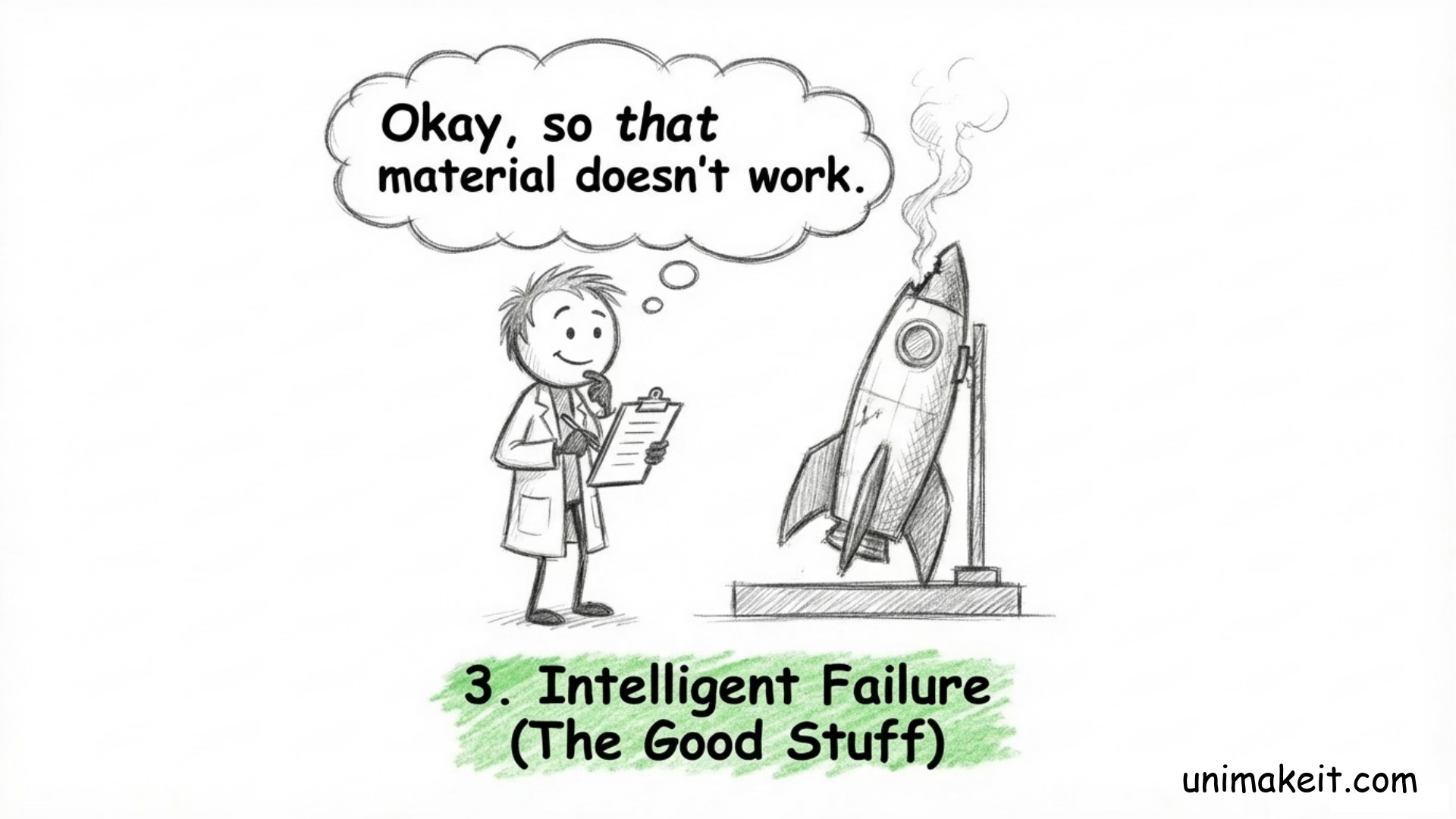
This is what we are aiming for.
Think of Thomas Edison. He tried thousands of materials for a lightbulb filament. When they didn’t work, he didn’t cry and eat ice cream. He just knew what not to use.
An Intelligent Failure is in new territory, goal-driven, and small enough not to kill you.
If I launch a new project and nobody clicks? Intelligent Failure. I learned what the market hates.
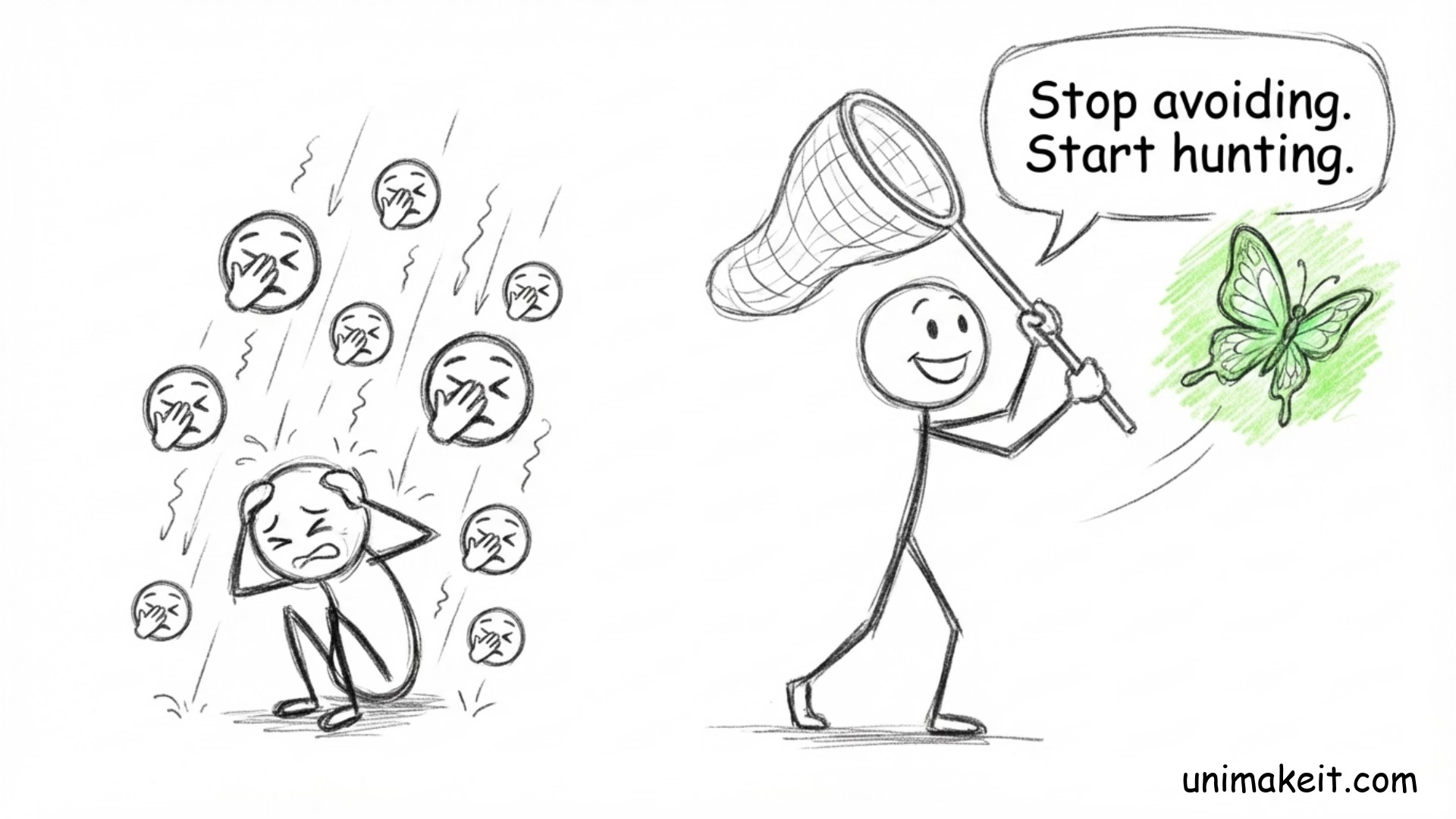
Most of us tolerate Basic Failures (sloppy mistakes) because we’re lazy, but we avoid Intelligent Failures (bold experiments) because we’re scared.
Flip that.
Be ruthless about eliminating the sloppy mistakes. Be fearless about chasing the bold experiments.
The Takeaway
So, here is your assignment.
Give yourself a Failure Quota.
If you get to December and you haven’t broken anything, you didn’t run a business. You ran a museum.
But let’s try to have the Right Kind of Wrong.
Stop tolerating Basic Failures. Make the checklist.
Start hunting for Intelligent Failures. Try the scary thing.
And when you fall on your face?
Don’t let the toddler in your brain scream, “I didn’t do it!”
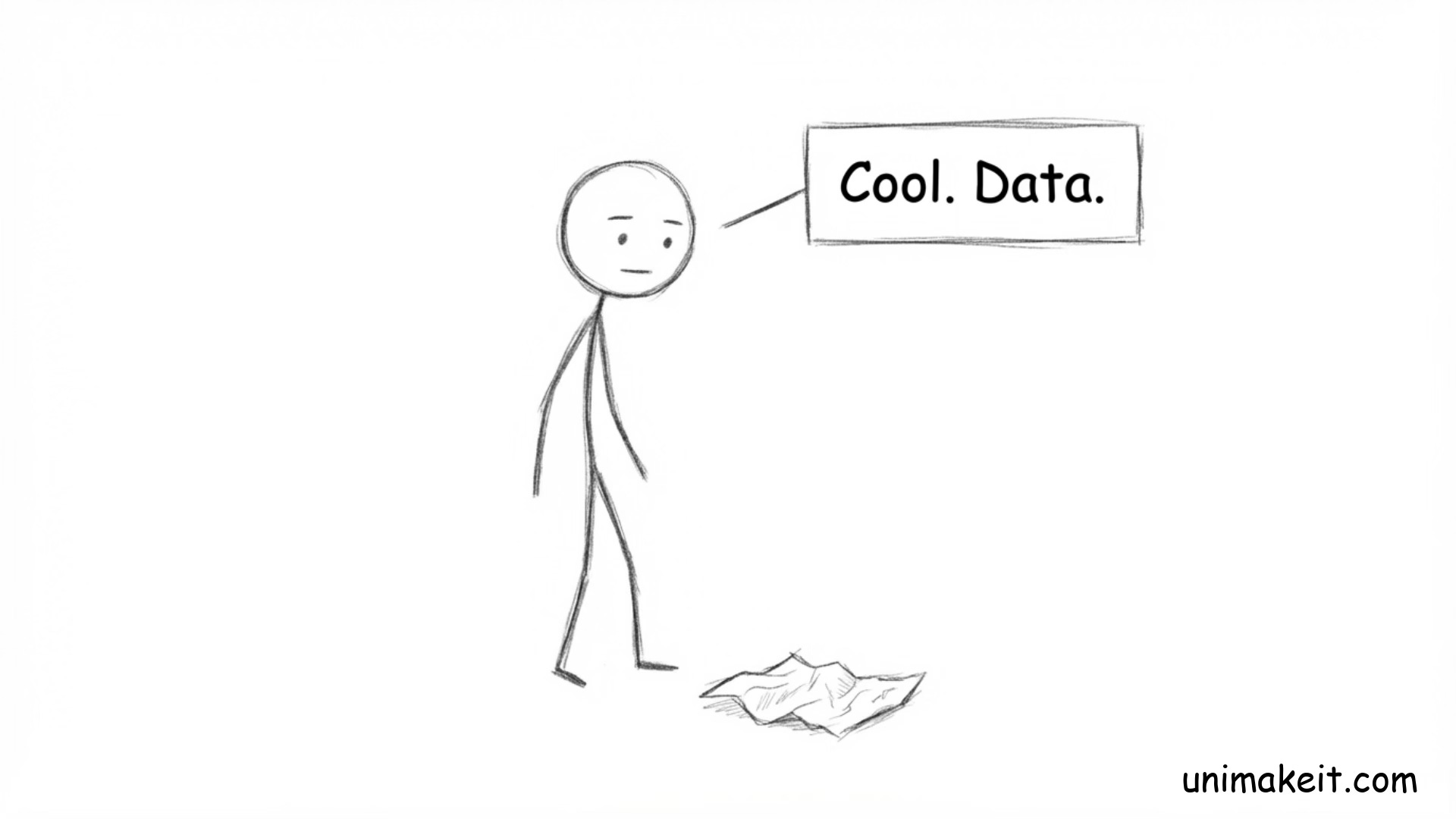
Take a breath. Look at the mess. And say:
“Cool. Data.”
Links:
https://amycedmondson.com
https://www.amazon.com/Right-Kind-Wrong-Science-Failing/dp/1982195061


